The Crippled and Sick Cured at the Tomb of Saint Nicholas by Gentile da Fabriano
In 1425, Gentile da Fabriano painted “The Crippled and Sick Cured at the Tomb of Saint Nicholas,” a striking tempera on panel artwork, housed in a private collection. It captures a vibrant scene of communal faith and the hope for miracles, characteristic of early 15th-century Italian art.
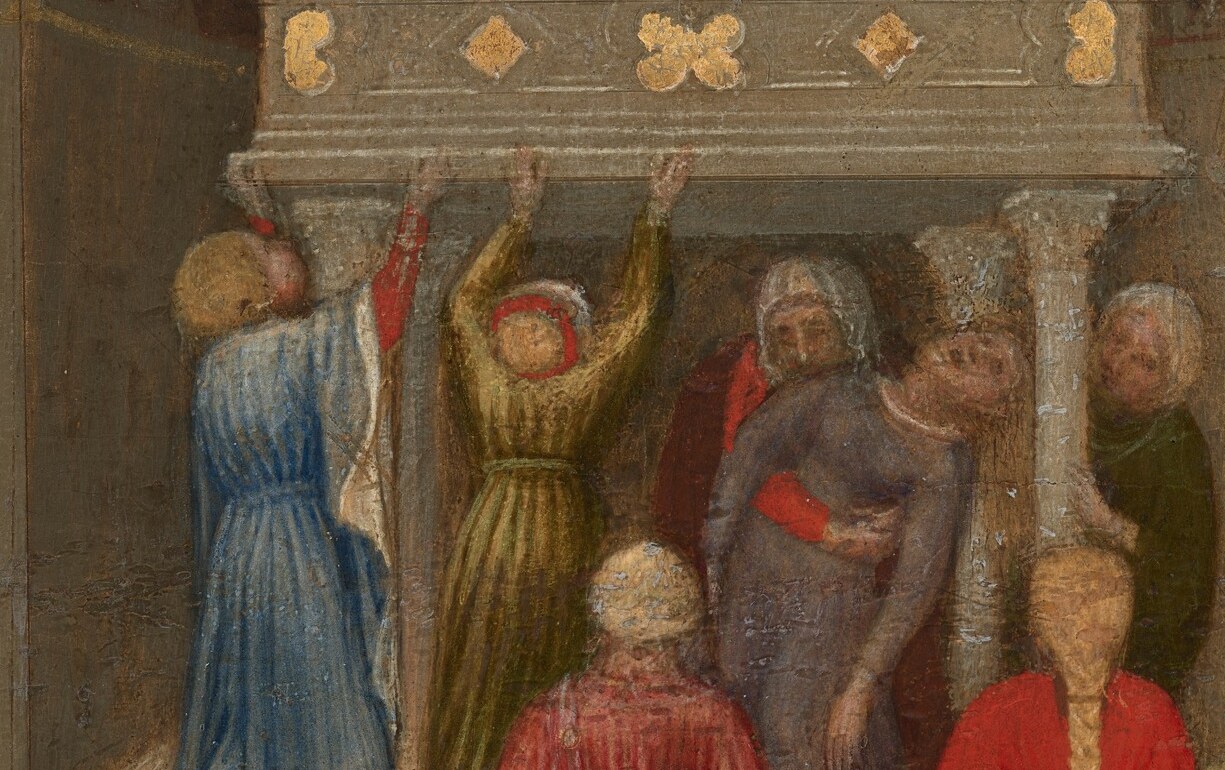
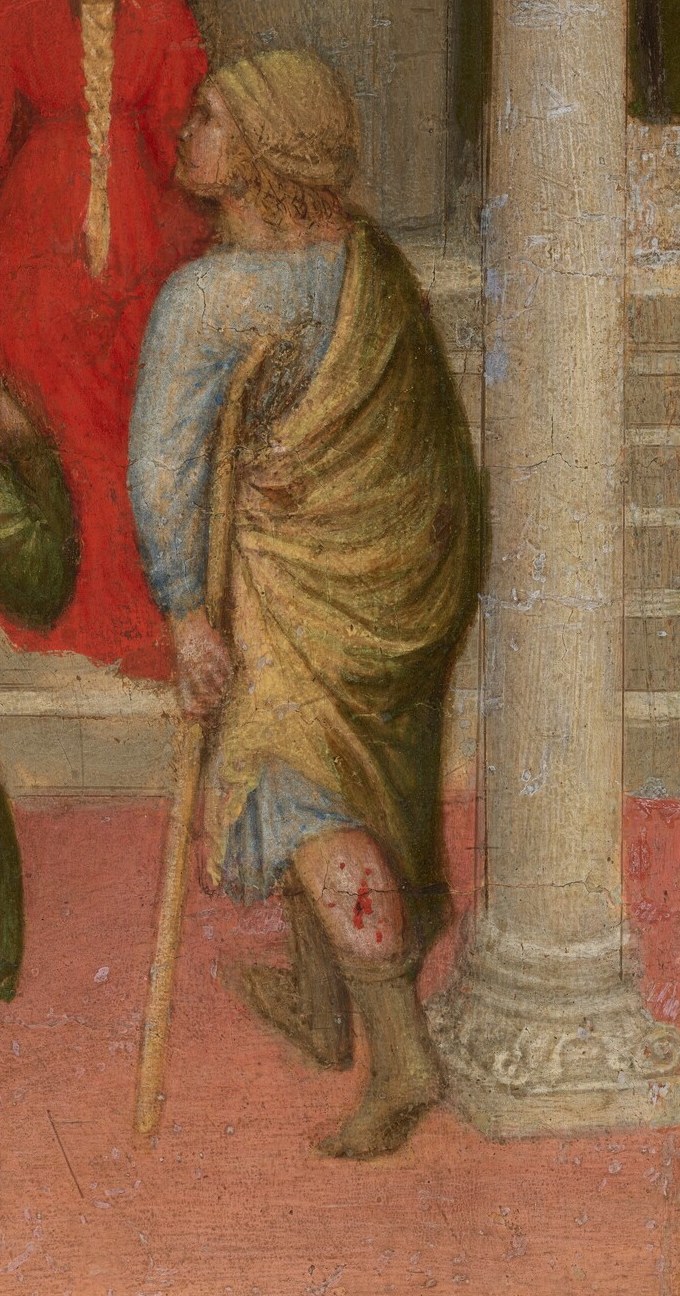
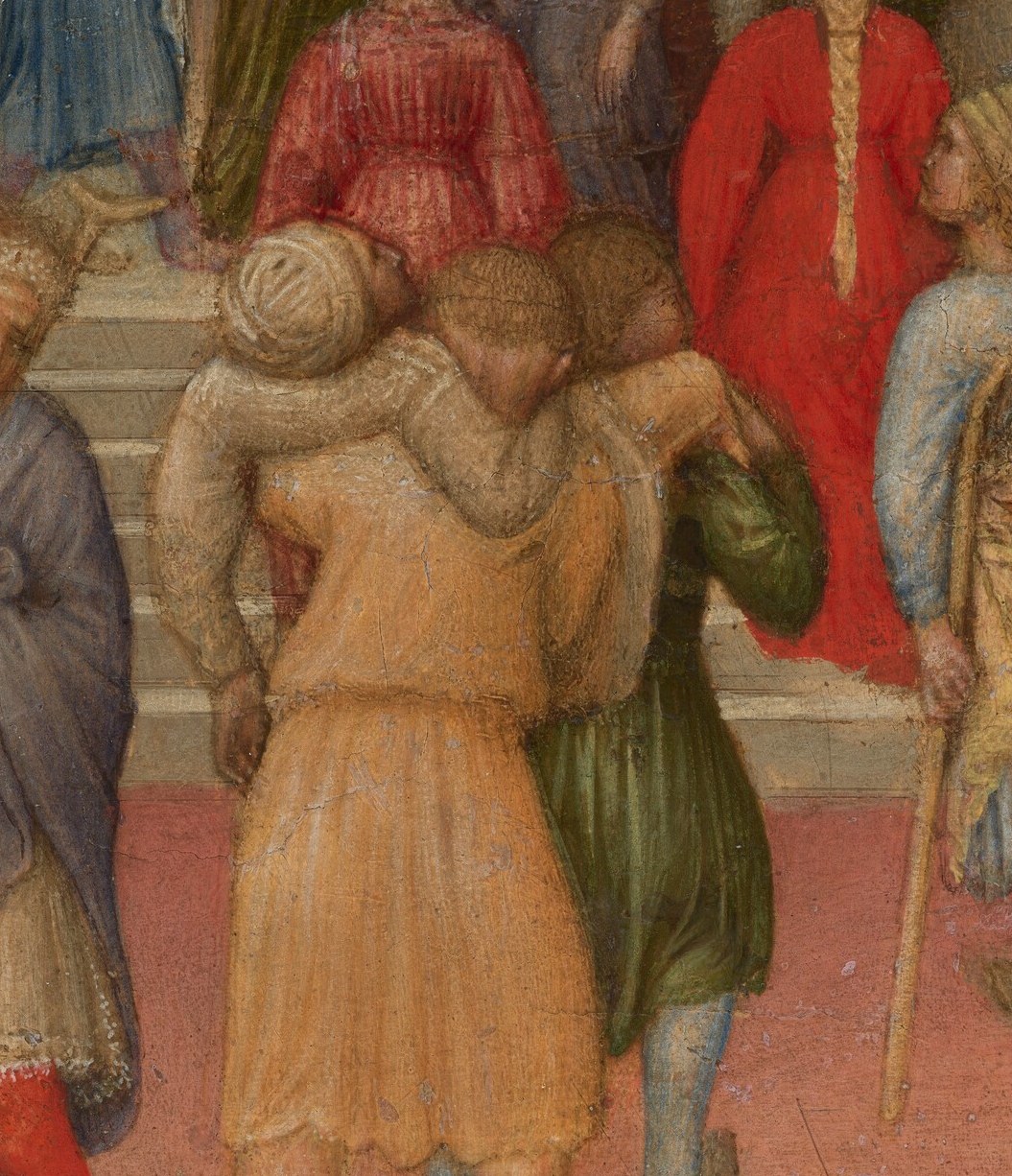
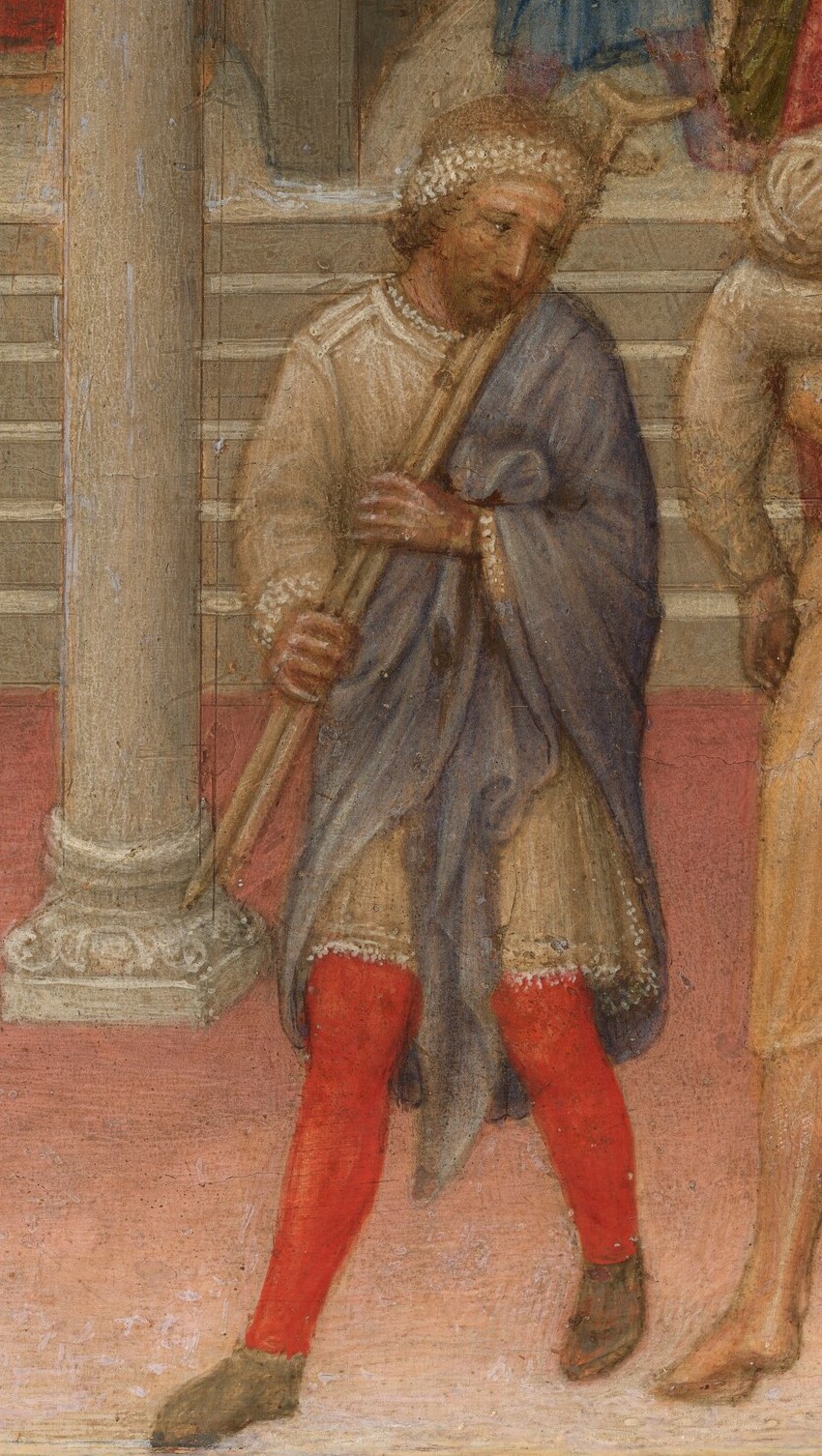
Look closely at the figures gathered around the ornate tomb of Saint Nicholas. You can see individuals in richly colored robes, reflecting the era's fine textiles, and a group carrying a sick man on a stretcher, illustrating the profound belief in divine healing.
Gentile da Fabriano, known for his love of gold leaf and meticulous detail, brought this scene to life with vivid colors and grand architectural elements, such as the tall columns and patterned floor tiles. He was a traveling artist, always seeking patrons, and his works often featured dazzling surfaces that caught the light.
This painting is a window into a moment when faith and daily life were deeply intertwined. What details surprise you most about this historical depiction?
Details
Transcript
In 1425, people believed miracles happened here. This is the ornate tomb of Saint Nicholas. Sick and crippled people traveled far to be cured. They brought the sick on stretchers, seeking divine intervention. The vibrant robes show the era's rich textiles and dyes. These grand columns frame a moment of communal hope and faith.