Still Life with Herring, Bread, and Cheese by Alexandre Gabriel Decamps
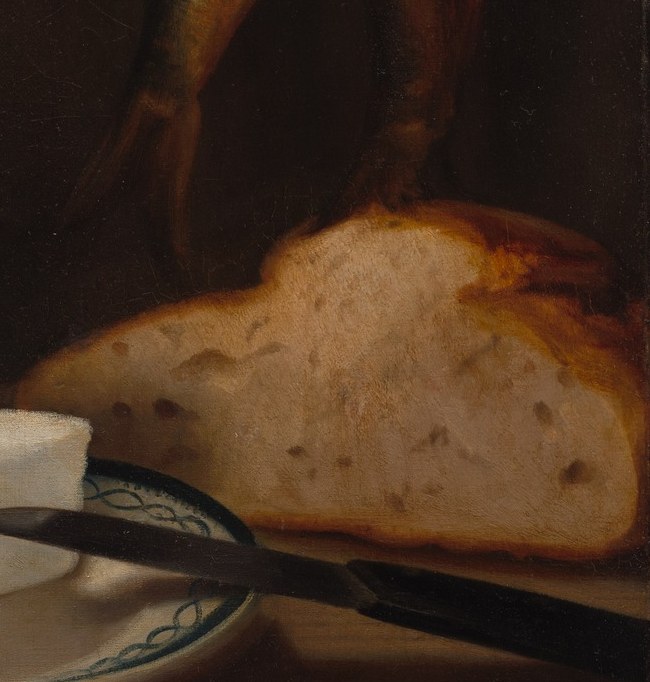
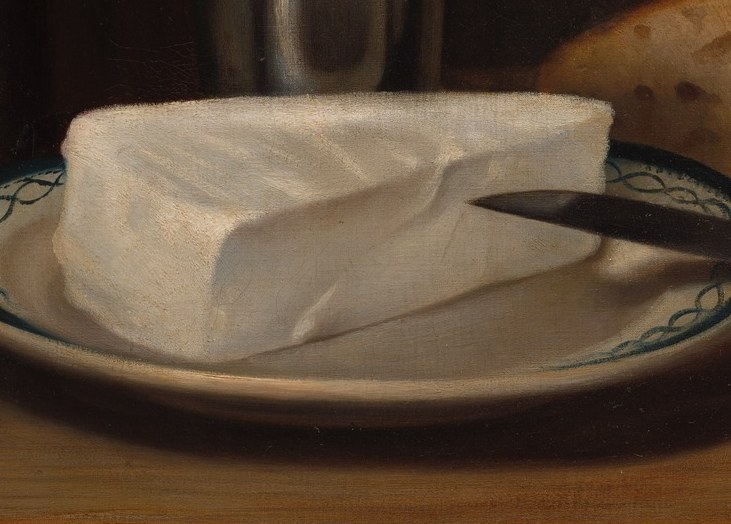
This is Alexandre Gabriel Decamps' Still Life with Herring, Bread, and Cheese, painted in 1858 and housed at The Cleveland Museum of Art. The painting’s humble subject matter is elevated by subtle inscriptions that reveal a philosophical message. Here, ordinary food items and simple objects form a visual code for a life of virtue.
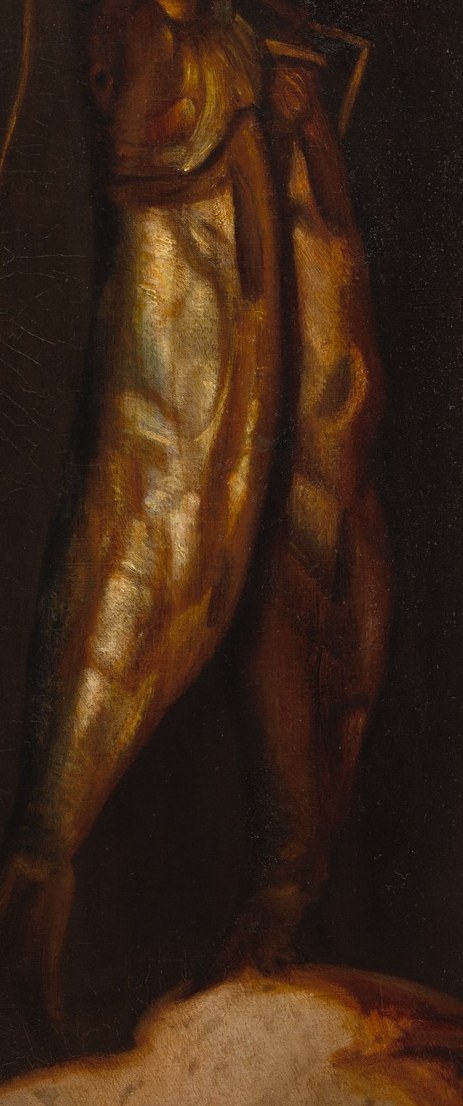
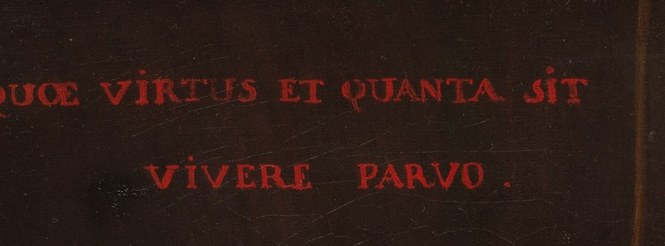
Observe the three herrings hanging prominently. Their stark presence, rendered with metallic sheen, speaks to parsimony. Look closely at the inscriptions: 'VIVERE PARVO' meaning 'to live simply,' and 'QUAE VIRTUS ET QUANTA SIT,' or 'what virtue and how great.' These phrases transform the still life from a mere depiction of sustenance into a meditation on the value of a simple existence.
Decamps, known for his Orientalist works, turned his skilled hand to this still life in 1858. By presenting these basic provisions as a coded message, he invites contemplation on the inherent virtue found in simplicity and self-restraint. The artist's careful rendering of textures and subtle lighting enhances this quiet, contemplative mood.
Decamps invites us to decode this still life, suggesting that true virtue lies not in abundance, but in the art of living simply. What other symbols of austerity might we find in art history?
Details
Transcript
This painting holds a hidden message. Look at these three hanging herrings. They represent living with less. The bread and cheese are also coded. The inscription reads 'to live simply'. And 'what virtue and how great'. Decamps shows simple life as virtue.