The Grave of William Penn by Hicks, Edward
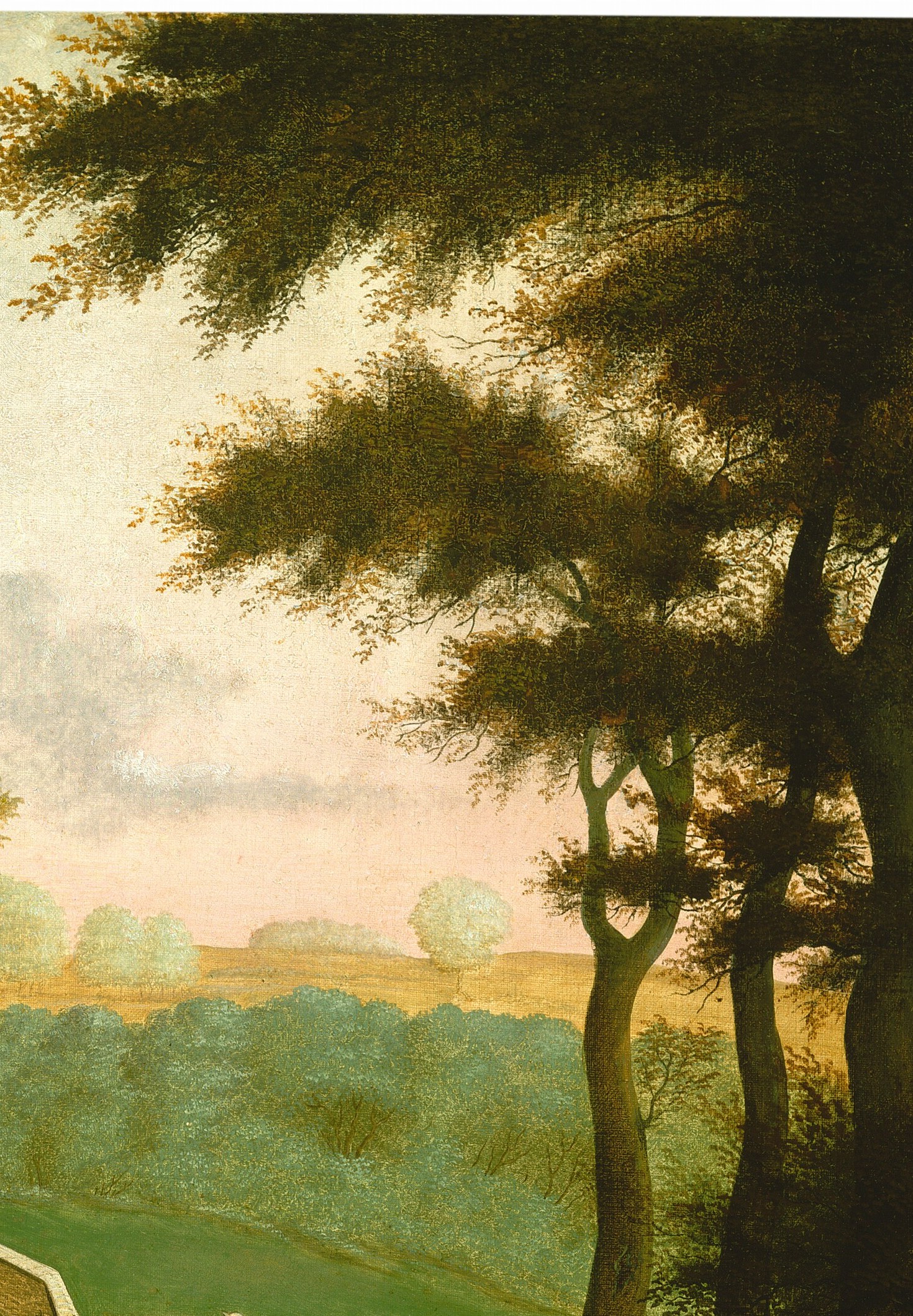
Edward Hicks's "The Grave of William Penn" (c. 1848) at the National Gallery of Art, Washington, D.C., isn't just a landscape; it's a visual sermon on Quaker values.
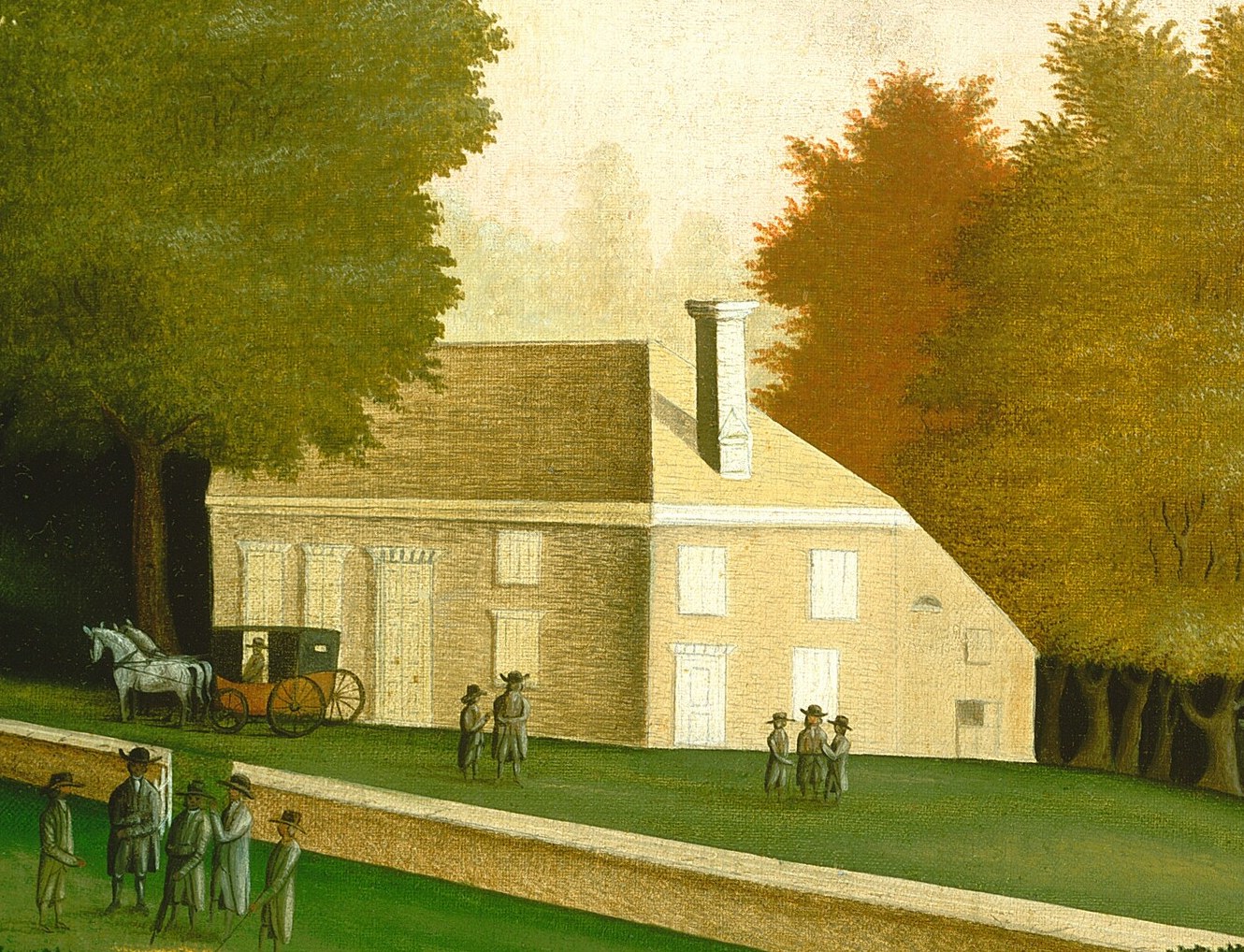
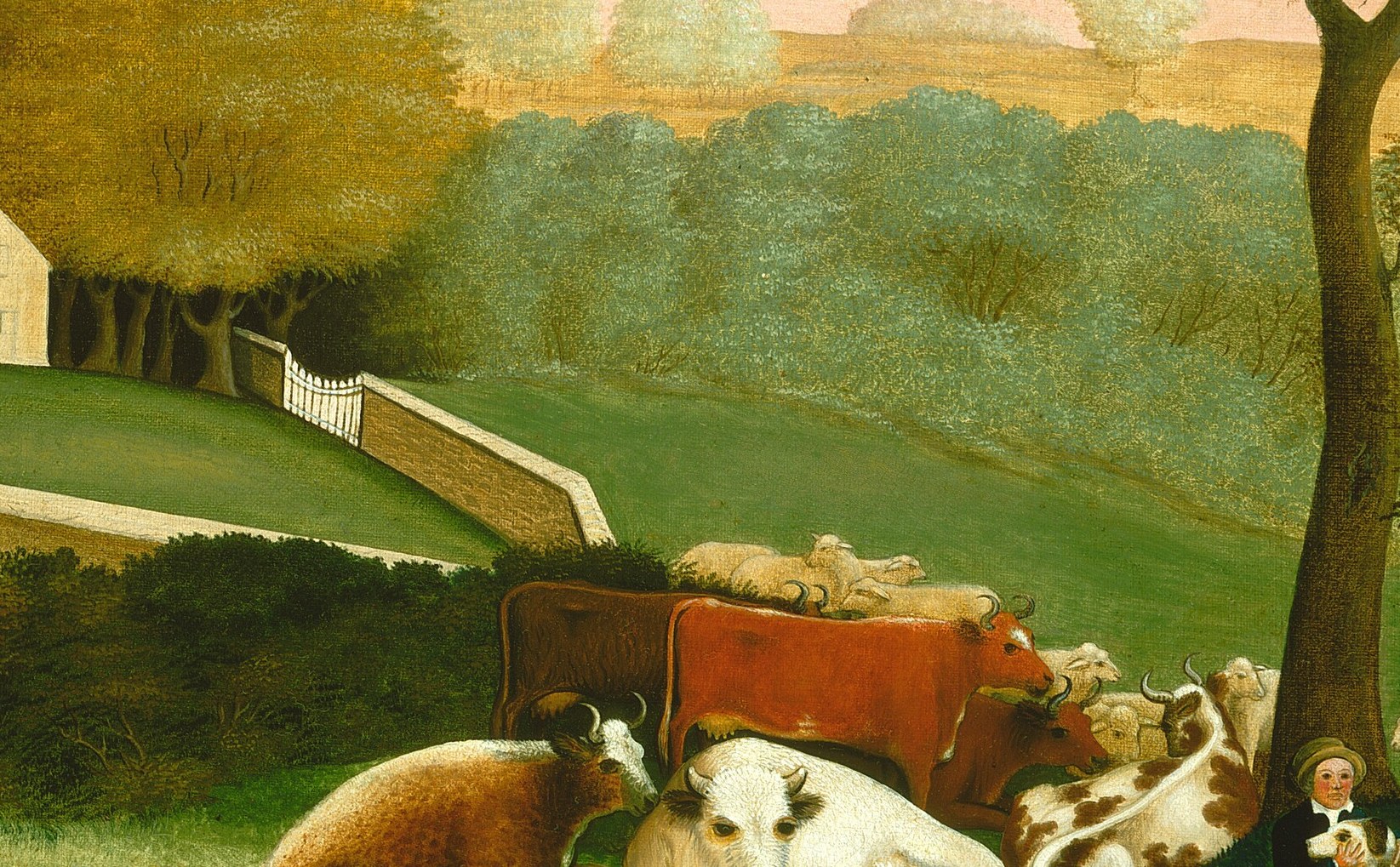
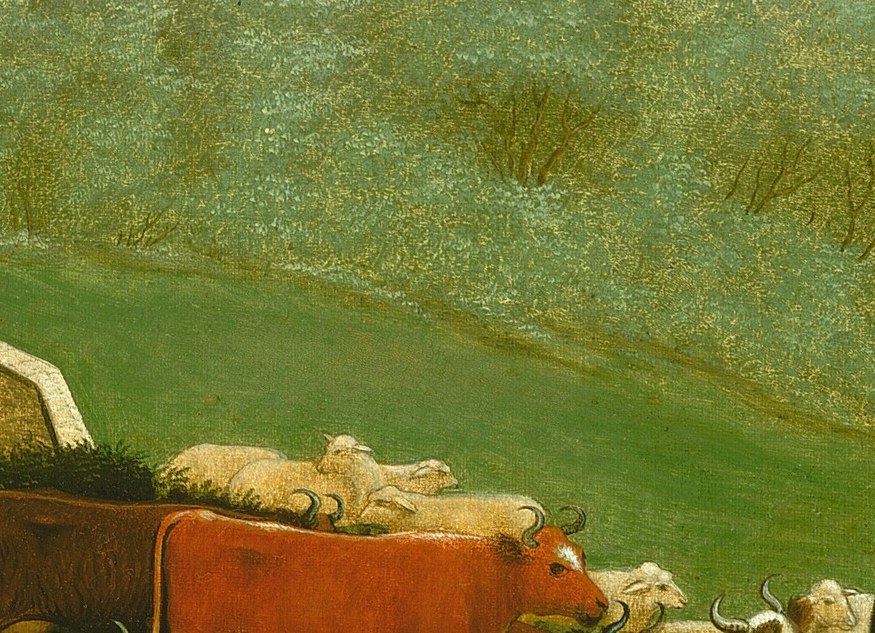
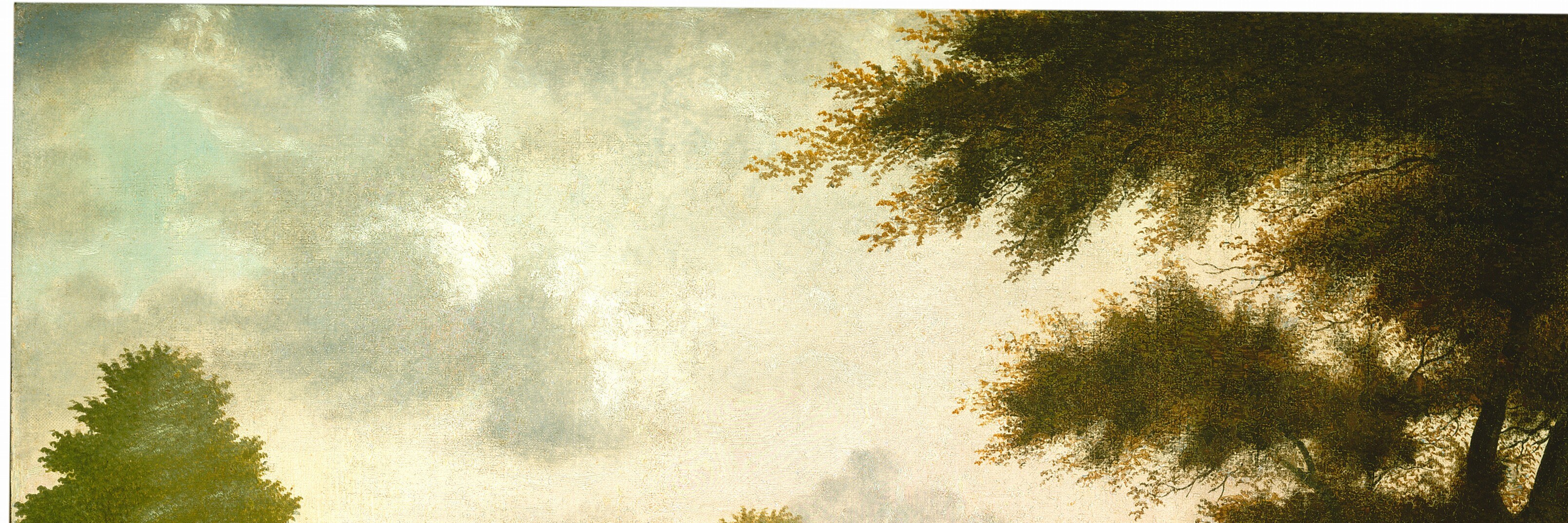
Look closely at how Hicks, a Quaker minister himself, uses elements like the neat fence, the productive cattle, and Penn's modest gravestone to convey principles of order, stewardship, and humility. The glowing sky bathes the scene in a divine light, reflecting the spiritual foundation of Penn's colony.
Hicks painted this work late in his career, revisiting themes of peace and religious harmony that were central to his faith. It serves as a contemplative memorial, connecting his spiritual beliefs with the historical foundations of the Quaker community. Penn's advocacy for religious freedom and peaceful treaties were values Hicks deeply admired.
What other subtle details do you notice that might carry a deeper meaning?
Details
Transcript
This painting honors William Penn, founder of Pennsylvania. Penn was a Quaker, and this landscape is rich with Quaker ideals. The simple wooden fence line signals order and stewardship. The grazing cattle represent productive land and peaceful living. His grave marker, small and humble, reflects Quaker modesty. The luminous sky, full of golden light, suggests divine presence. The artist, Edward Hicks, was himself a Quaker minister. He painted this scene as a devotional tribute to Penn's legacy.