Adeline Ravoux by Vincent van Gogh
Vincent van Gogh's "Adeline Ravoux," painted in June 1890, just weeks before his death, is a testament to his distinct impasto technique. This intimate portrait, housed at The Cleveland Museum of Art, captures the daughter of the innkeeper where Van Gogh resided in Auvers-sur-Oise during his final months.
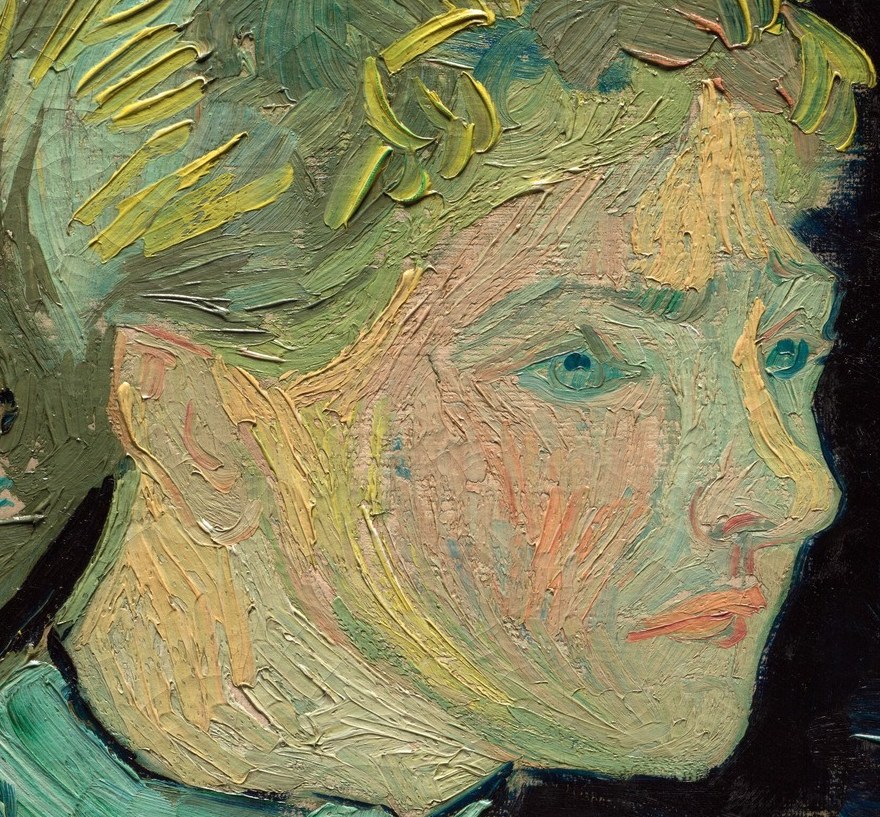
Notice the incredible texture of the paint, particularly on Adeline's cheek, where individual brushstrokes are clearly visible. Van Gogh's technique creates a palpable quality, making the surface of the painting almost sculptural.
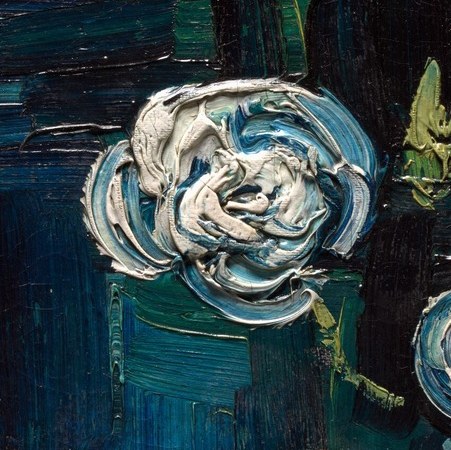
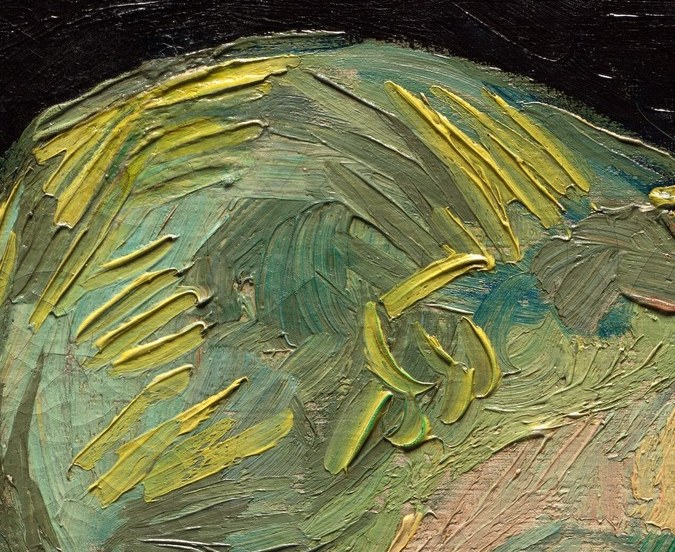
He uses this same bold, thick application of oil paint for the vibrant white roses and to sculpt the wreath in her hair. This approach transforms the paint itself into a dynamic, three-dimensional element.
This painting offers a unique glimpse into Van Gogh's late period, where even in more subdued works, his powerful and expressive brushwork remained central to his artistic vision. What details do you find most striking?
Details
Transcript
This portrait was painted weeks before the artist died. He was staying at Adeline Ravoux's father's inn. Look at the texture on her cheek, visible brushstrokes. He uses thick, vibrant strokes for the white roses. And even thicker paint to sculpt her hair wreath. This is paint as sculpture, built up from the canvas.