The Bay of Naples with Vesuvius and Castel dell'Ovo by Franz Ludwig Catel
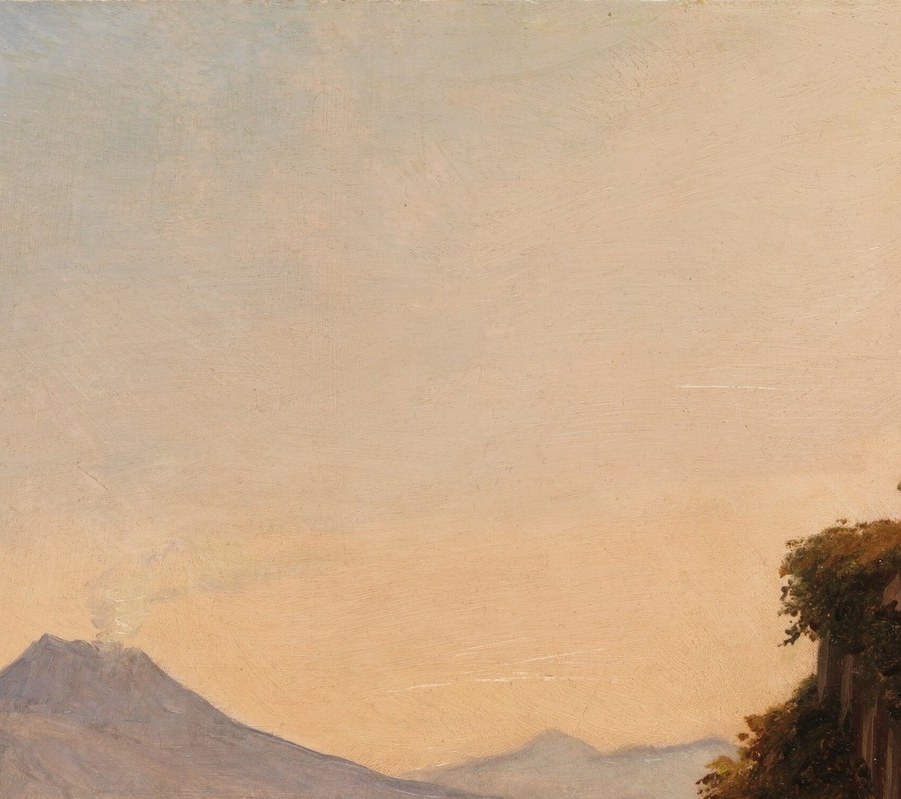
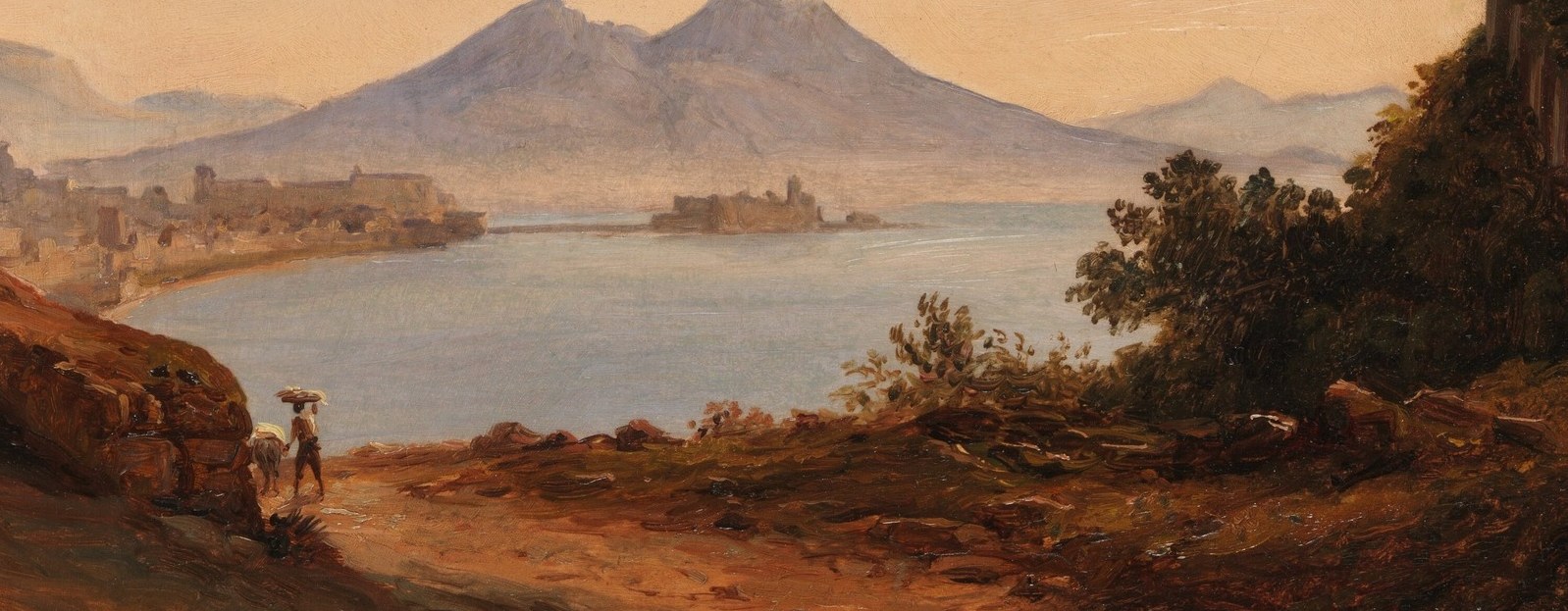
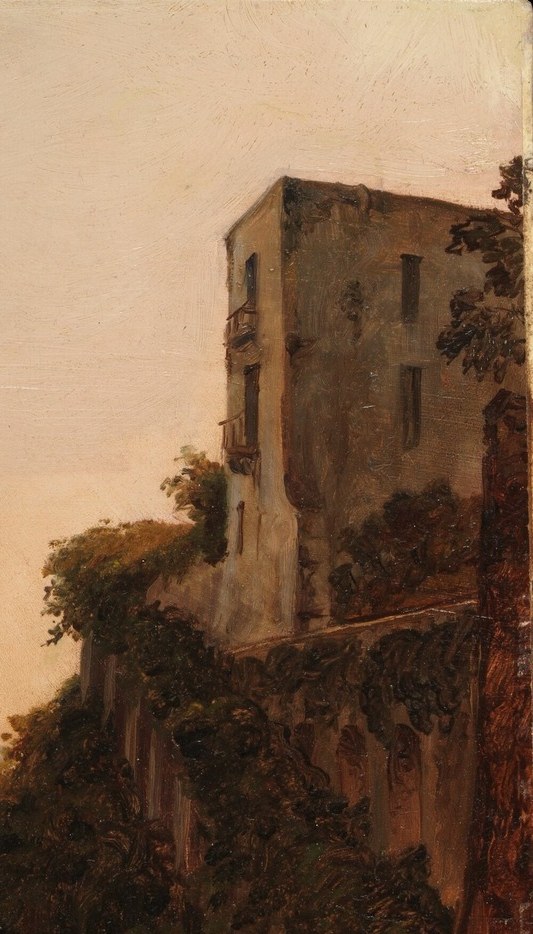
Franz Ludwig Catel painted "The Bay of Naples with Vesuvius and Castel dell'Ovo" in 1819, and it now lives at The Metropolitan Museum of Art. It is the definitive Grand Tour view: Vesuvius looming over the bay, the medieval Castel dell'Ovo on its islet, and an Italian sky that northern painters crossed the Alps to find.
Most eyes land on the volcano and the castle and call it done. But if you follow the coastline as it curves left, dissolving into the pale haze, Catel has placed a tiny reward: the silhouette of a distant city, almost invisible against the water. It is the last stop in a panoramic sweep that carries you from the rough foreground path all the way past the drama.
Catel was a Berlin-born painter who moved to Rome and became a central figure among the German artists working in Italy. They were after something particular: not just topography, but atmosphere. Mediterranean light. The sensation of standing on that rocky path and breathing the air. This painting is less a record of a place than a record of a feeling about a place.
The solitary figure on the foreground path carries a load and gives the vast scene its scale. But the painting's truest secret is its restraint: the bay is still, the sky is soft, and the real subject is the light itself.
Details


Transcript
Naples, 1819. Mount Vesuvius, a quiet threat over the bay. The light is the German fantasy of Italy. Warm, hazy, impossibly calm. Every Grand Tour traveler painted this view. But this painter hid a quiet reward if you follow the far shore. Past the castle, past the volcano. A miniature city sits on the haze.