George Sand's Garden at Nohant by Eugène Delacroix
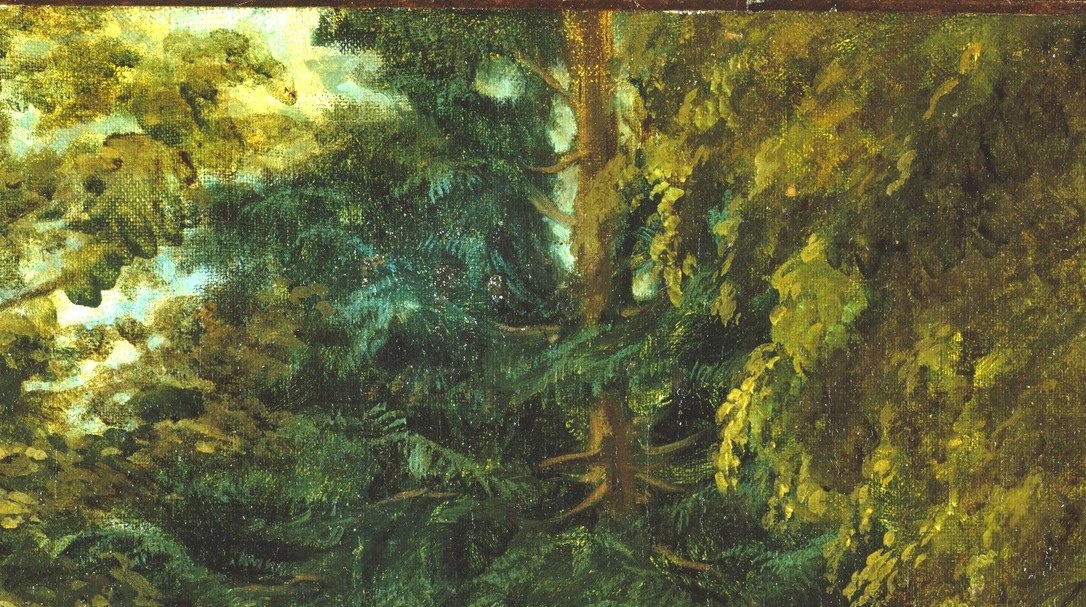
This is George Sand's Garden at Nohant, painted by Eugène Delacroix in 1842 and now held at The Metropolitan Museum of Art. It is a painting that seems to breathe. A casual look suggests a tangle of greenery, but the scene is built on a precise optical trick: a single patch of open sky visible through the canopy makes every other stroke of light feel true.
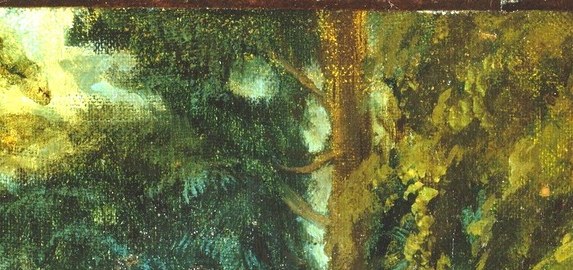
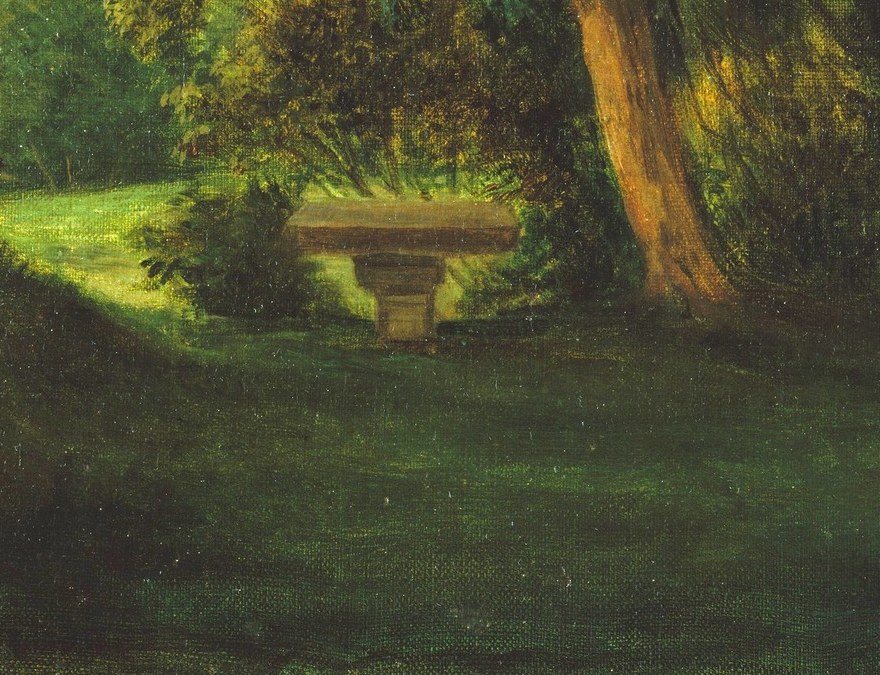
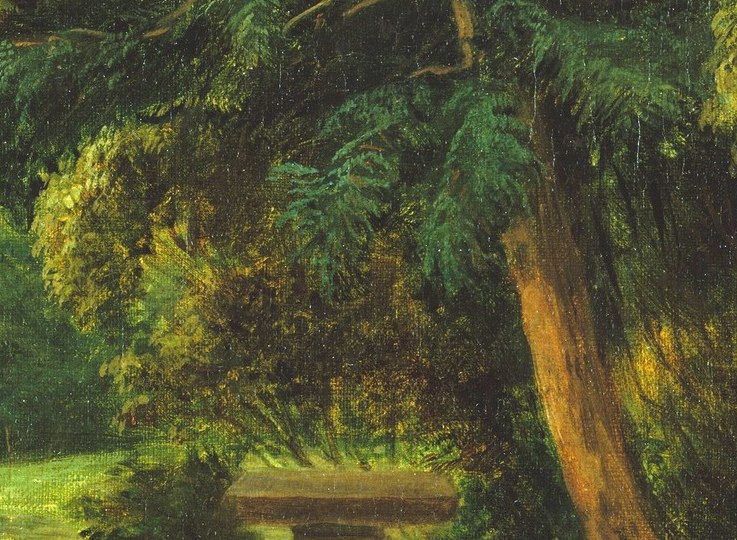
Look first at that small sky gap near the upper center. It is a quiet, factual anchor. Then drop your eye to the sunlit grass clearing directly below it. The warmth flooding that lawn is not a local green, it is a constructed temperature shift, warm yellows and lime notes that vibrate against the deep surrounding shadows. Delacroix loaded a dry brush and laid those highlights in a few confident strokes.
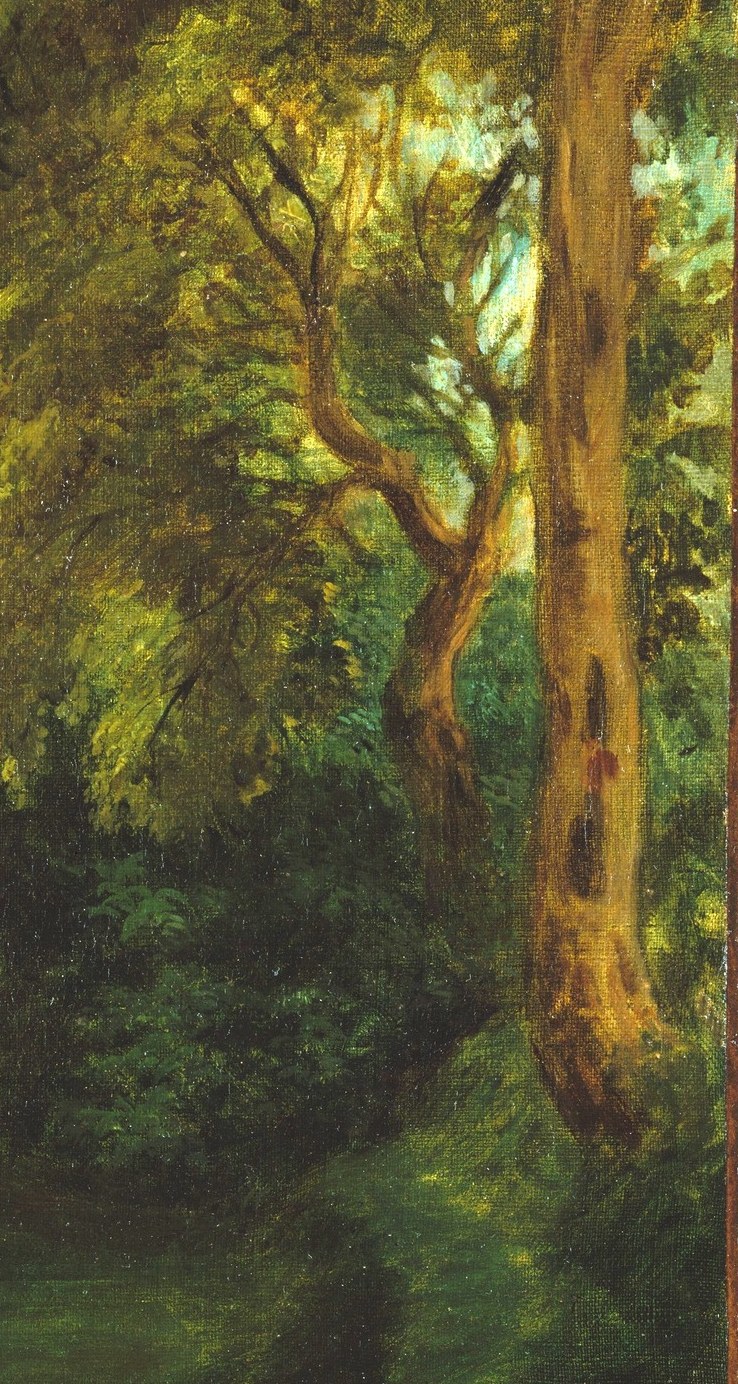
The dark forest mass on the right is its counterweight, painted wet-on-wet so the greens bleed into each other without sharp edges. This is the Venetian method Delacroix studied in Rubens: depth made by color temperature, not by outline. The shadowed middle ground between the foreground darkness and the bright clearing creates a three-zone recession that makes a small canvas feel deep.
Delacroix painted this garden while staying with the writer George Sand at her country house in Nohant. He was not documenting a famous estate; he was recording how light fell through leaves on a particular afternoon. The Romantic love of nature is here, but so is the cold, clear technique Baudelaire described: passionately in love with passion, but determined to express it with total control.
Details
Transcript
It looks like a tangled thicket. Now watch the sunlight break through. A single patch of sky anchors the whole painting. Without it, that warm glow on the grass makes no sense. He painted the light with a few loaded strokes of a dry brush. The dark forest is laid in wet-on-wet, one color dragged into another. Depth isn't drawn. It's made from three zones of light.