Madonna and Child by Vincenzo Foppa
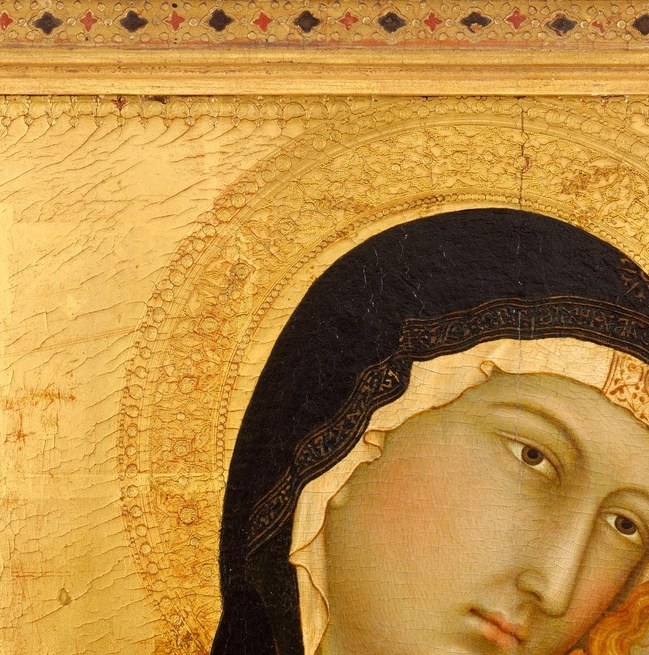
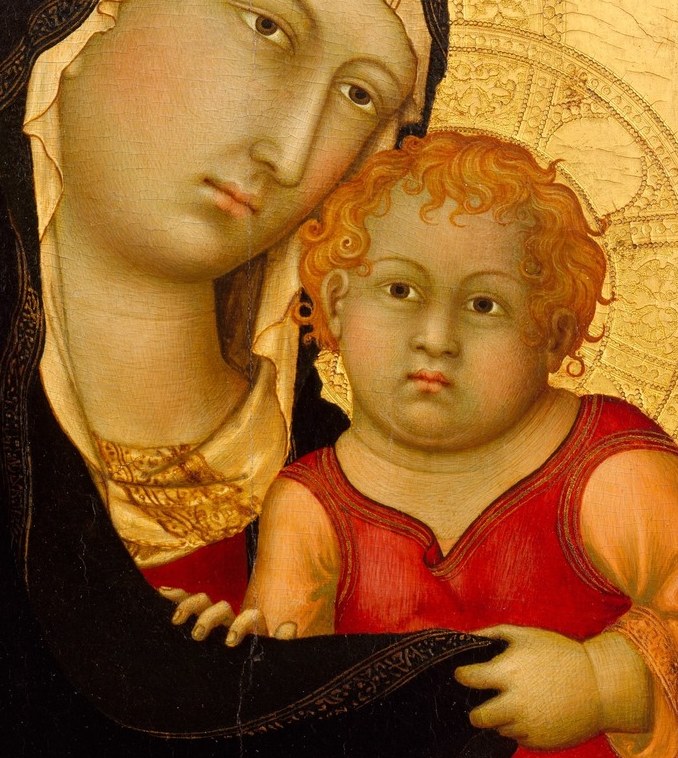
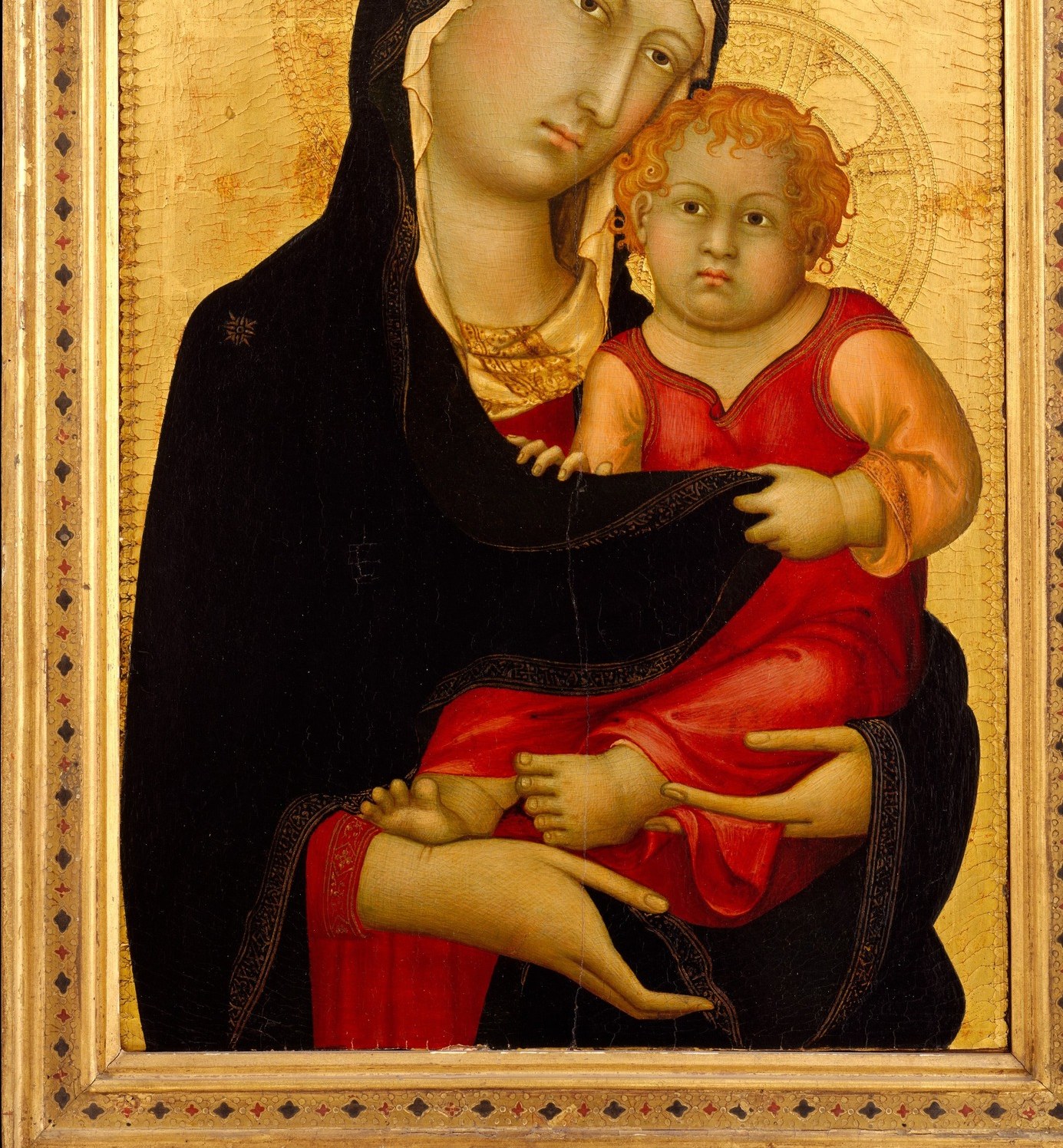
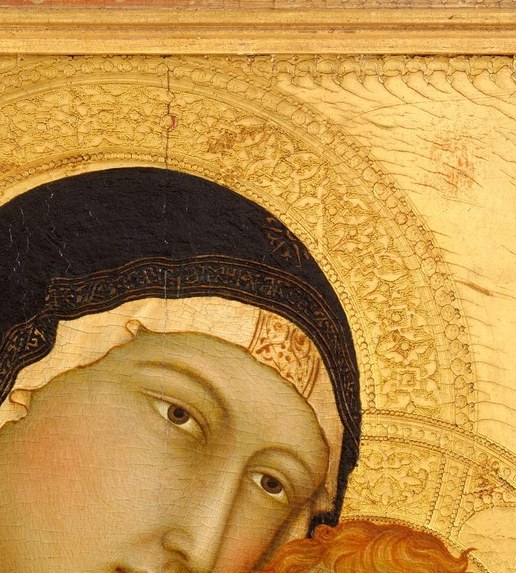
This is Vincenzo Foppa's Madonna and Child, painted around 1490 and now in the collection of The Metropolitan Museum of Art. It looks at first like a simple, tender image of motherhood. But Foppa, the leading painter of the Early Lombard School, built the picture on a kind of visual code. Every object in the frame carries a double meaning that a 15th-century viewer would have recognized immediately.
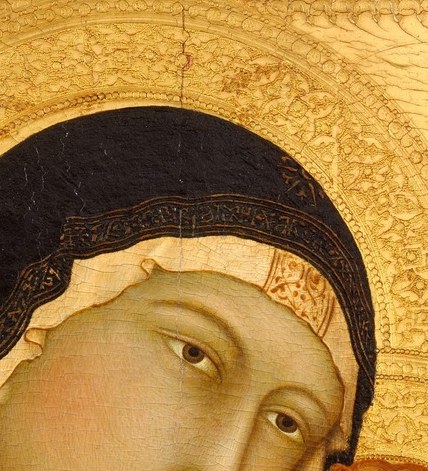
Look at the red of Mary's mantle. Vermillion fills nearly two-thirds of the panel, and in devotional art red is the color of the Passion, the suffering Christ will endure. The thin white swaddling wrapped around the child is creased and wrapped exactly like a burial shroud. Even the faces work this way: Mary's averted, heavy-lidded gaze was read as foreknowledge of grief, not simple tenderness. Every comfort in the picture is shadowed by what comes next.
Vincenzo Foppa was born in Brescia around 1427 and worked for the powerful Sforza court in Pavia. He was the preeminent painter of the Lombard school, and his work is distinguished by an austere restraint, deep shadow, stark silhouettes, and an emotional weight that sets him apart from the more ornate Florentine painters of the same period. Few of his paintings survive, which makes this panel especially important.
The code adds up to a single idea: that Christ's birth and his death are the same story, told in the same body. Foppa gives you a mother holding an infant. He trusts you to see the rest.
Details
Transcript
She looks away, already knowing. Her red mantle fills the panel. A signal of the Passion. The child's swaddling is wrapped like a burial cloth. Devotional painters encoded death within birth. It was a feature, not a flaw. Human need, pressed into a mother's cheek. Foppa built this tenderness on a theological trapdoor. Every comfort here prefigures a loss.