A Roman Landscape with Figures by Goffredo Wals
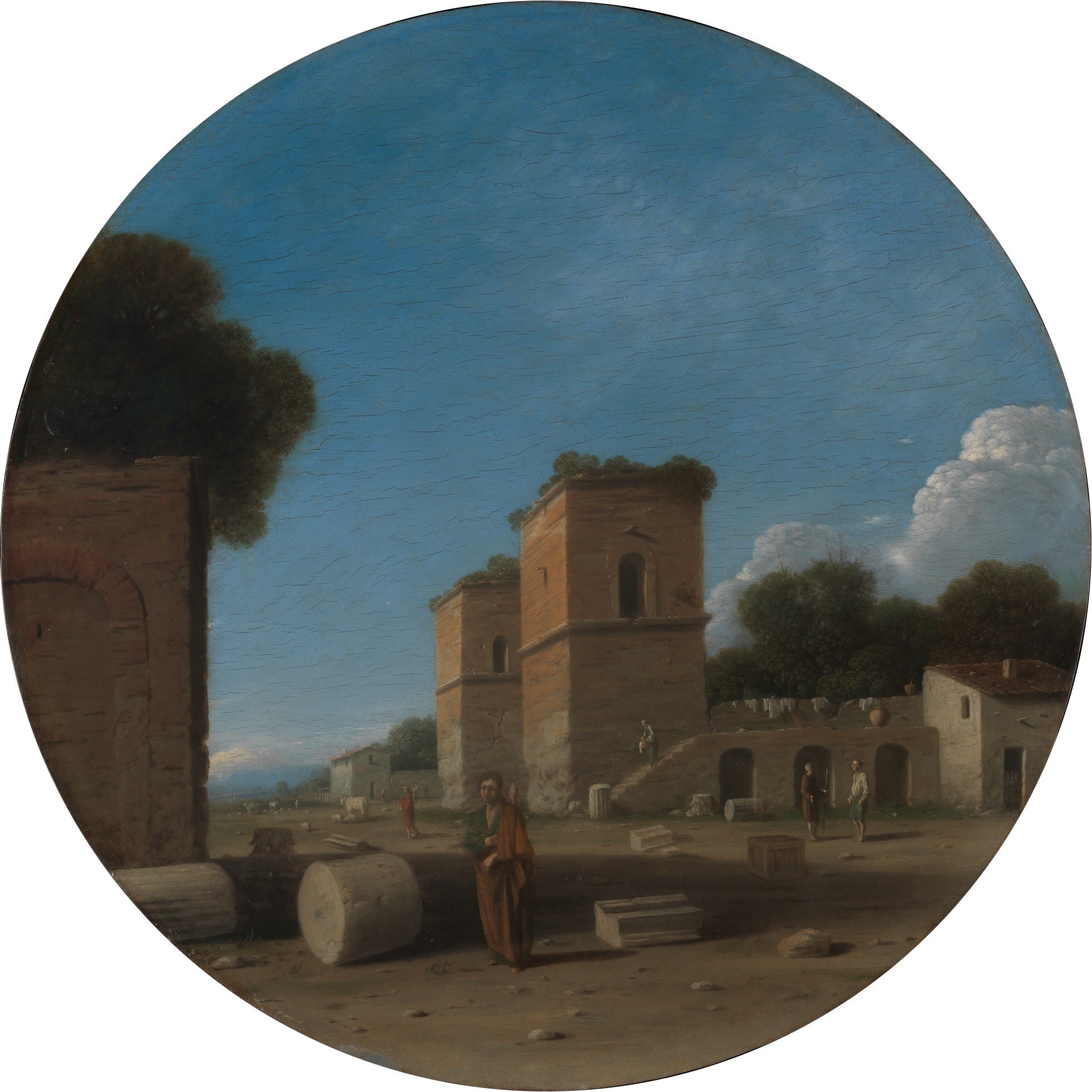
This is A Roman Landscape with Figures, painted by the German artist Goffredo Wals in 1630 on a sheet of copper. It lives at The Metropolitan Museum of Art. It looks like a quiet souvenir of the Roman campagna, but it is actually a Baroque sermon. Every ruin, every shoot of wild grass, is a word in a visual language its first owner would have recognized immediately.
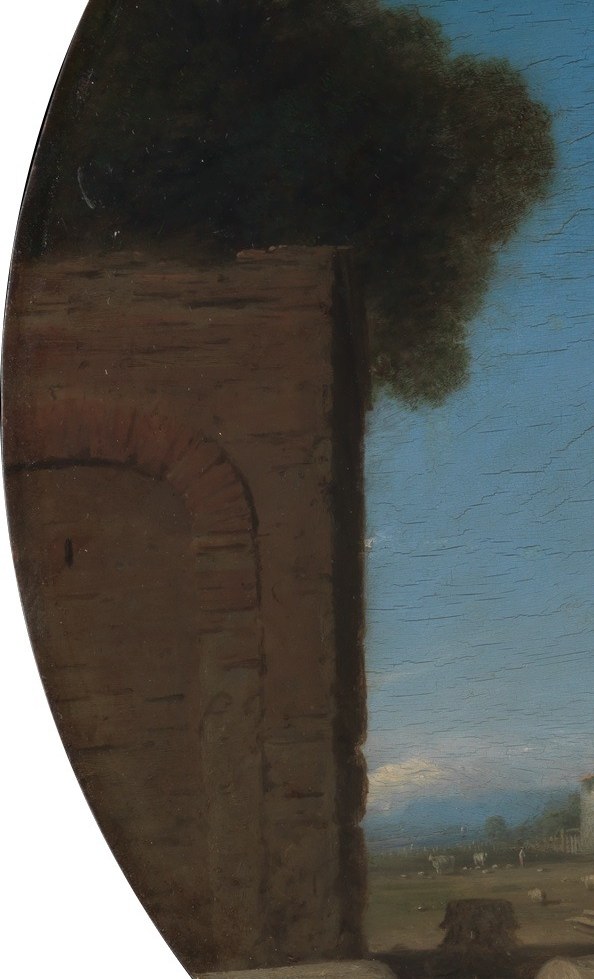
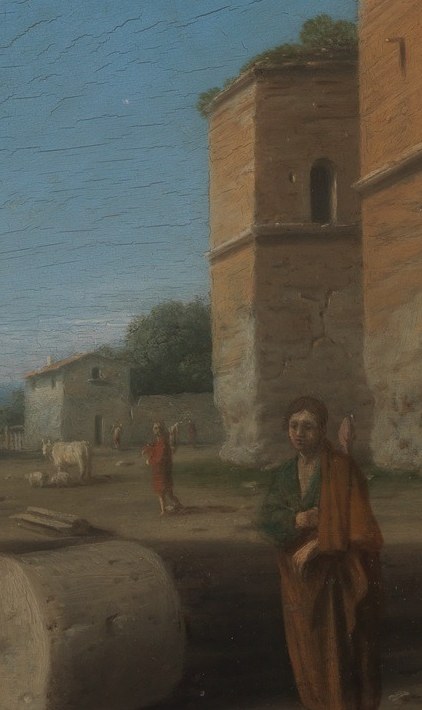
Find the figure in the red robe. He is the only warm, living chromatic accent in the whole circular panel. Then let your eye drift up the brick tower at center: scrubby weeds are colonizing the masonry. The left edge of the picture is a wall that has already collapsed. This is not architectural reportage. Wals is building a vanitas in the landscape genre, meditating on what outlasts us and what does not.
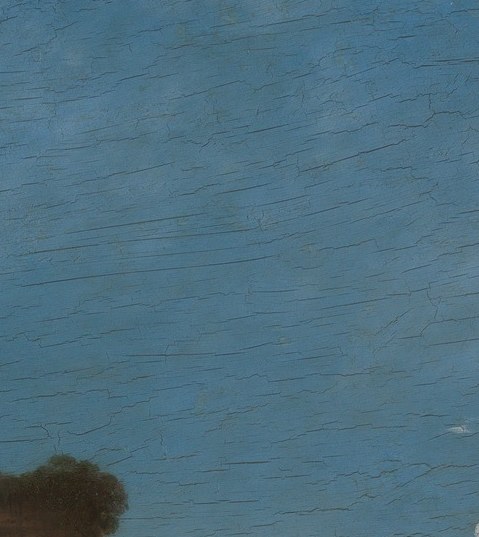
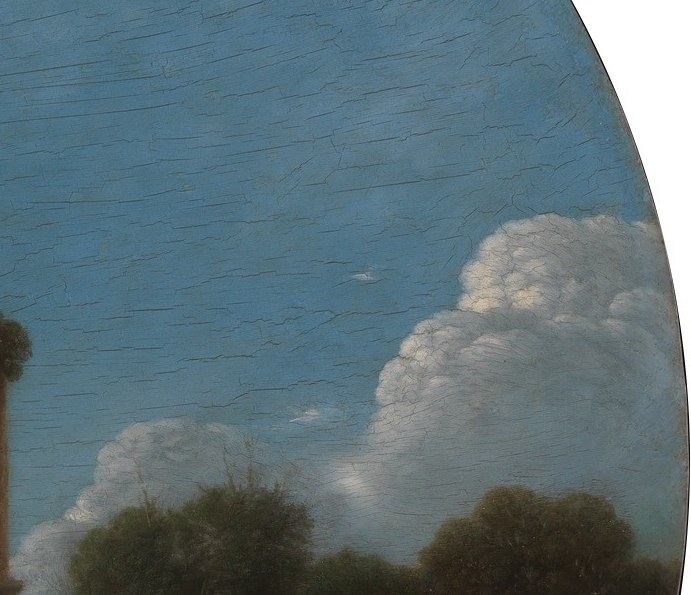
Wals was a German who worked almost entirely in Italy, part of a circle of northern painters drawn to Rome's ruins and light. Copper was a prized support because its smooth, non-absorbent surface let artists keep paint workable for luminous skies and crisp detail; you can see it in the sharp cloud edges and the tiny white town half-hidden on the distant hillside. The tondo format underlines the intimacy: this was a collector's object meant to be held and decoded, not hung on a church wall.
Every monument in the painting is already returning to the earth. The lone figure in red is the only thing that does not belong to the stone. Wals does not preach loudly; he just points, and waits.
Details
Transcript
On the face of it, a traveler rests in the Roman sun. But the year is 1630. The Baroque knows nothing rests. The tower still stands, but weeds are eating it alive. Every stone on the left has already fallen. These are not just ruins. They are an argument. Empire, masonry, pride: all of it crumbles back into the hill. Only this moment holds. A figure in red, between what was and what will be gone.