Militia Company of District VIII under the Command of Captain Roelof Bicker by Bartholomeus van der Helst
Painted in 1641, Bartholomeus van der Helst's 'Militia Company of District VIII under the Command of Captain Roelof Bicker' is a significant example of Dutch Golden Age group portraiture, held at the Rijksmuseum.
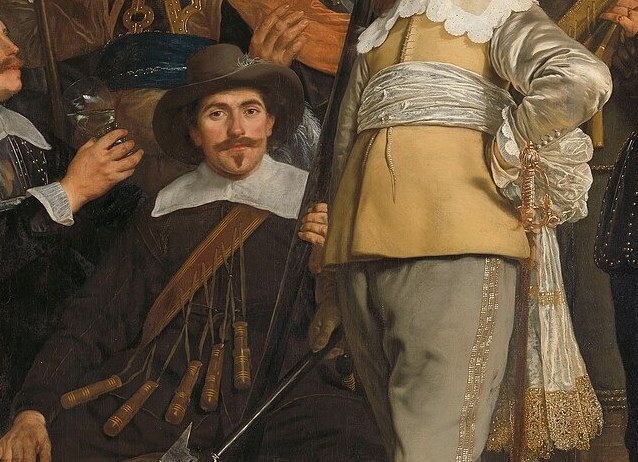
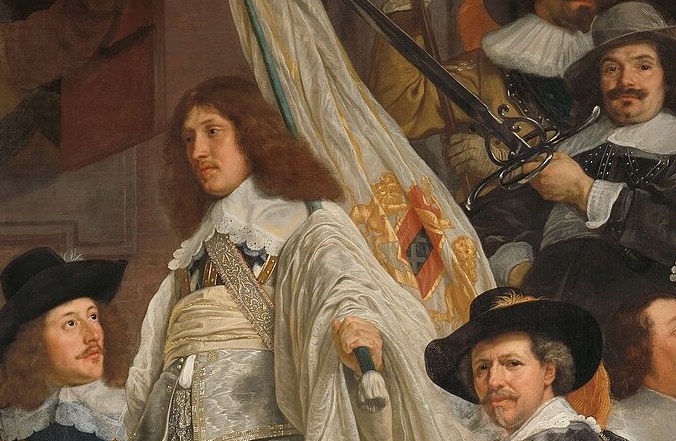
This grand painting captures a formal gathering of Amsterdam's civic militia, with each man having paid for his inclusion. Look closely for the artist himself, subtly placed within the group, making eye contact with the viewer. Van der Helst's meticulous attention to detail is evident in the elaborate 17th-century attire, from ruffled collars to delicate lace cuffs.
During the Dutch Golden Age, civic militias played a crucial role in maintaining order and symbolizing the city's prosperity. Van der Helst, a leading portrait painter of his time, was celebrated for his elegant style, securing commissions from Amsterdam's elite. This work not only documents a specific moment but also reflects the vibrant civic culture of the period.
What details do you find most striking in their formal presentation?
Details
Transcript
This large painting shows a 17th-century Dutch militia. Each man paid for his place in the portrait. The artist also included himself, looking out at us. His detailed work captured every rich texture and fabric. These civic militias maintained order in Amsterdam. They were an important part of the Dutch Golden Age.