The Virgin of Carmen and the Souls of Purgatory with St. Joseph and the Prophet Elijah by Juan Francisco de Aguilera
This is The Virgin of Carmen and the Souls of Purgatory with St. Joseph and the Prophet Elijah, painted in 1720 by the Mexican Baroque artist Juan Francisco de Aguilera. It lives at the Museo Nacional de Arte in Mexico City. The painting is a single doctrinal argument made fully visible: a brown scapular and a human hand, and this is how salvation works.
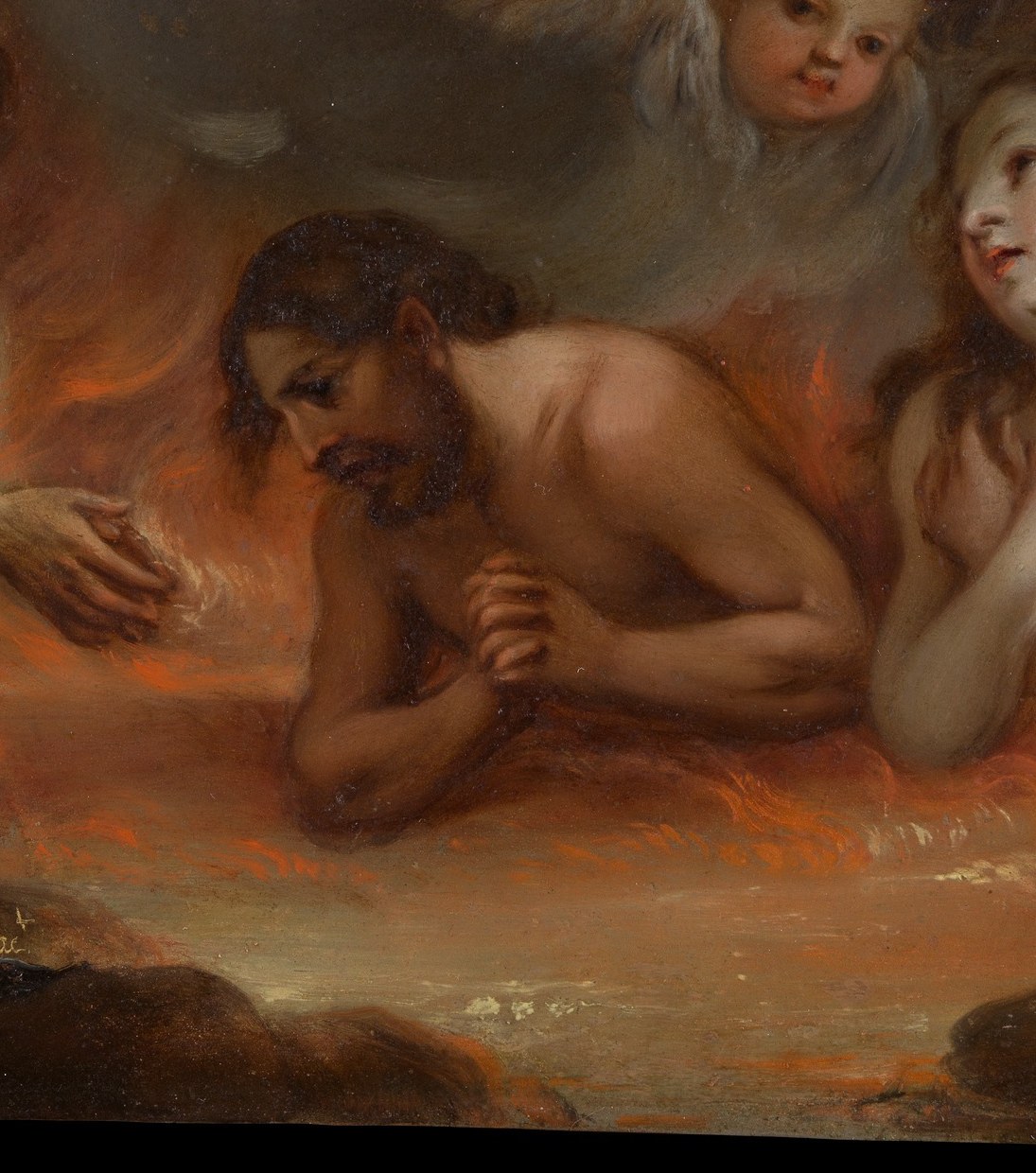
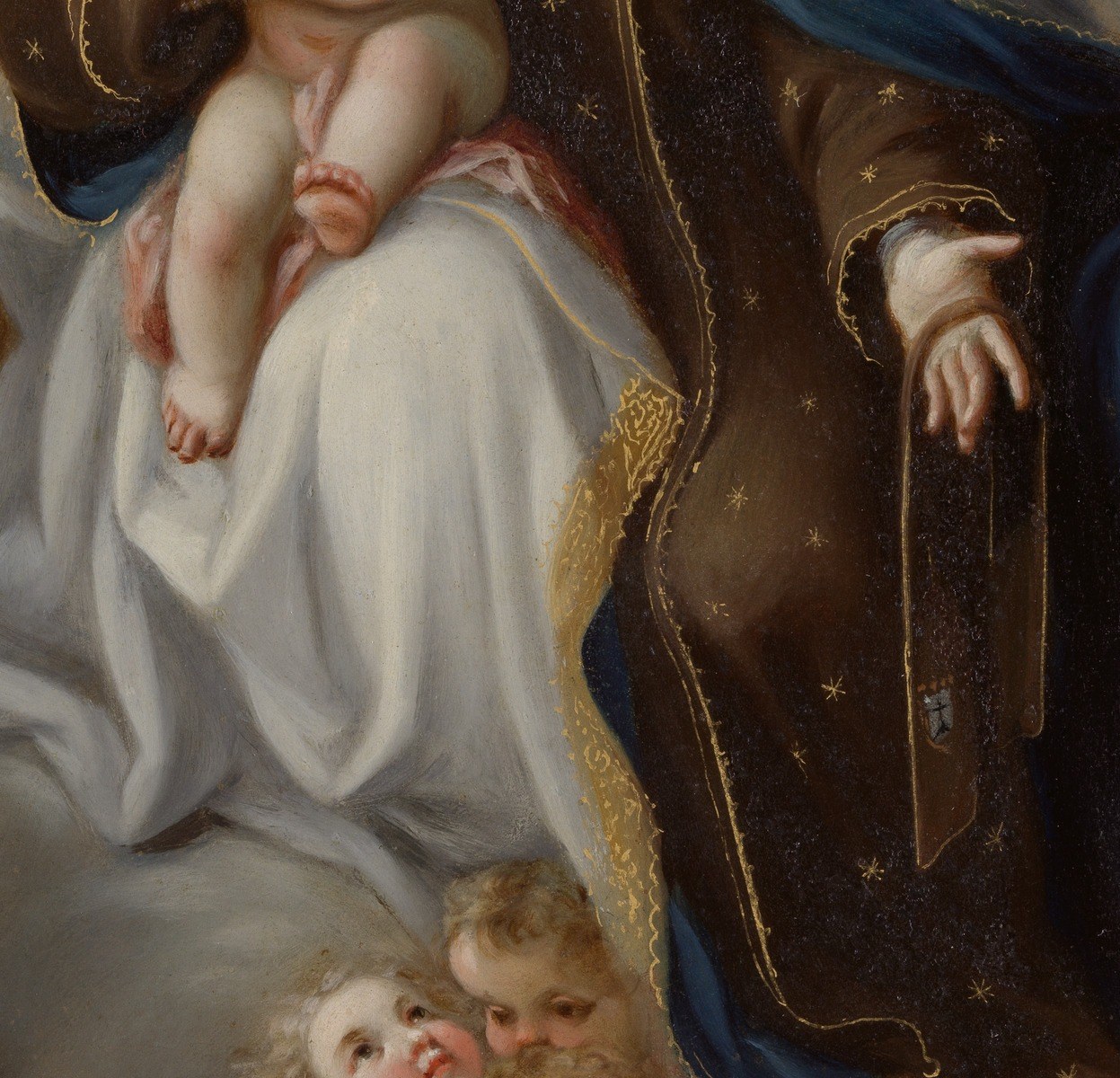
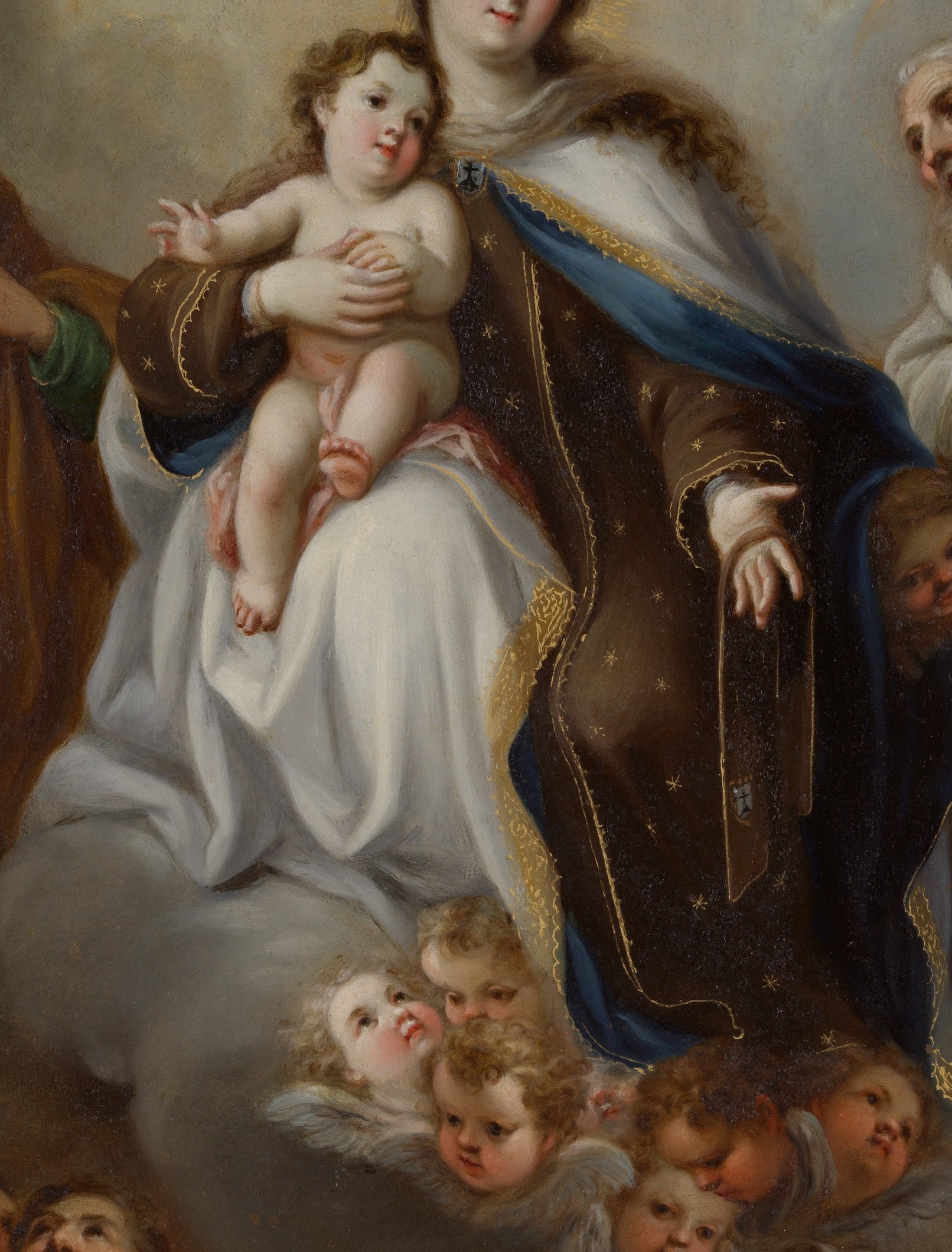
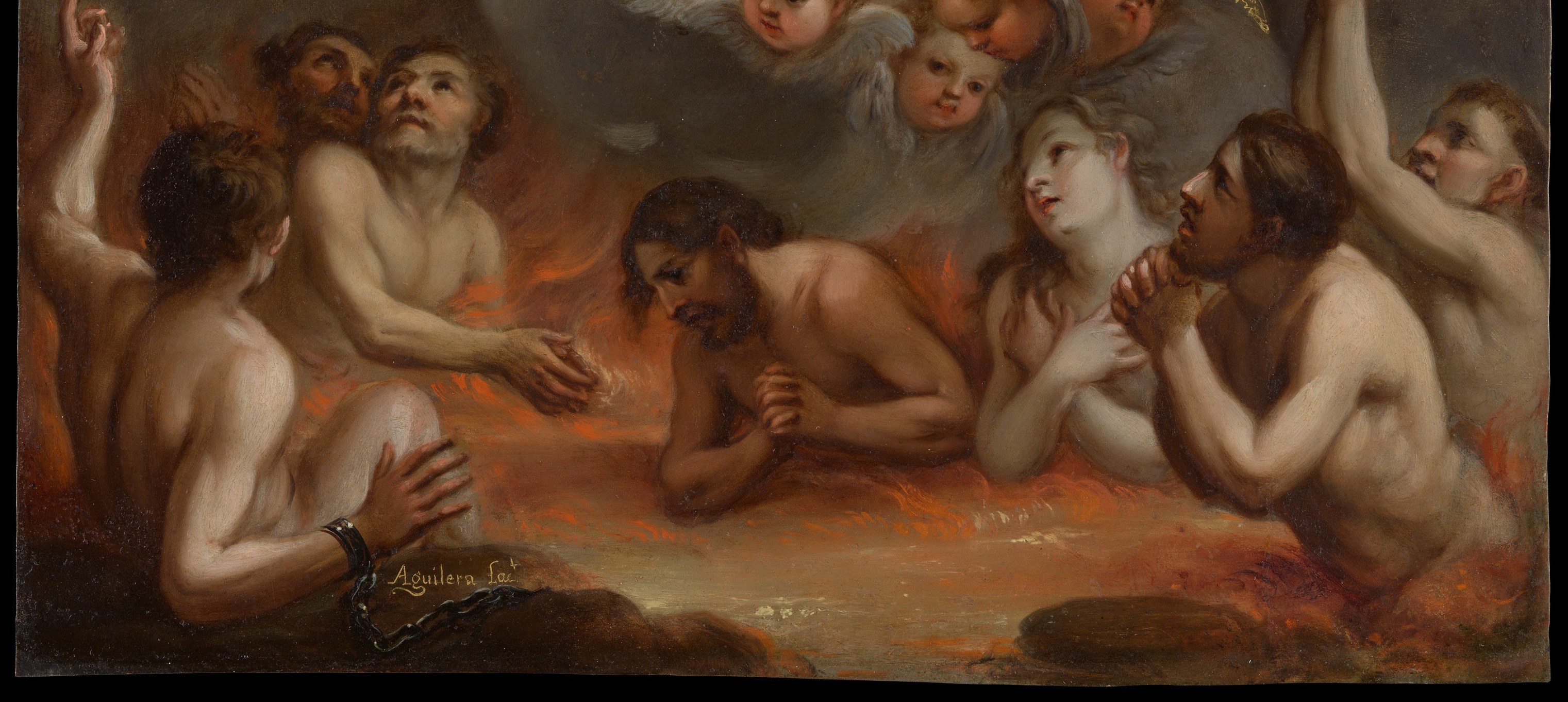
Follow the vertical axis from the bottom to the center of the canvas. One soul, the most prominent figure in the lower register, does not look up at the Virgin’s serene face. His gaze and his open hand are fixed on the small brown scapular she lowers toward him. The Carmelite order taught that wearing this cloth was a guarantee of the Virgin’s protection at the hour of death. Aguilera makes the promise legible as a physical exchange.
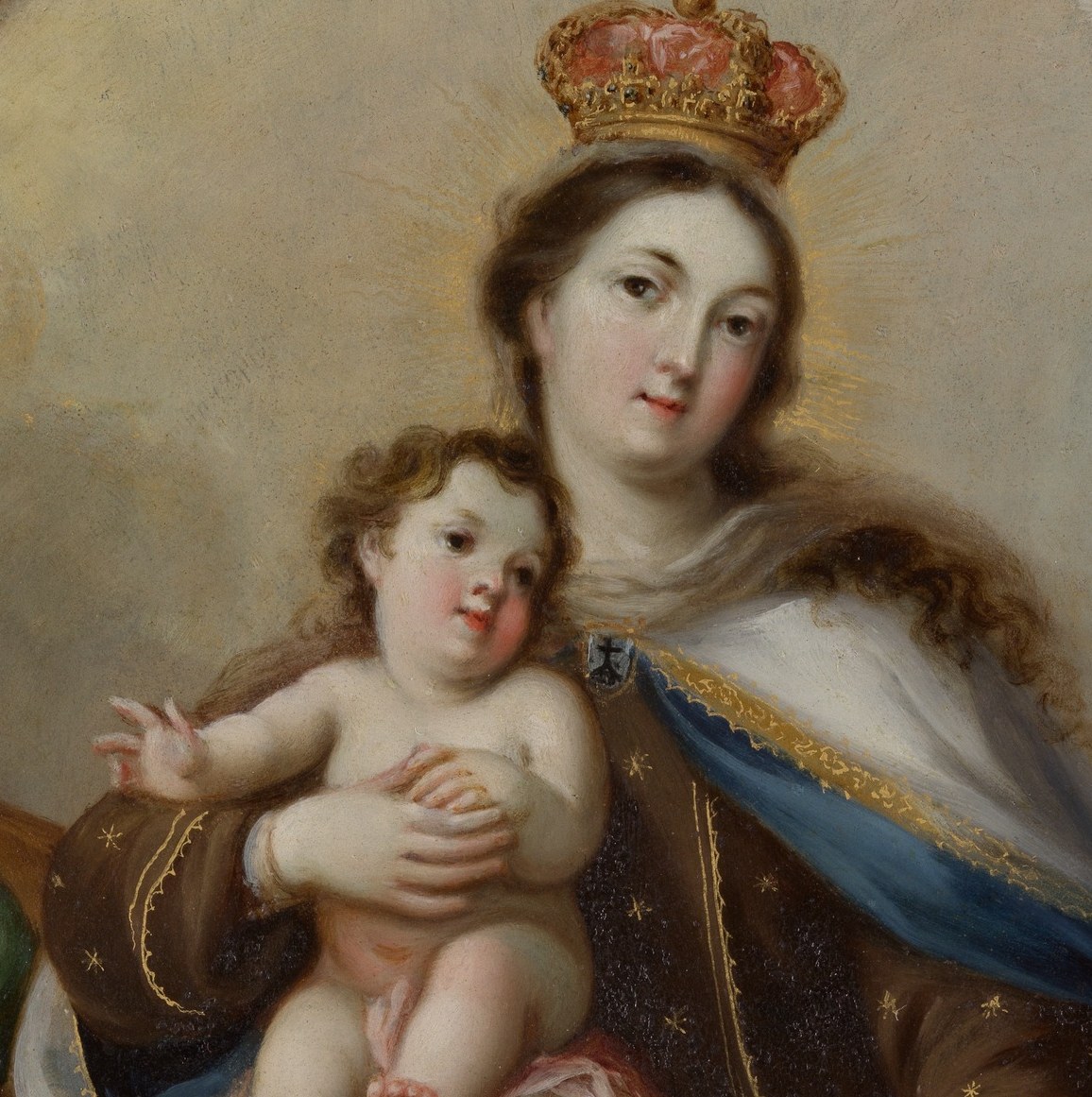
The Virgin of Carmen is depicted as Queen of Heaven, crowned in gold, standing on a living throne of cherub bodies rather than a painted cloud. She is flanked by St. Joseph on the left and the Prophet Elijah on the right, Elijah being the founding patriarch of the Carmelite order, whose presence anchors the entire apparition in Old Testament legitimacy. Below, the crowd of souls holds anguish and hope in a single posture, and the camera can find individual faces among them that reward slow attention.
Aguilera was one of the leading painters of New Spain in the early eighteenth century, working in a Baroque idiom that used strong chiaroscuro to divide the canvas into distinct realms of light and darkness. Here the light is not just theatrical. It is argument. The scapular is the brightest object in the lower half of the painting. Everything else waits in shadow.
Details
Transcript
They are waiting in darkness. Catholic teaching called it Purgatory, a state of painful longing. This man is not looking at the Virgin's face. He is looking at this. A brown cloth on a cord. The Carmelite order promised: anyone who wears the scapular will be released. The painter, Juan Francisco de Aguilera, built the entire composition on that transaction. Object descending, hand ascending. The promise in paint.