Amédée-David, the Comte de Pastoret by Jean Auguste Dominique Ingres
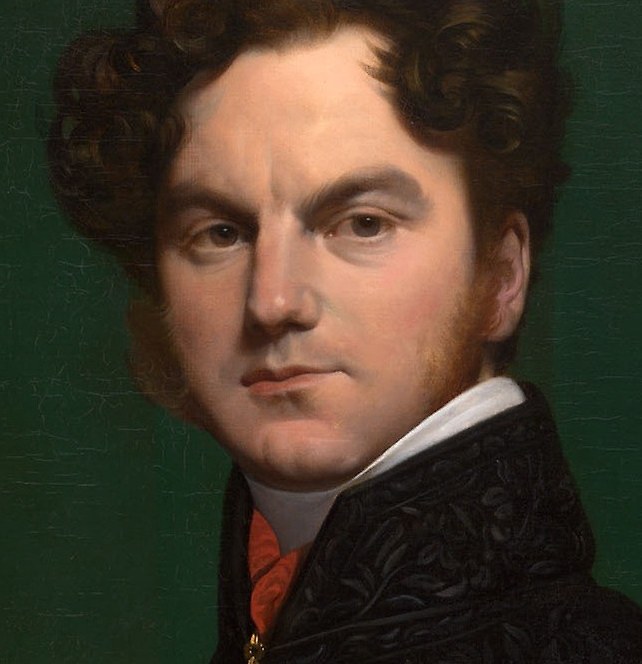
Jean-Auguste-Dominique Ingres's 1823 portrait, "Amédée-David, the Comte de Pastoret," at the Art Institute of Chicago, captures a powerful French statesman in all his dignity. The painting shows Amédée-David, a lawyer and government advisor, at 32 years old, adorned with symbols of his high status.
Notice the prominent Legion of Honor medal on his chest and the ornate hilt of his sword, both signifying his authority and achievements. Even the subtle details, like the inscription on the book spine, hint at his intellectual pursuits and his role as a patron of the arts for Ingres.
Despite the sitter's prominence and his close relationship with the artist (Pastoret commissioned several works from Ingres), this portrait, along with another painted in the same year, was not well-received by the public. The critical backlash was so significant that Ingres stopped painting portraits for six years, returning to the genre only in 1832. The painting remained in the Count's family for decades before eventually being acquired by Edgar Degas, and later, the Art Institute of Chicago in 1971.
It's a fascinating look at a moment when even a celebrated artist faced public disapproval. What do you think makes a portrait successful?
Details
Transcript
This is Amédée-David, the Comte de Pastoret, painted in 1823. He was a powerful French statesman, a lawyer and government advisor. His Legion of Honor medal shows his high status. The ornate sword hilt also signals his authority. He was a patron of the arts, commissioning several works from this painter. Yet the public disliked this portrait, and the artist stopped painting them.