Boîte à lait, carafe et bol by Paul Cézanne
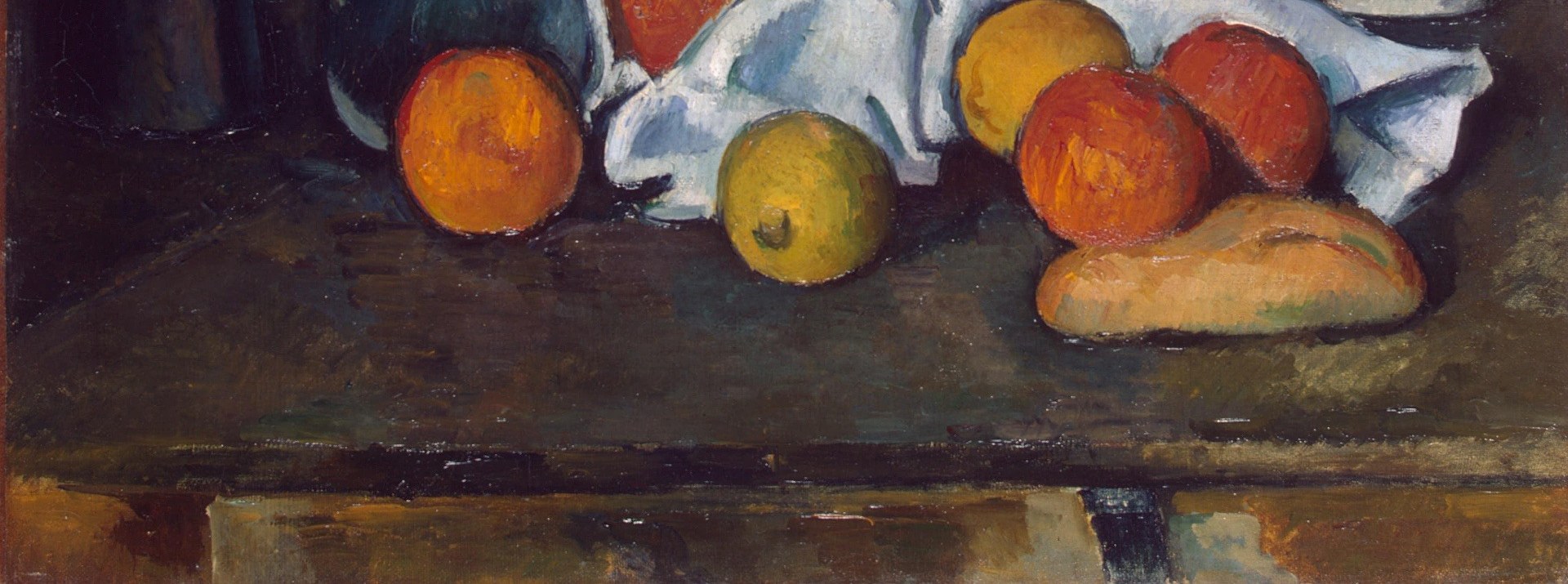
In *Boîte à lait, carafe et bol*, painted around 1890, Paul Cézanne transforms everyday objects into a profound study of form and texture through his revolutionary use of oil paint. This work, held in a private collection, showcases his unique approach to still life.
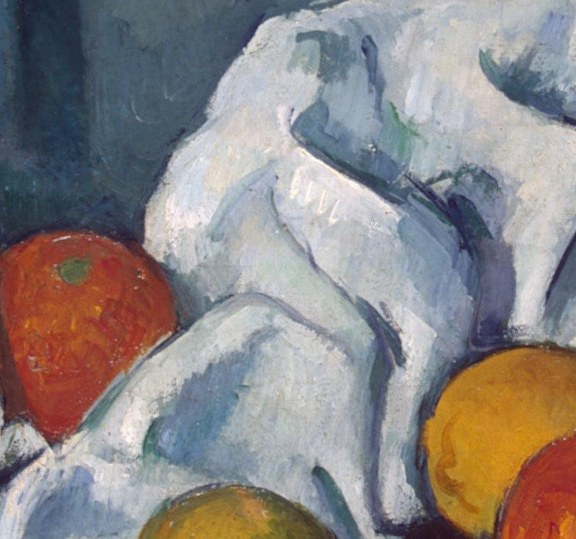
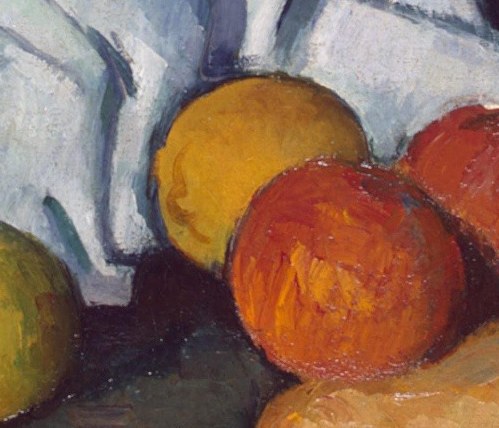
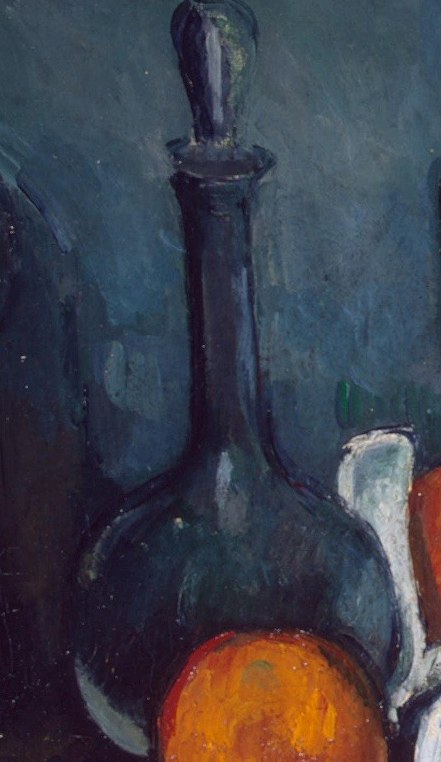
Look closely at how Cézanne uses thick, deliberate brushstrokes to construct the objects. The white cloth draped over the milk pot isn't merely painted; it's built up with paint, giving it a tangible, sculptural presence. This tactile quality is evident across the composition, from the roundness of the oranges to the rough surface of the tabletop.
Cézanne, a pivotal Post-Impressionist, moved beyond simply capturing light. He focused on the underlying structure and volume of his subjects, laying the groundwork for Cubism. His repetitive, exploratory brushstrokes convey an intense study, challenging traditional perspective and emphasizing the formal qualities of art itself.
How does this visible, almost architectural, construction of paint change how you perceive these ordinary objects?
Details

Transcript
This painter explored how paint could build objects. He used thick, tactile brushstrokes to create texture. See how the white cloth feels solid, almost sculptural. These brushstrokes build form, rather than just describe it. His painting technique influenced Cubism a generation later. Every patch of color is a deliberate step in building the surface.