The Spanish Singer by Édouard Manet
View the artwork: The Spanish Singer →
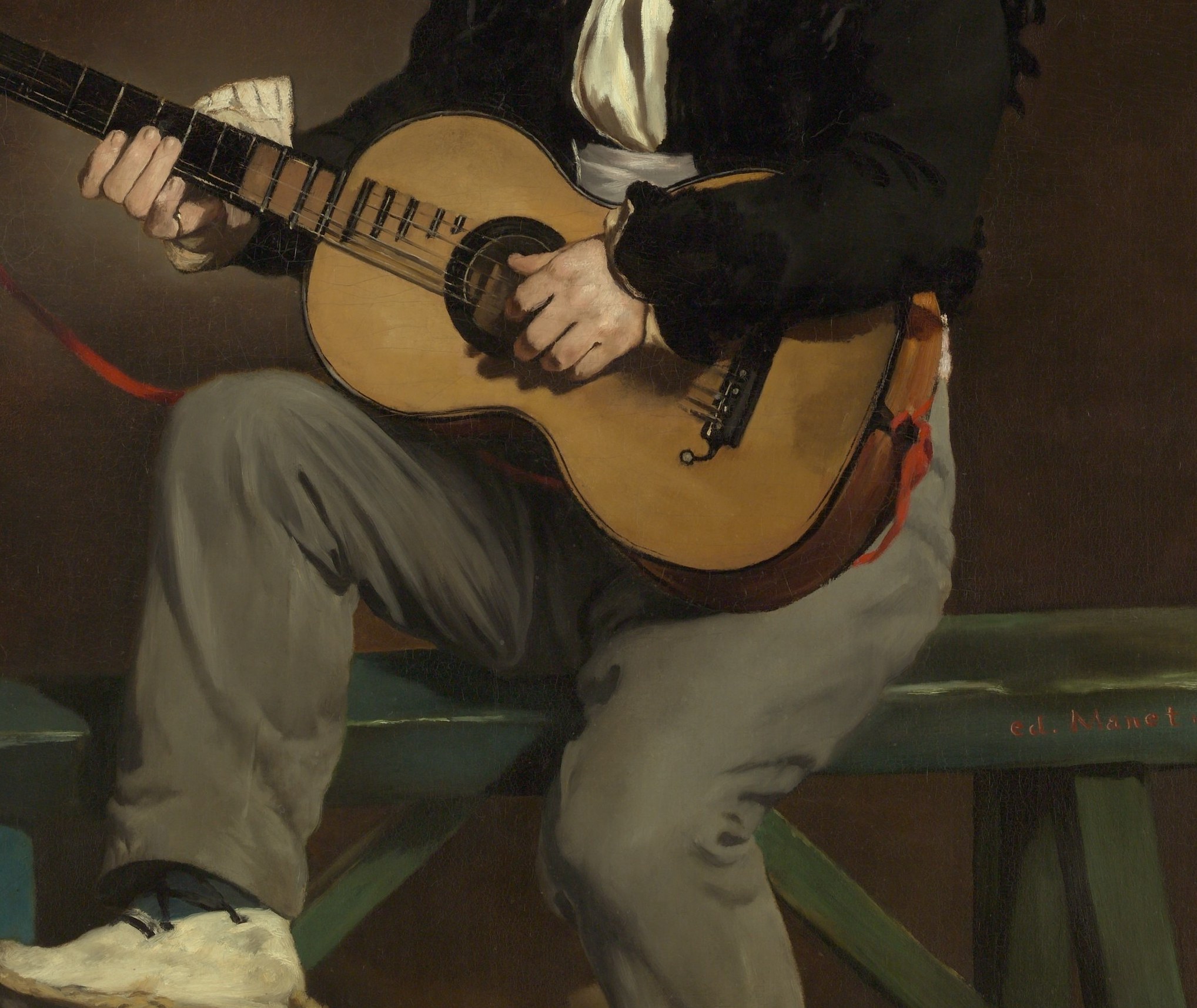
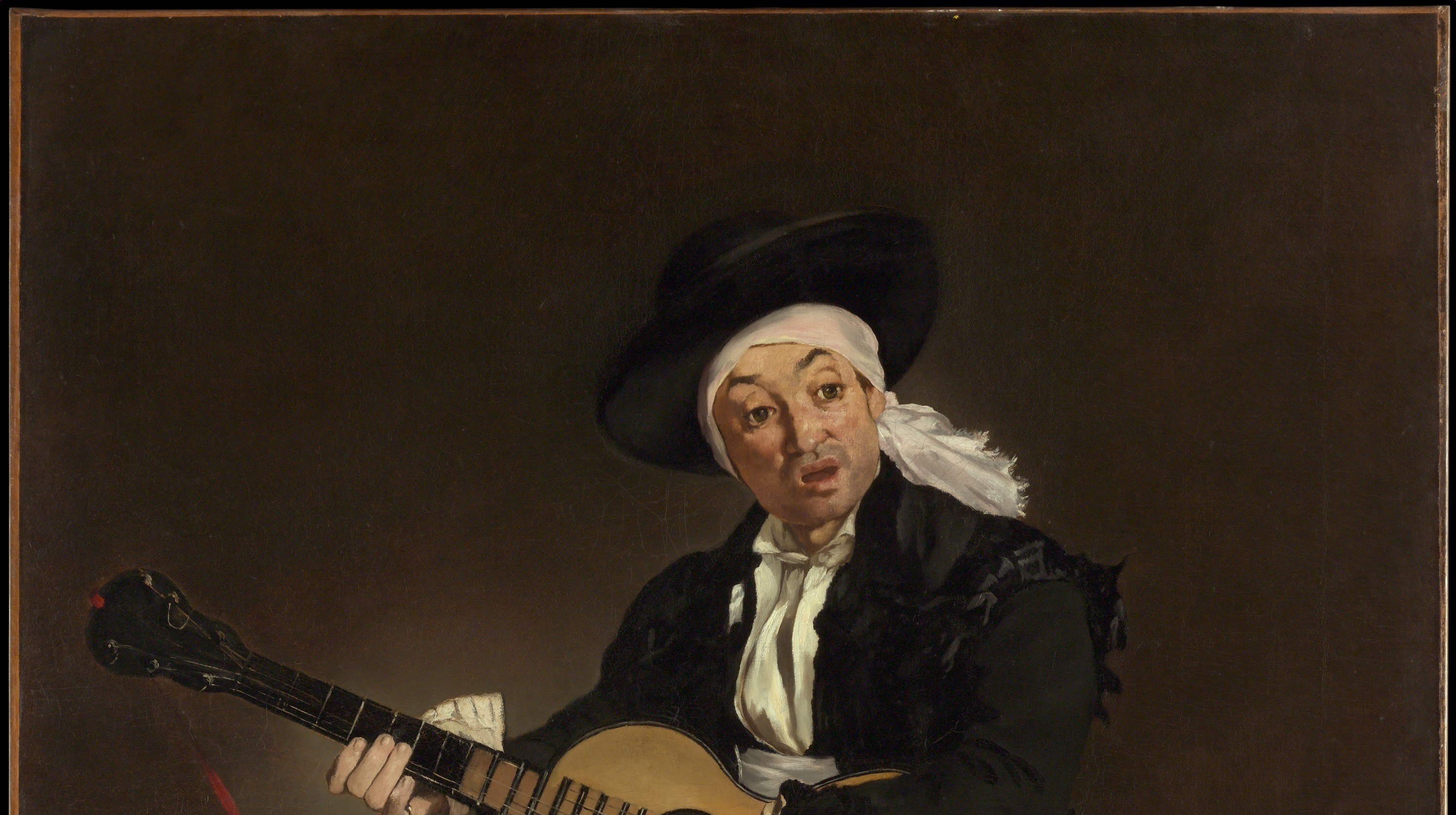
Édouard Manet's 'The Spanish Singer' (1860), at the Metropolitan Museum of Art, is a painting that survived a brutal acid attack. It was the work that first made Manet notorious, accepted into the Paris Salon of 1861 and praised by critics like Théophile Gautier for its 'vigorous brush' and 'very true color'. But the canvas almost didn't make it to New York.
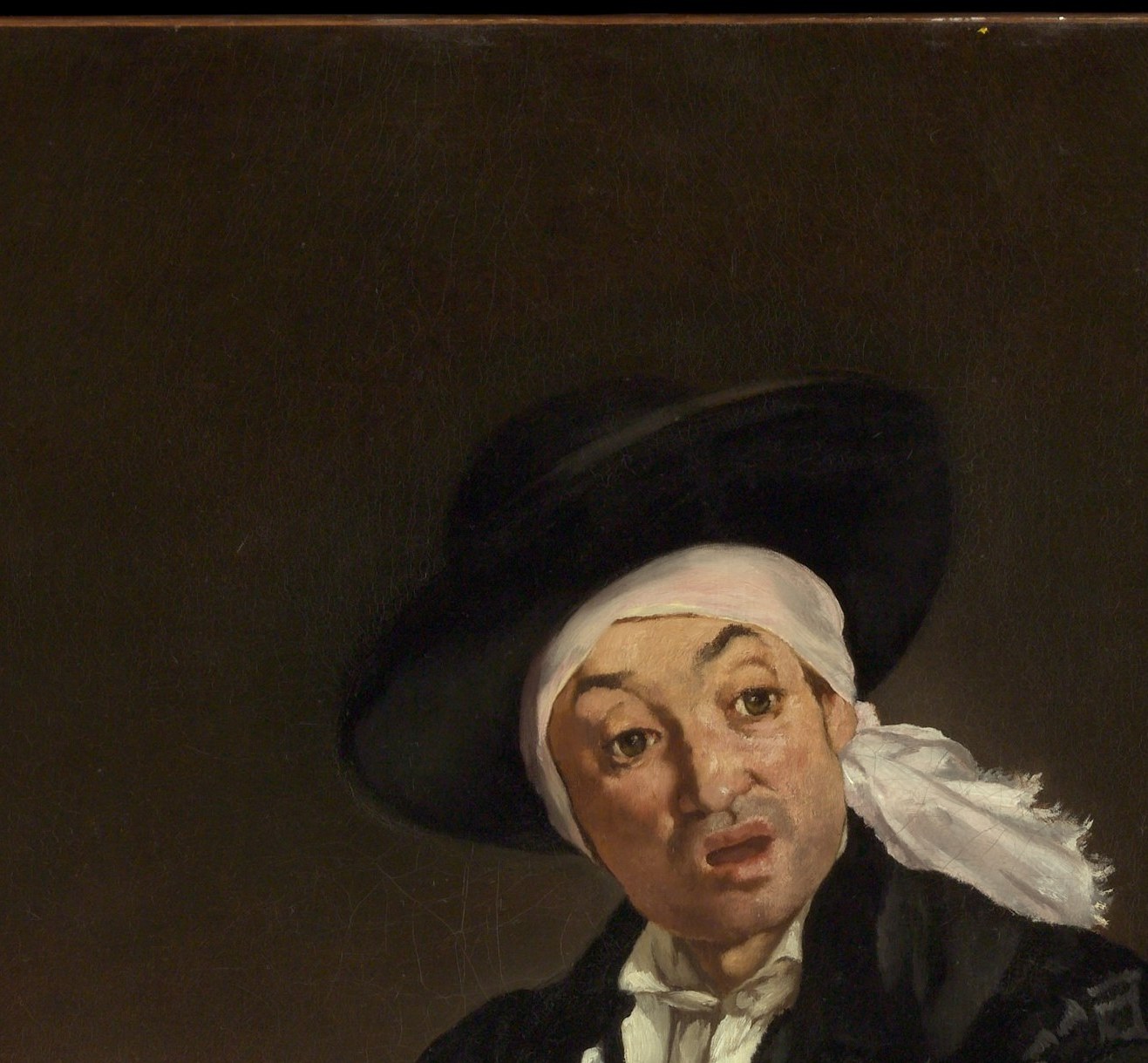
Look closely at the singer's face, specifically the parted lips and upward gaze that capture the instant of performance. The face you see is the work of a skilled restorer. In 1948, a disturbed visitor to the Met threw acid directly at it, melting the paint across the singer's mouth and cheek. The gallery was immediately closed, and for a time, an armed guard stood watch over the damaged work.
Before the acid attack, the painting had already been through a wartime escape. A Jewish collector, having fled Europe, arranged for the canvas to be smuggled out of Nazi-occupied territory. It reached New York, was donated to the Met in 1949, and promptly suffered this further act of violence in its new home.
Months of restoration reconstructed the face, layer by layer. What began as a studio fiction, a Parisian model dressed as a Spanish guitarist, became a document of its own harrowing history, still hanging in the Met's galleries today.
#arthistory #manet #metmuseum
Details
Transcript
In 1861, this painting made a young Parisian notorious. Critics loved the vigorous brush and true color. But Manet had never been to Spain. He built the scene in a Paris studio with props and a model. A century later, a collector smuggled it to safety from the Nazis. In 1948, a visitor at the Met threw acid on the singer's face. The museum closed the gallery and posted an armed guard. A restorer spent months rebuilding the face you see now.