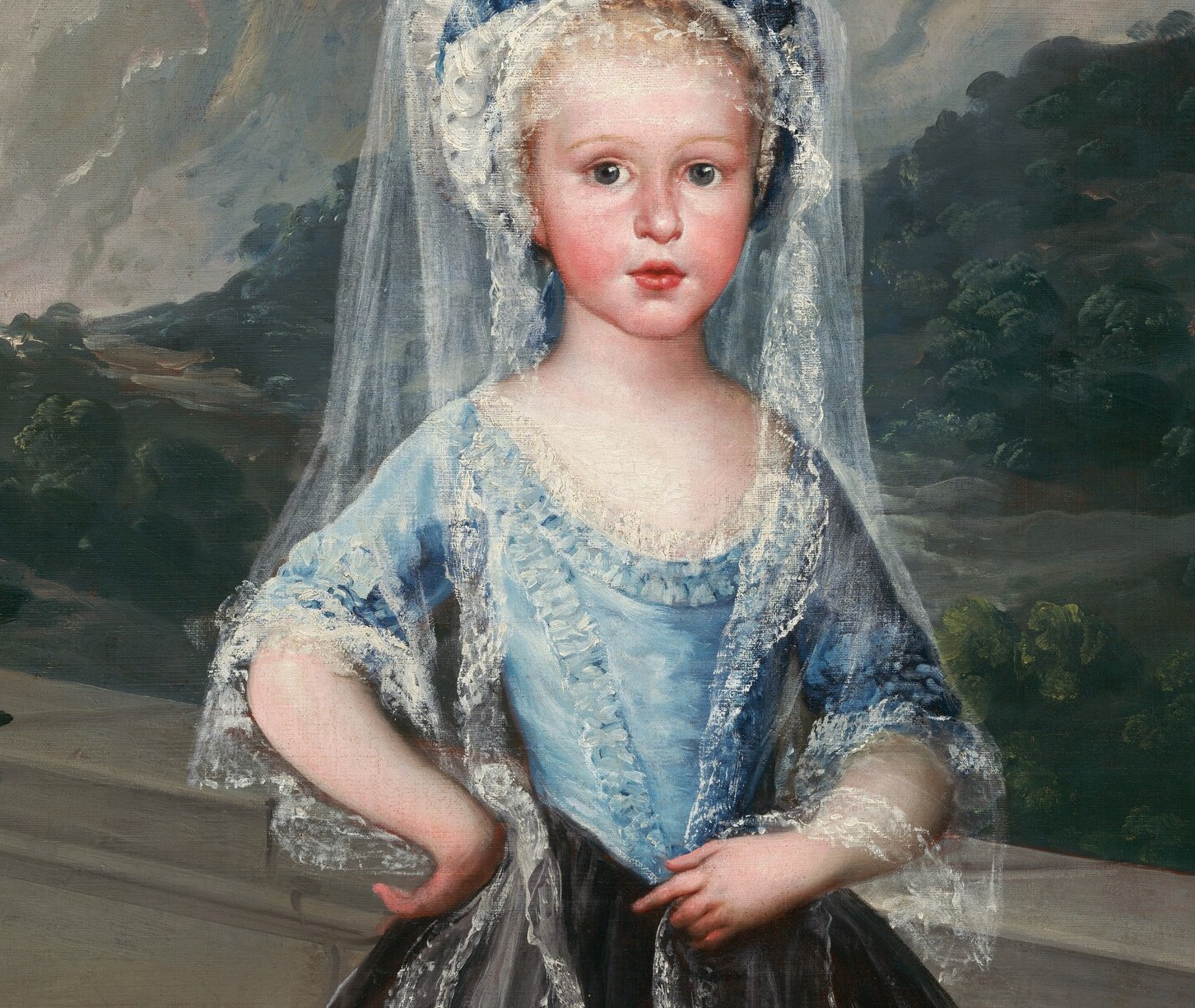
María Teresa de Borbón y Vallabriga, later Condesa de Chinchón by Goya, Francisco
This is Francisco Goya's portrait of María Teresa de Borbón y Vallabriga, painted in 1783. She was about four years old. The painting now hangs in the National Gallery of Art in Washington, D.C. But for a long time, the person who mattered most did not want anyone to see it.
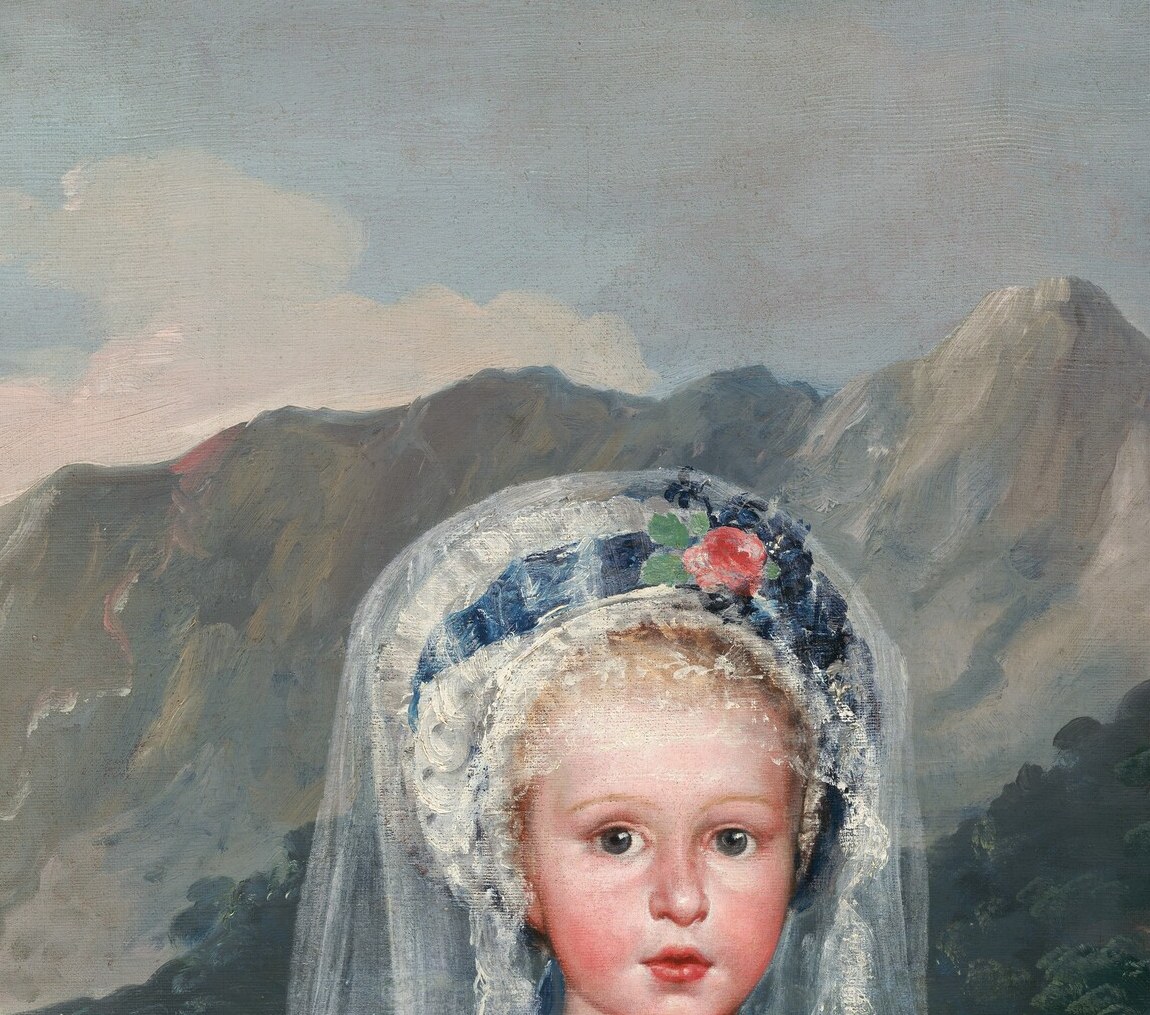
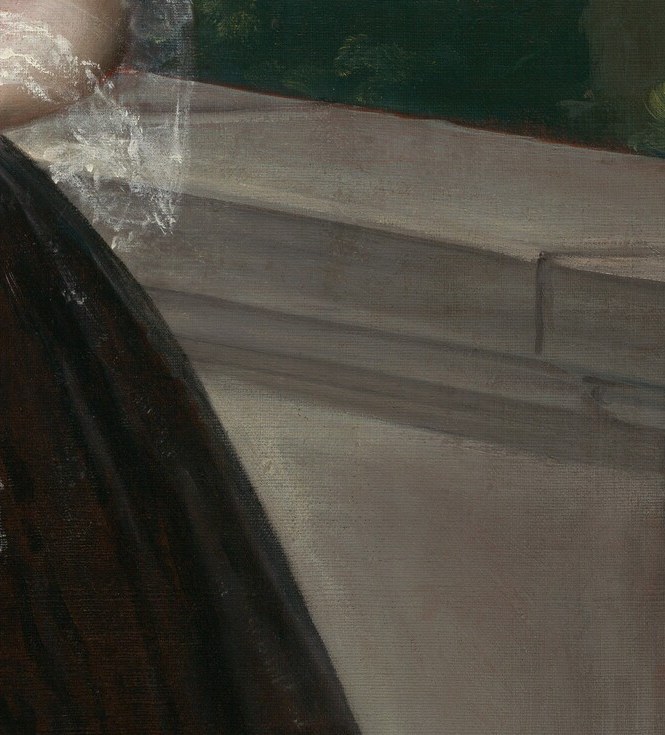
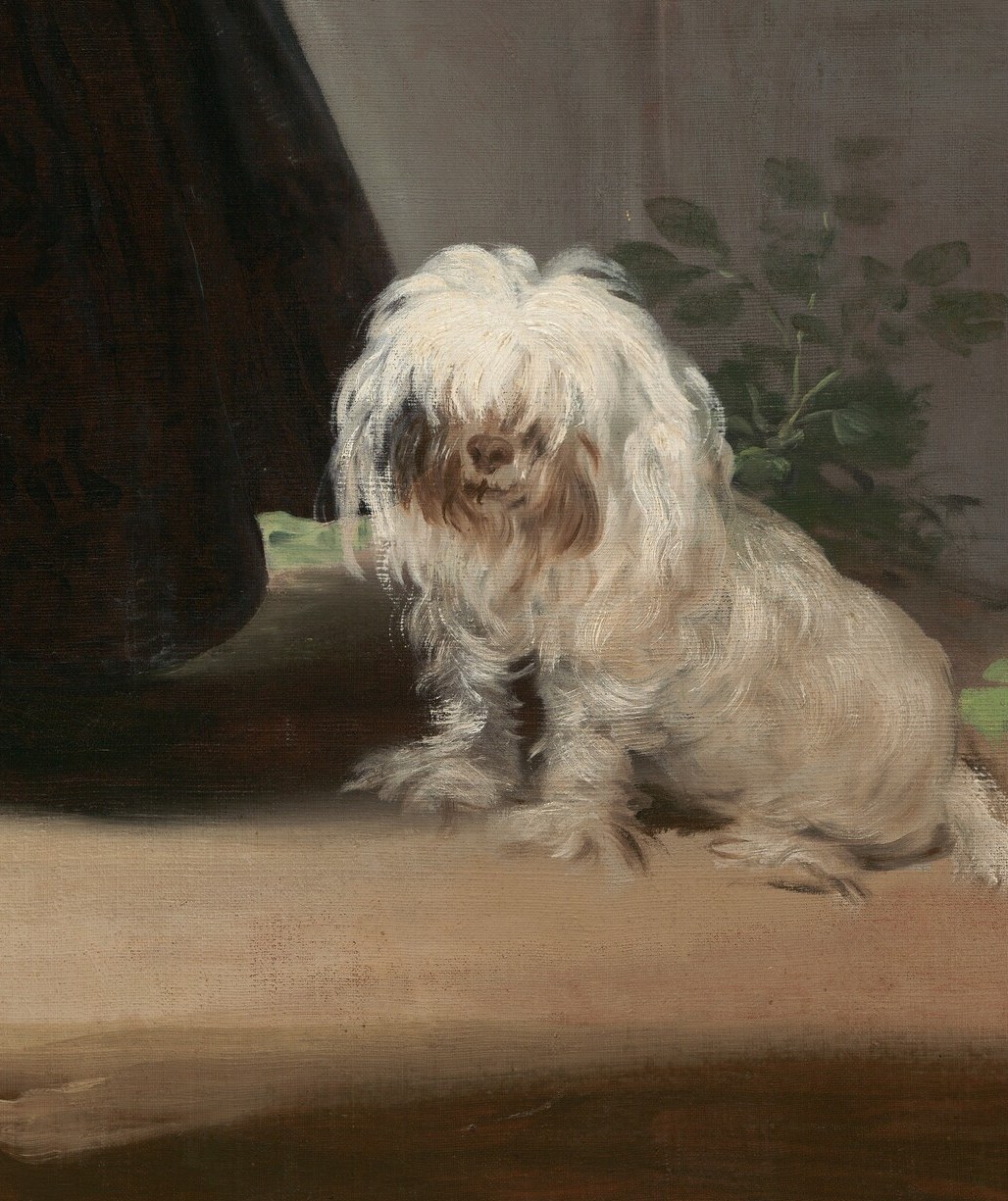
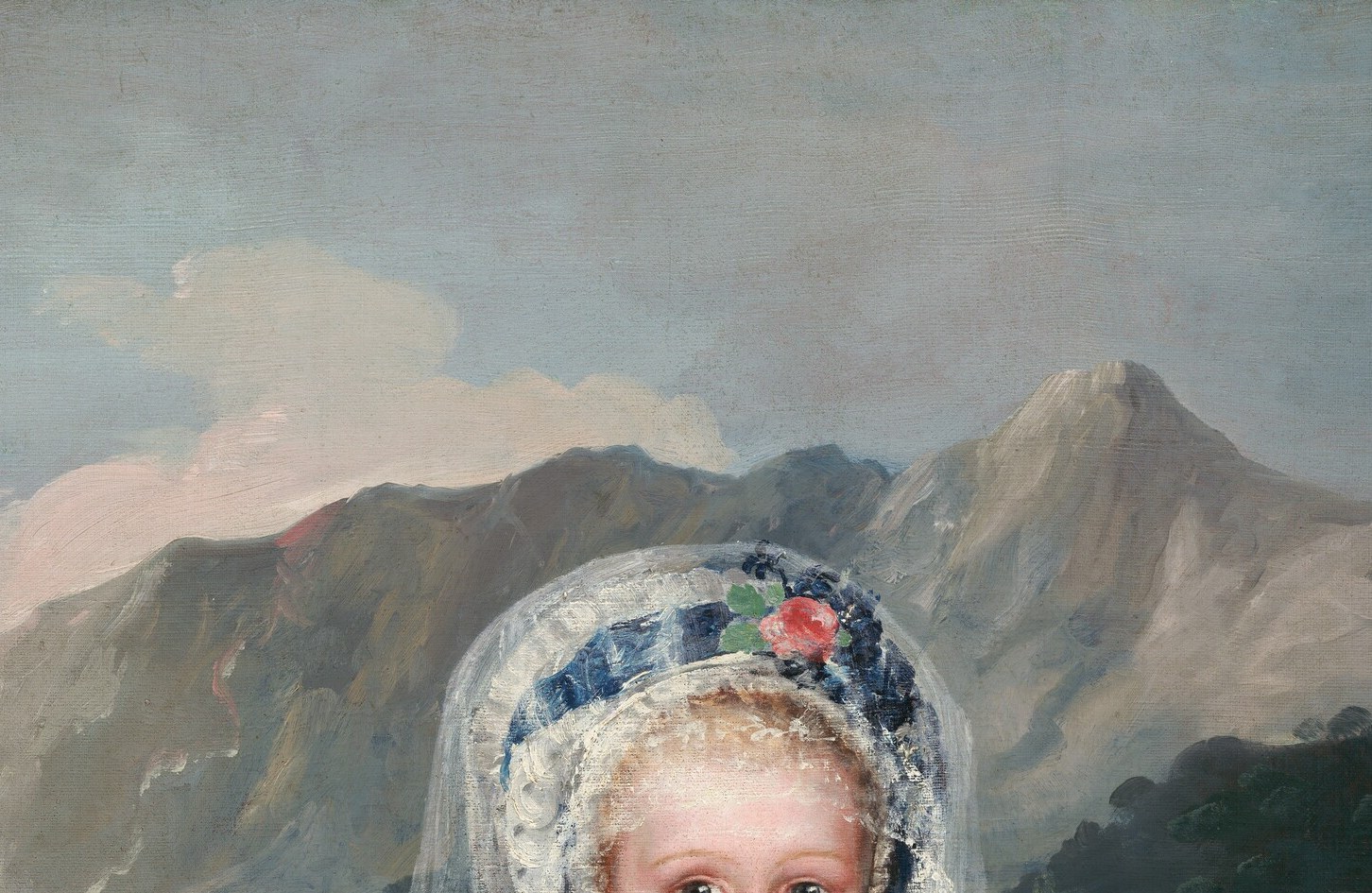
Look at the details Goya carefully included: the sky-blue shot silk of the bodice, the powdered hair beneath a froth of lace and artificial flowers, and the fluffy white dog at her side. The dog was a standard aristocrat's prop, but here Goya uses it to ground the child in something playful, her hand drifts toward the animal, a rare unscripted moment in a formal portrait. The distant mountain landscape behind her is unexpected for a studio portrait, elevating the tiny girl to an almost heroic setting.
The sitter was the daughter of the Infante Don Luis, the King of Spain's brother. Goya was a family friend and painted several portraits for them. But when he delivered this one, the girl's mother, María Teresa de Vallabriga, was reportedly displeased. She found the portrait stiff and unnatural, a failing in a genre meant to flatter. The canvas was hidden in a storage room for over a decade and only resurfaced after the mother's death. Goya would later paint the same sitter as a grown woman, the Condesa de Chinchón, in one of his most famous works. But this first, rejected portrait shows the artist early in his career, still learning exactly how much truth a patron could take.
Art, even by a genius, is sometimes an unwelcome guest.
Details
Transcript
She looks like a perfect little aristocrat. Blue silk, powdered hair, a face by Goya. She was four. Goya was still becoming Goya. He added this little dog to make her look like a child. Her mother hated the result. She called it stiff, unnatural, and hid the canvas from view.