July Fourteenth, Rue Daunou, 1910 by Childe Hassam
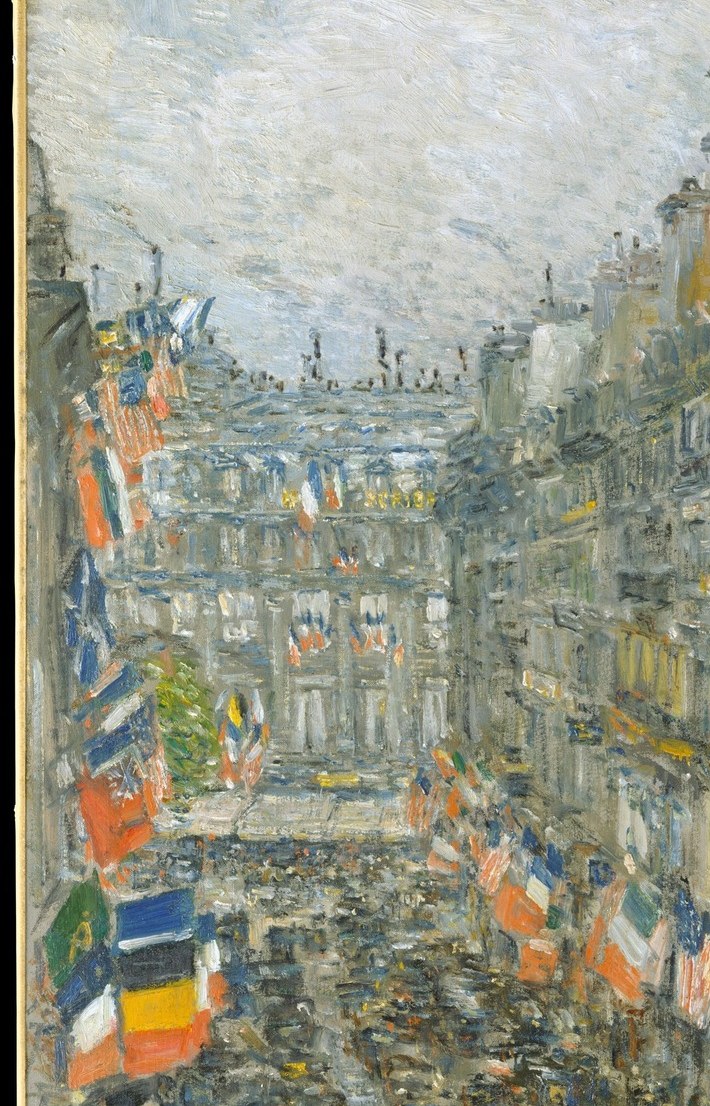
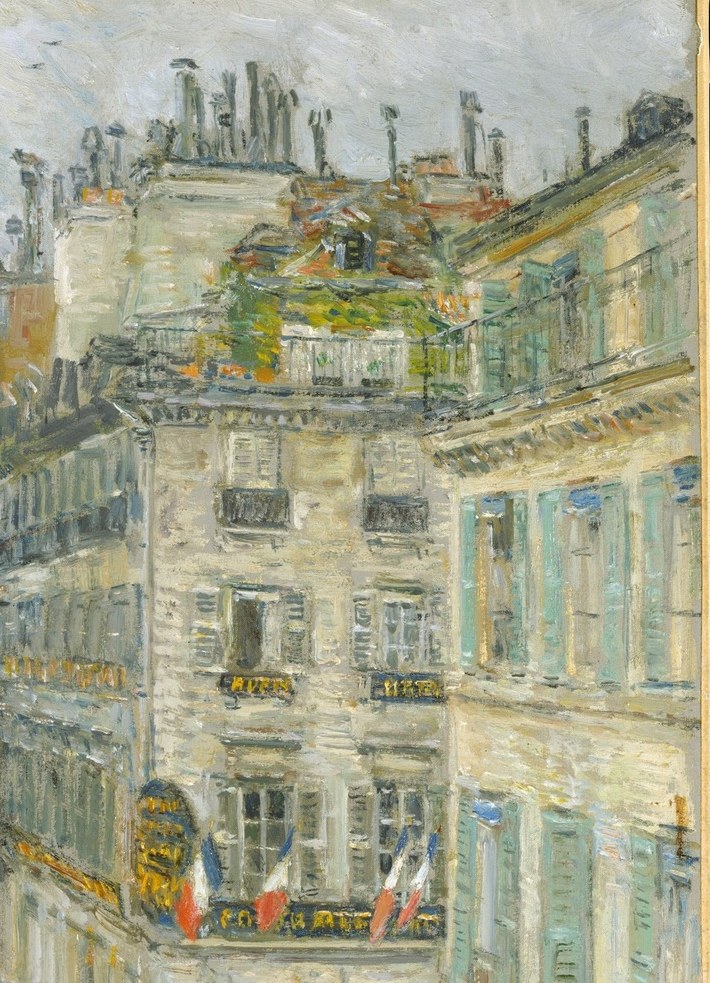
Childe Hassam's "July Fourteenth, Rue Daunou, 1910" is not just a picture of a party. It is a primary document, painted at eye level by an American artist standing in the thick of a Parisian crowd on Bastille Day. The painting lives at The Metropolitan Museum of Art.
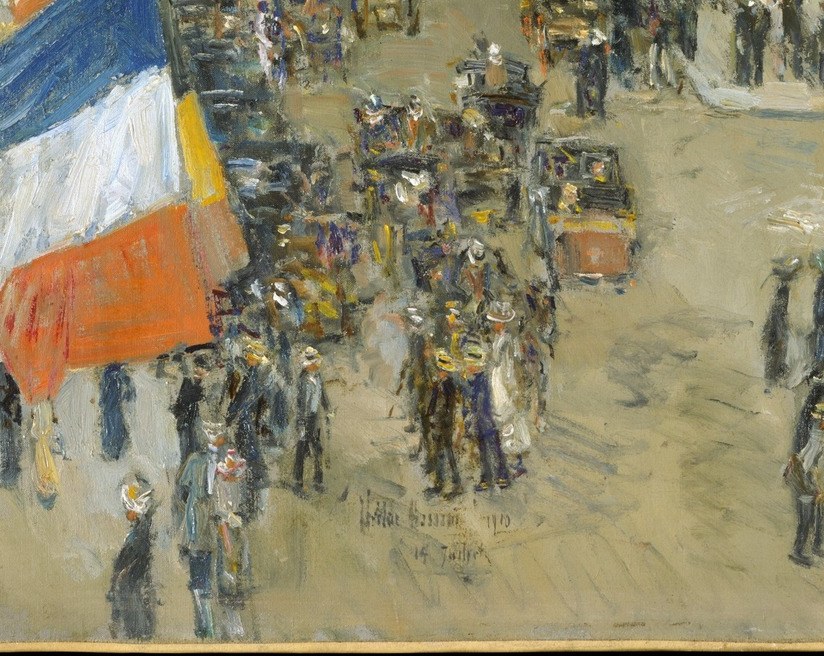
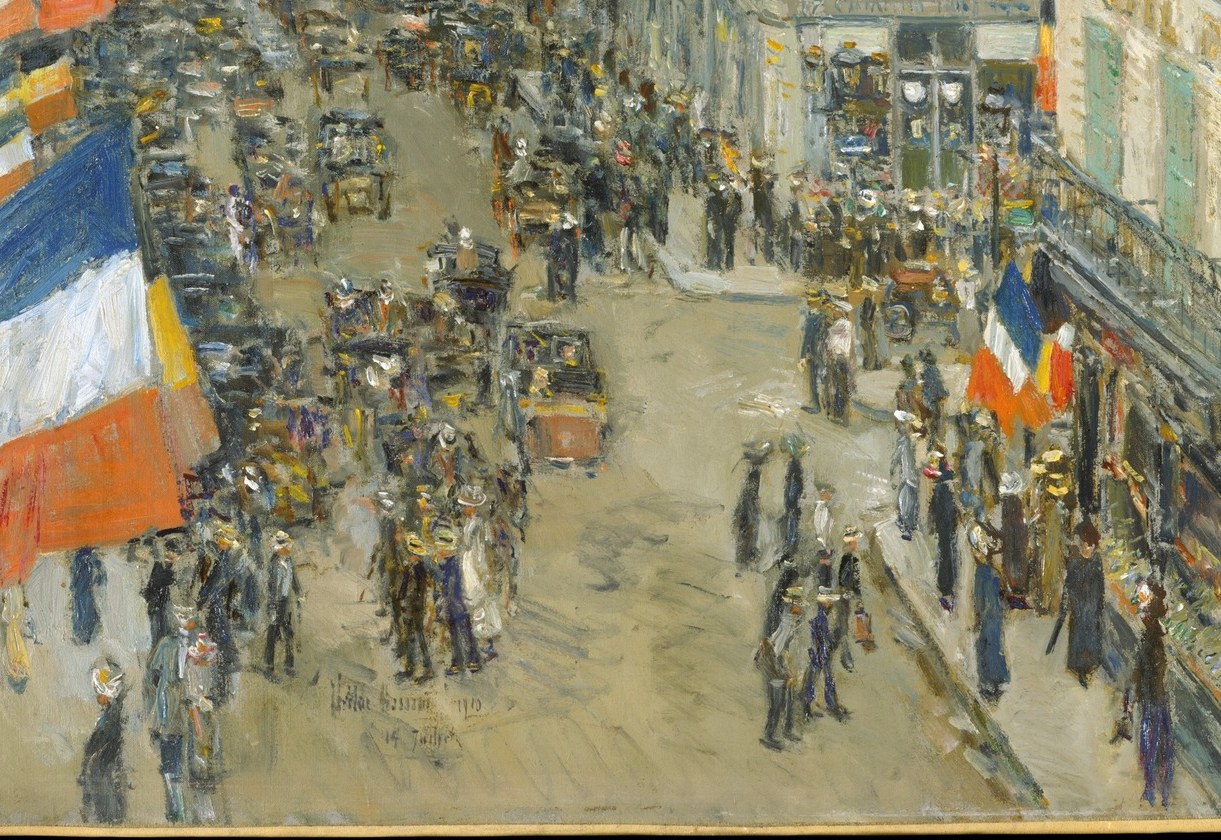
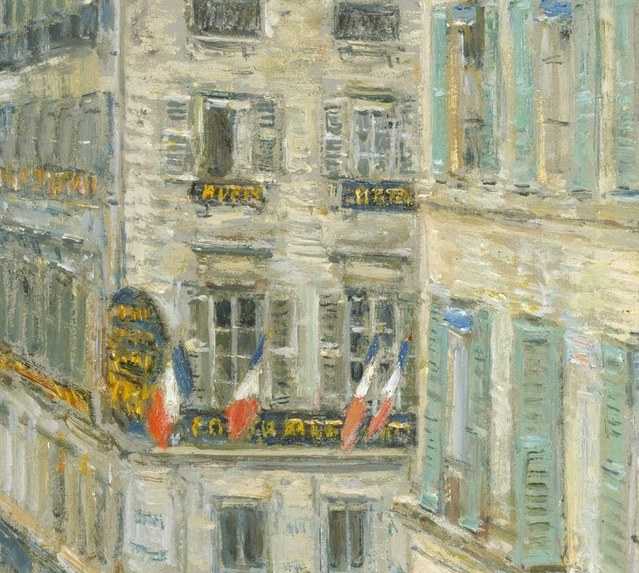
Look first at the flags. They aren't polite little pennants; they are monumental swags of tricolor that turn the Haussmann stonework into a canyon of red, white, and blue. Then look down. The crowd is a dark, restless mass. Hassam doesn't paint individual faces, he paints civic energy itself, the anonymity is the point.
Hassam was a leading American Impressionist who spent considerable time in Paris. By 1910, the city had been physically reshaped by Baron Haussmann's grand boulevards, which is exactly what you see here: the deep recession of the street, the uniform balconies, the mansard rooflines. This new Paris was designed for control, but on July 14th, the people took it back.
Next time you see a flag draped from a building, consider the architect who designed the wall and the painter who saw it come alive.
Details
Transcript
July 14, 1910. The new, wide boulevards of Paris. Buildings designed for order, lined with imperial stone. But this is Bastille Day, and the city drapes itself in red, white, and blue. The painter across the Atlantic: Childe Hassam, an American in Paris. He stands at street level, swallowed by a dark and joyous crowd. His eye turns the mass of people into a single, vital texture. Above it all, a few Parisians watch calmly from iron balconies. The avenue recedes into a pale summer haze, the holiday dissolving into light.