The Trousseau by Charles Webster Hawthorne
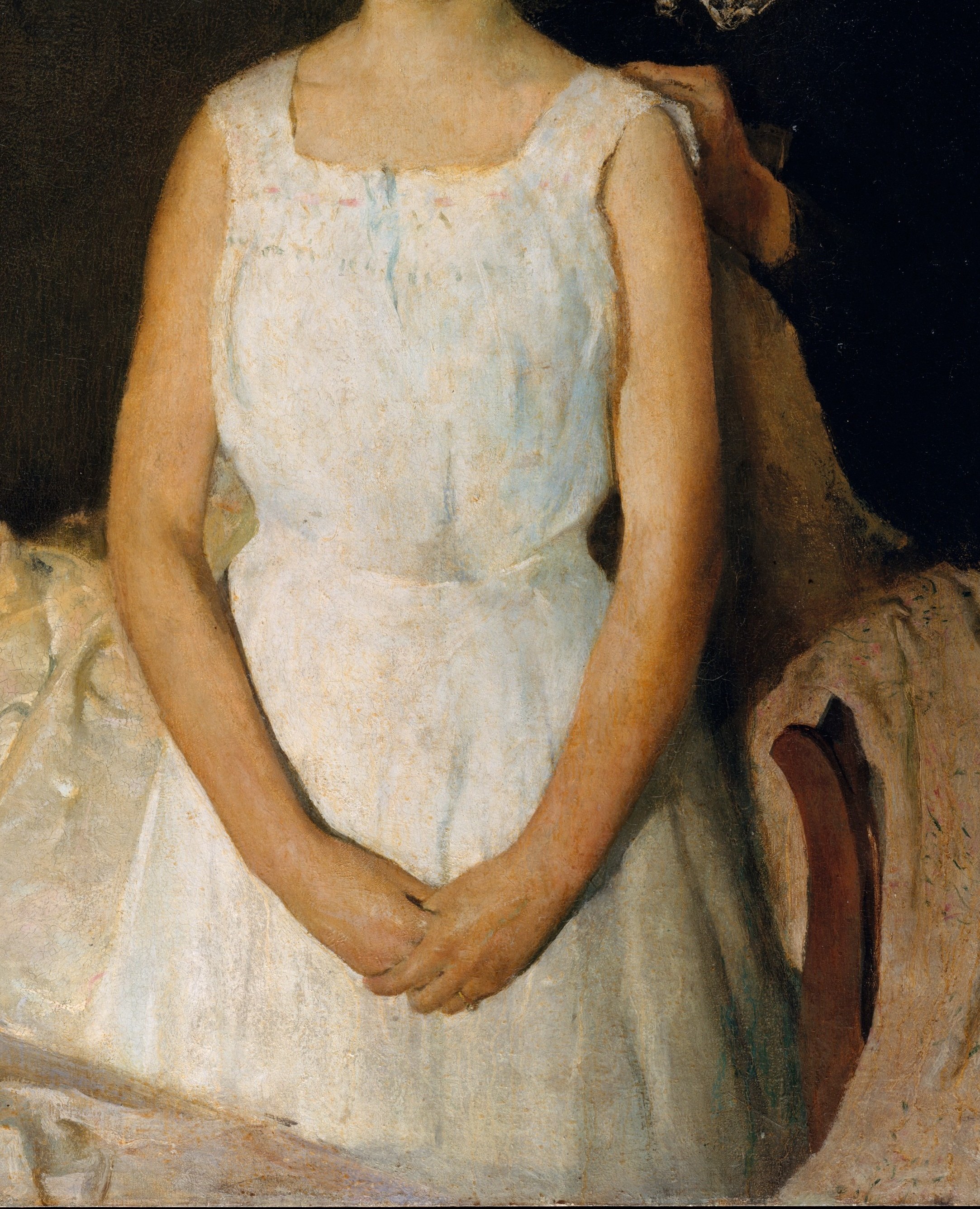
Charles Webster Hawthorne's *The Trousseau*, painted in 1910, captures a quiet domestic scene with layers of meaning. The title implies the women are preparing a bride's collection of linens and garments, a traditional pre-marital ritual.
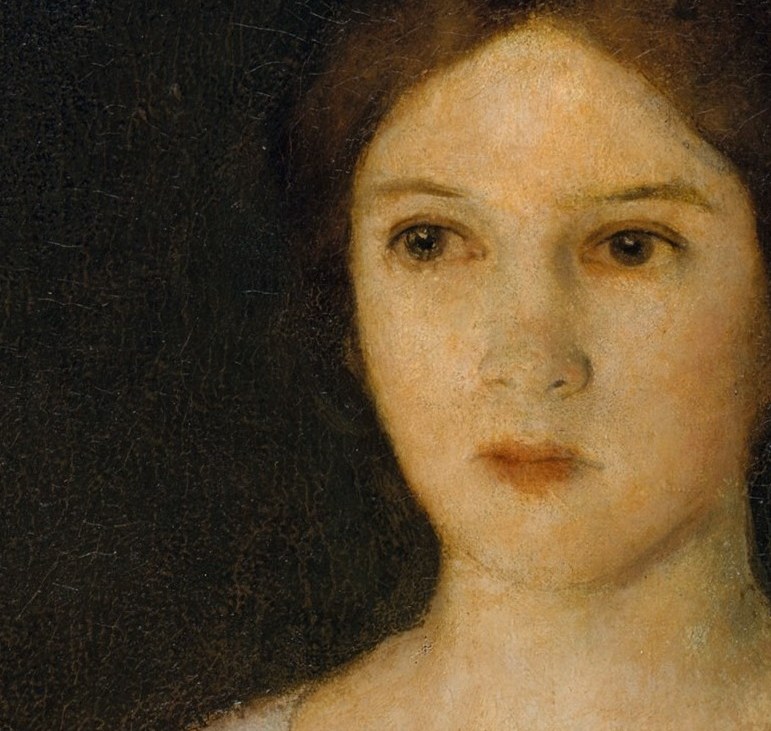
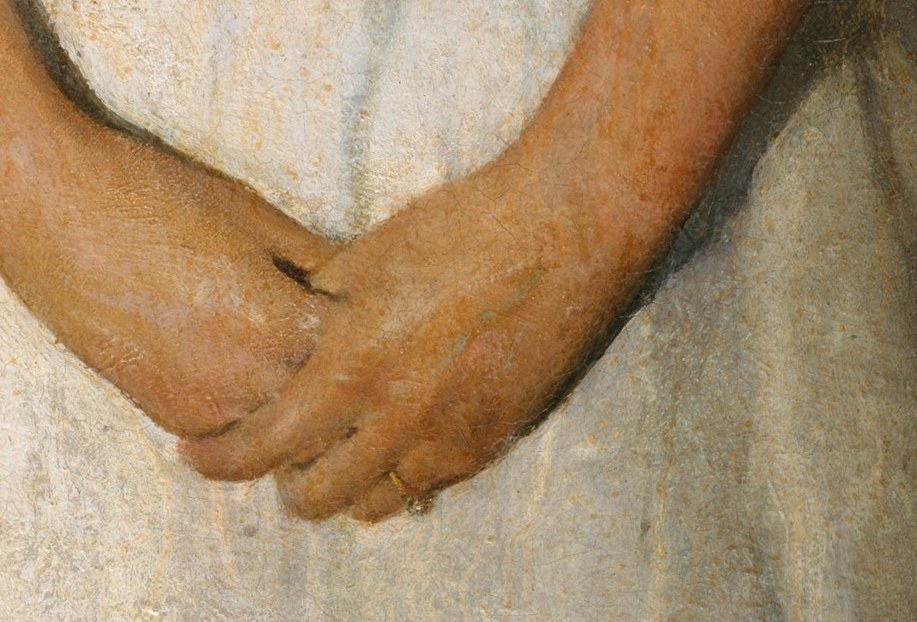
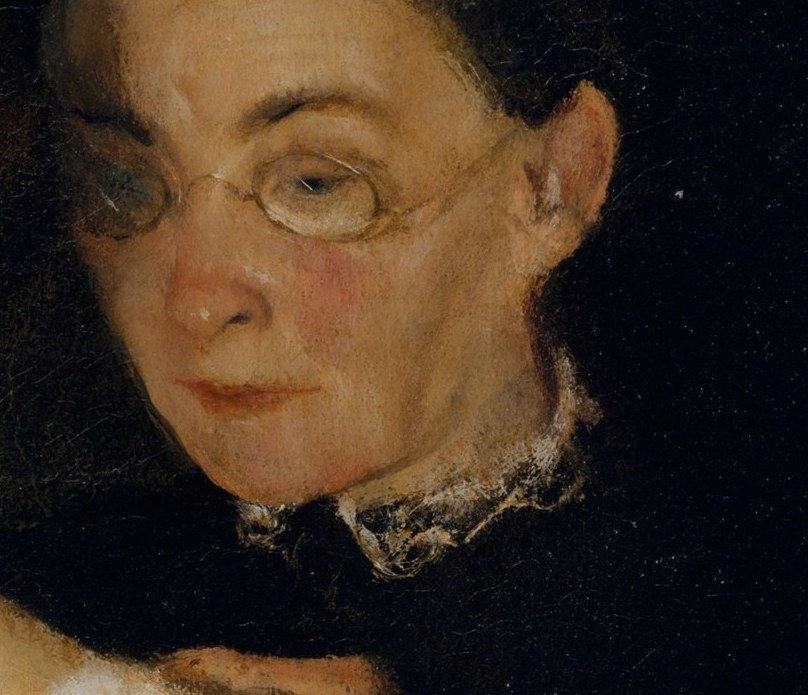
Look at the central figure in white, her gaze direct and melancholic, her hands folded in quiet resignation. An older woman offers support or guidance with a hand on her shoulder, while another woman is absorbed in sewing, her focused profile highlighting the labor involved.
Hawthorne, a notable American Impressionist and founder of the Cape Cod School of Art, completed this oil painting during a period of significant artistic development. The work eventually found its home in the esteemed collection of The Metropolitan Museum of Art.
What unspoken thoughts lie behind the bride's composed expression?
Details
Transcript
A bride's trousseau is being prepared. The central figure wears a luminous white dress. Her gaze is direct and slightly melancholic. Her folded hands convey quiet resignation. An older woman oversees her work. Her hand rests on the younger woman's shoulder. Another woman sews with deep concentration. This painting was made in 1910.