The Family of John Q. Aymar by George W. Twibill Jr.
View the artwork: The Family of John Q. Aymar →
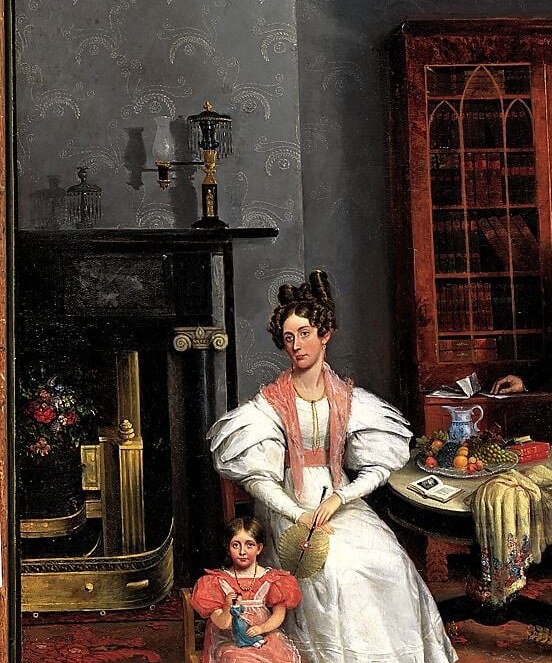
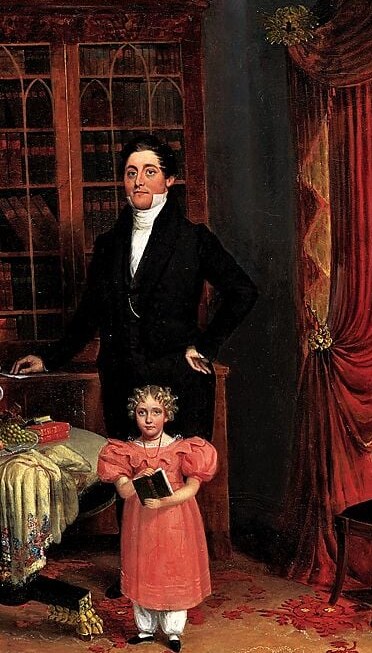
This is "The Family of John Q. Aymar," painted around 1833 by George W. Twibill Jr. It lives at the New-York Historical Society. The single most interesting true thing about it is that it is a portrait of a prosperous Black family from an era when American portraiture almost exclusively depicted affluent white subjects.
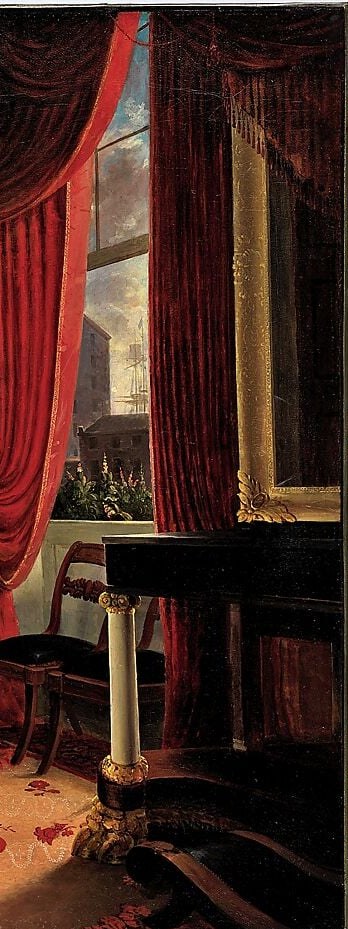
When you look closely, you see a family deploying every visual marker of the 1830s American middle class. The mother's enormous gigot sleeves were the cutting edge of European fashion, not a hand-me-down. The father's dark coat and white cravat mirror the uniform of a white professional man. The heavy red curtain behind them is a theatrical prop borrowed straight from elite portrait tradition. None of these choices are accidental.
The artist, George W. Twibill Jr., was a white American painter who died young in 1836. We know frustratingly little about the Aymar family themselves, who they were, how they commissioned this work, or how they lived. But the painting is an argument in cloth and furniture. The patterned carpet, the parlor ornaments, and the bright window at right all insist on a domestic life of comfort and aspiration.
Every detail is a deliberate citation. The family knew exactly how respectability was coded visually, and they made sure the painter recorded it. It is a quiet, powerful act of self-presentation that pushes back against every stereotype of the period.
#arthistory #19thcenturyart #hiddenhistory
Details
Transcript
A family, dressed for a portrait. Nothing more. But look at the mother's sleeves. They are called gigot sleeves. In 1833, they were the absolute height of European fashion. Now look behind them. This red curtain. It is a direct quotation from the grammar of elite white portraiture. The father's formal coat and cravat are making the same argument. Every object here is a deliberate claim to dignity and status.