Artwork
The Family of John Q. Aymar
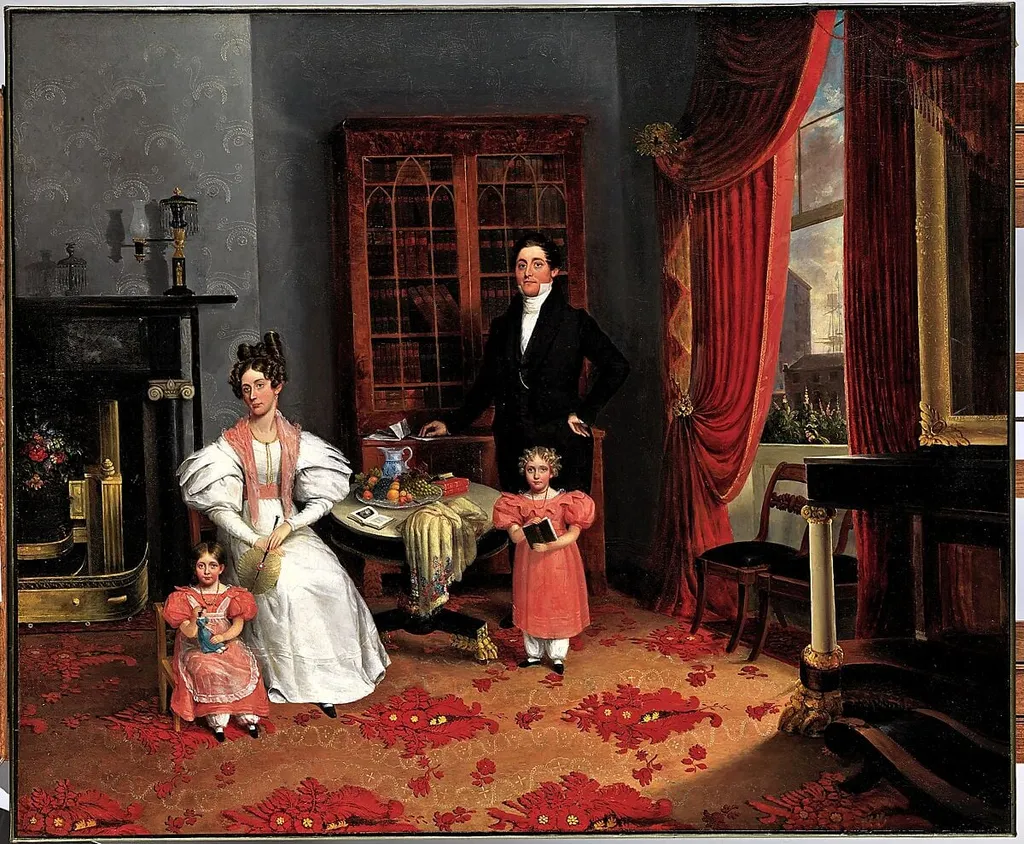
The Family of John Q. Aymar is an oil painting by the American Folk Art artist George W. Twibill Jr.. It dates from 1833 and is held in the collection of the Metropolitan Museum of Art. The Family of John Q.
About this work
A well-dressed family of five poses in a parlor: the father seated, the mother standing, three daughters in matching white dresses. The picture is rare for showing a middle-class Black family in 1833, when most portraits depicted wealthy white sitters. The careful clothes and furniture speak of pride.
Subject & Meaning
Executed in 1833, this oil painting functions as a group portrait depicting the domestic unit of John Quereau Aymar and Elizabeth Dickson Aymar.
Executed in 1833, this oil painting functions as a group portrait depicting the domestic unit of John Quereau Aymar and Elizabeth Dickson Aymar. The composition includes the titular couple alongside a young girl, situated within an interior setting. As a work of the portrait genre, the image serves primarily as a record of familial lineage and social status rather than employing complex allegorical symbolism.
The inclusion of specific family members within a home environment emphasizes the significance of the nuclear family structure in early nineteenth-century American society. The work visually documents the identities of the sitters, preserving their likeness and domestic context for posterity without relying on overt iconographic metaphors beyond the standard conventions of family portraiture of the era.
Technique & Style
George W. Twibill Jr. executed The Family of John Q. Aymar in 1833 using oil paint on a canvas support. The painting measures 88.3 cm in height and 106.7 cm in width, providing a sizable format for a multi-figure interior portrait. Stylistically, the work operates within the traditional genre of American portraiture, formally arranging the figures of John Quereau Aymar, Elizabeth Dickson Aymar, a girl, and other family members within an indoor setting.
The composition emphasizes the familial unit through the spatial relationships and interactions of the male and female subjects within the domestic interior. The current condition of the artwork is not specified in the available records.
History & Provenance
The Family of John Q. Aymar was commissioned in 1833 as an oil-on-canvas portrait by George W. Twibill Jr., depicting John Quereau Aymar, Elizabeth Dickson Aymar, and their family within an interior setting. The work’s creation is firmly dated to 1833, aligning with its inception record. Following its completion, the painting entered the collection of the Metropolitan Museum of Art, where it has remained housed since its acquisition. No intermediary ownership changes or private collections are documented in the available sources.
The painting is held by the Metropolitan Museum of Art. Its Wikidata entry lists the institution as the collection location with an accession record indicating dimensions of 88.3 cm in height and 106.7 cm in width. No exhibition history is documented in the provided sources.
Overview
The Family of John Q. Aymar is an oil on canvas painting depicting a well-dressed family of five within a domestic setting. The composition features the father seated, the mother standing, and their three daughters in matching white attire, all posed in a parlor. Created in 1833, this work is notable for its portrayal of a middle-class Black family, a subject rarely seen in American portraiture from this period.
Context
During the 1830s, portraiture in the United States predominantly featured affluent white individuals, reflecting their social prominence and economic power. "The Family of John Q. Aymar" stands as an unusual example from this era, offering a glimpse into the lives of a Black family. Its existence provides valuable insight into the diverse social fabric of the time, documenting a segment of society often overlooked in historical art records.
Artist & collection

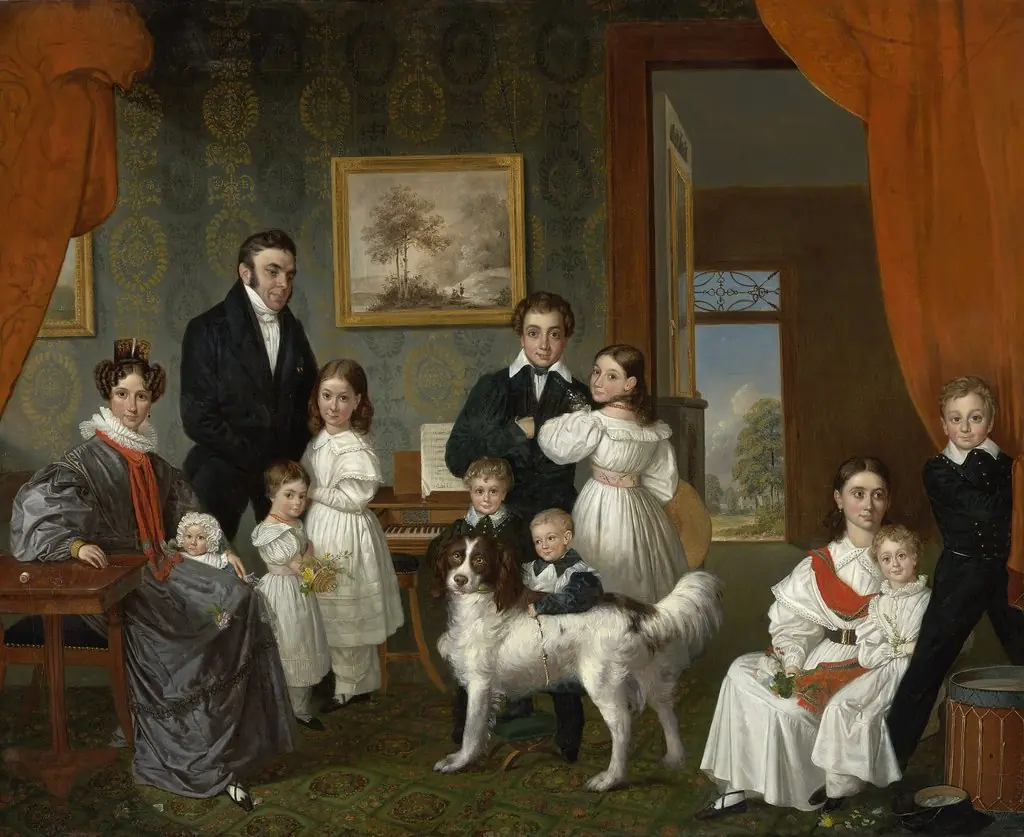 Portrait of the Baud family in their country house in Voorburg
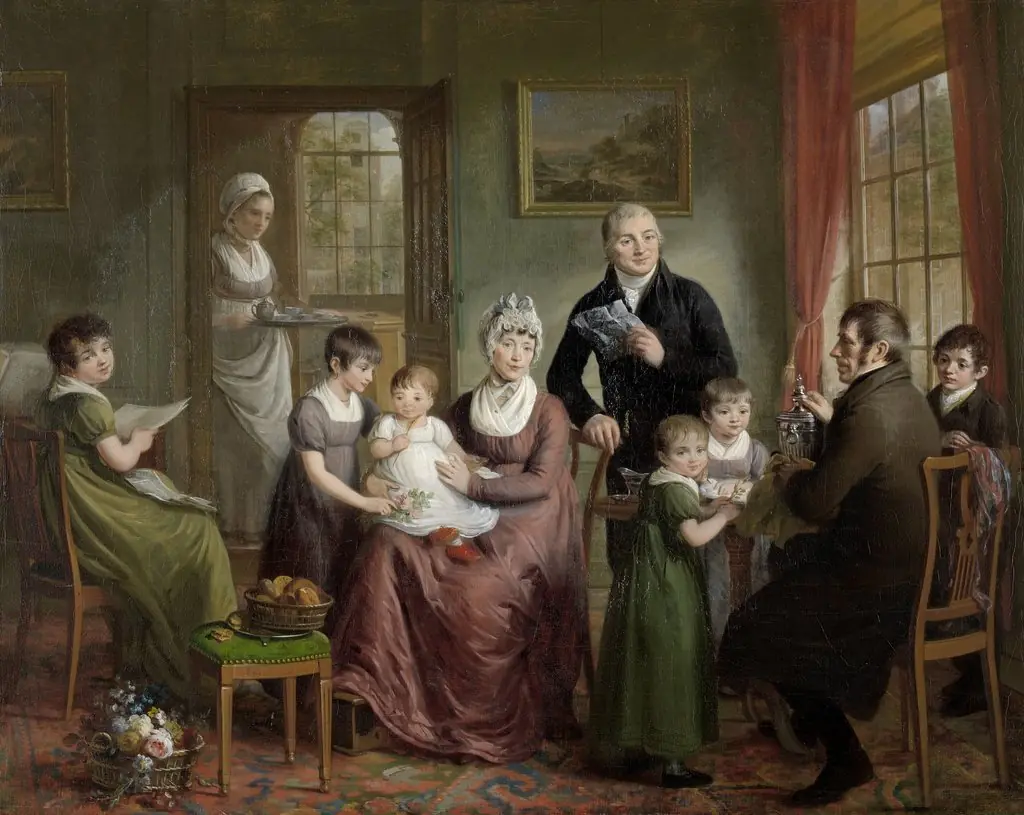 Portrait of the Family of Adrianus Bonebakker with Dirk L. Bennewitz
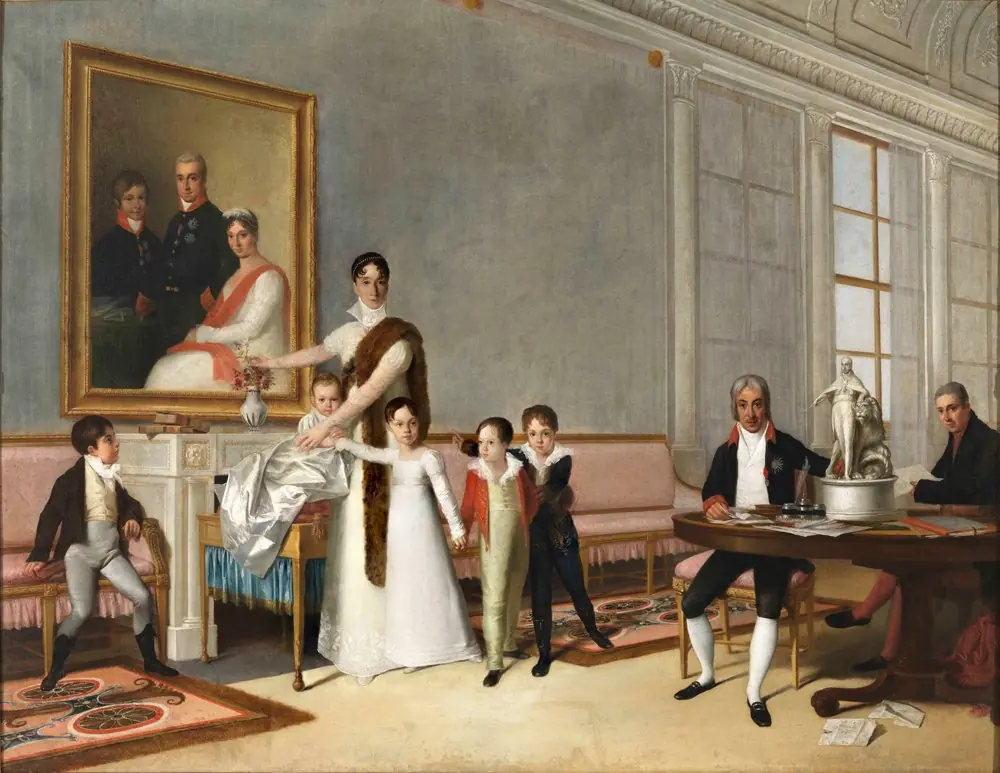 Portrait of the Family of the 1st Viscount of Santarém
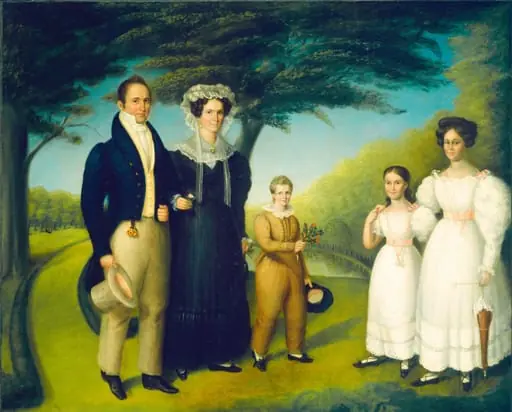 Dr. John Safford and Family
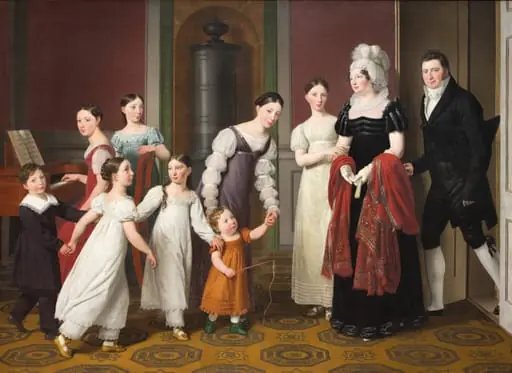 The Nathanson Family
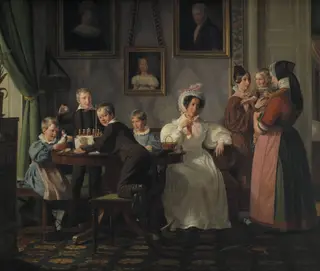 The Waagepetersen Family
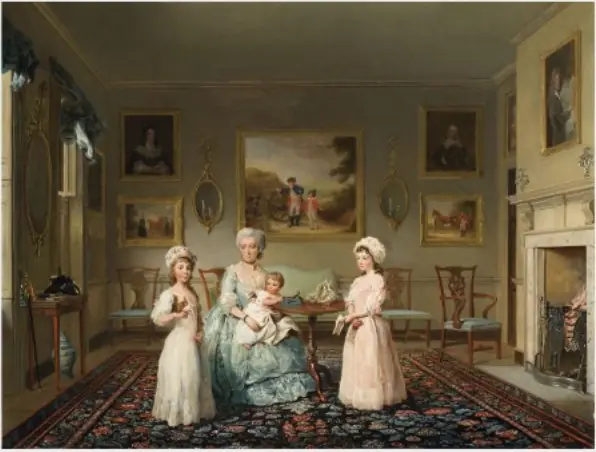 Portrait of Mrs Congreve with her Children
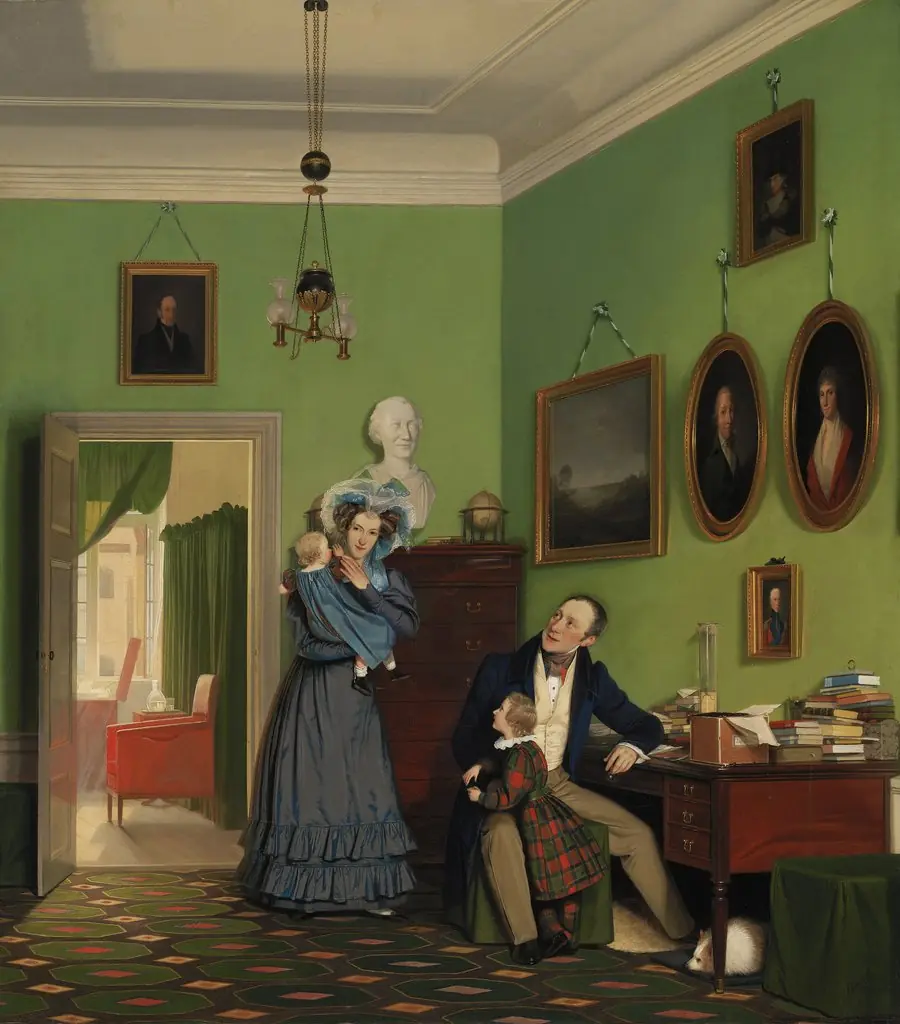 Familien Waagepetersen
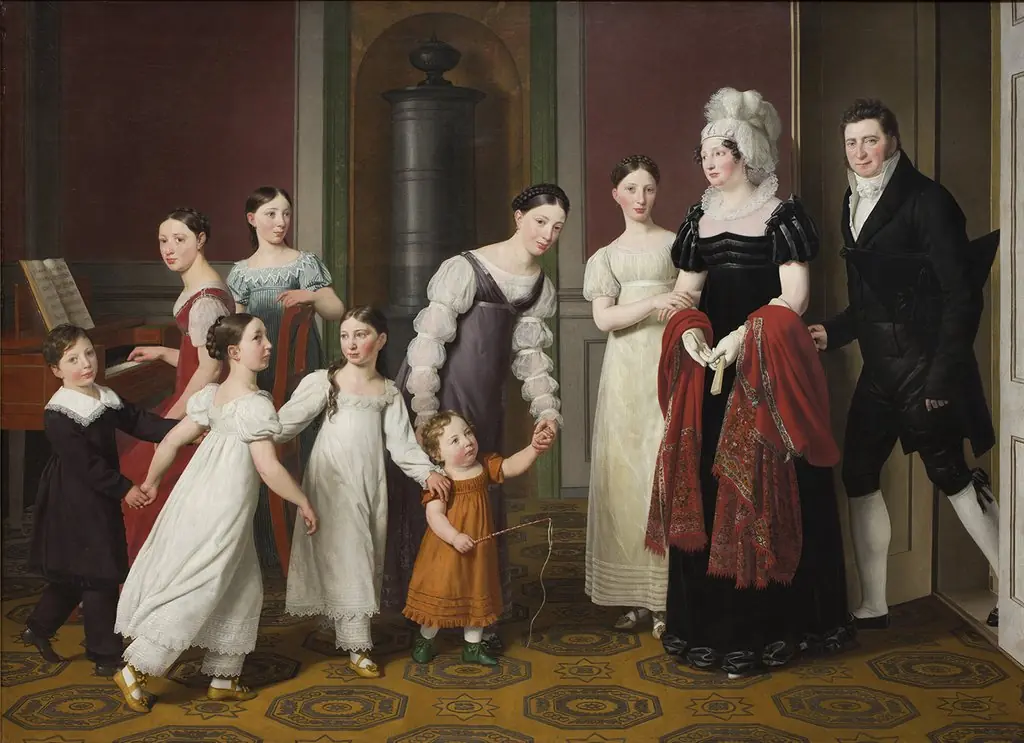 Familien Nathanson
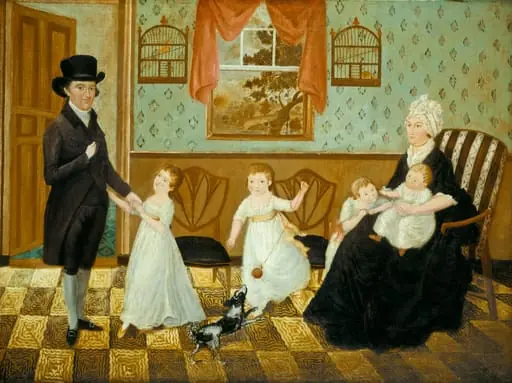 The Sargent Family
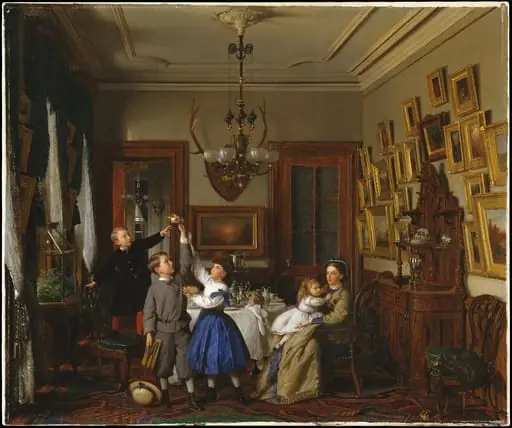 The Contest for the Bouquet: The Family of Robert Gordon in Their New York Dining-Room
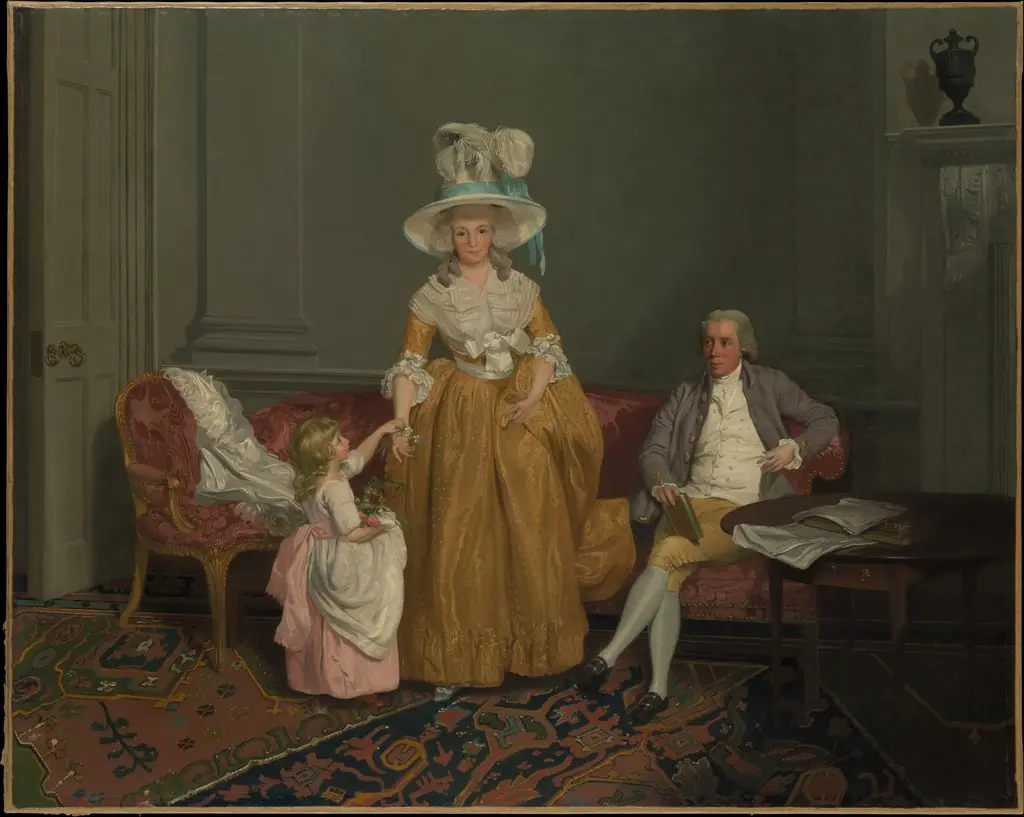 The Saithwaite Family
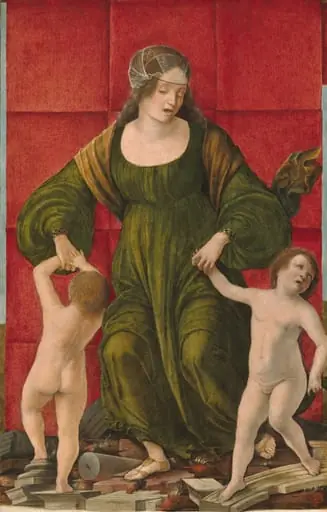 The Wife of Hasdrubal and Her Children
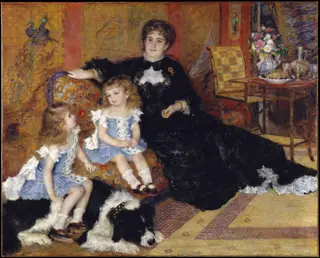 Madame Georges Charpentier and her Children
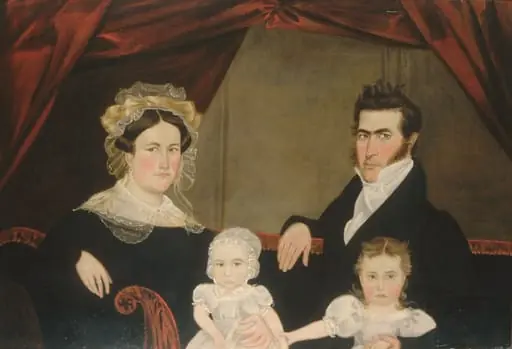 Family Group of Four on Sofa
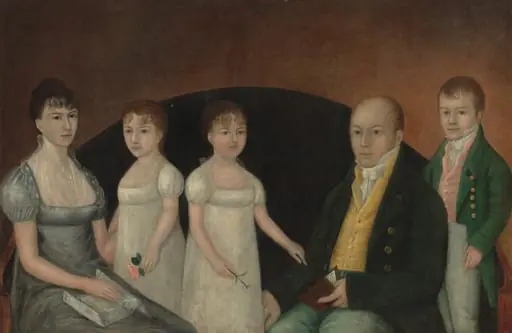 Family Group
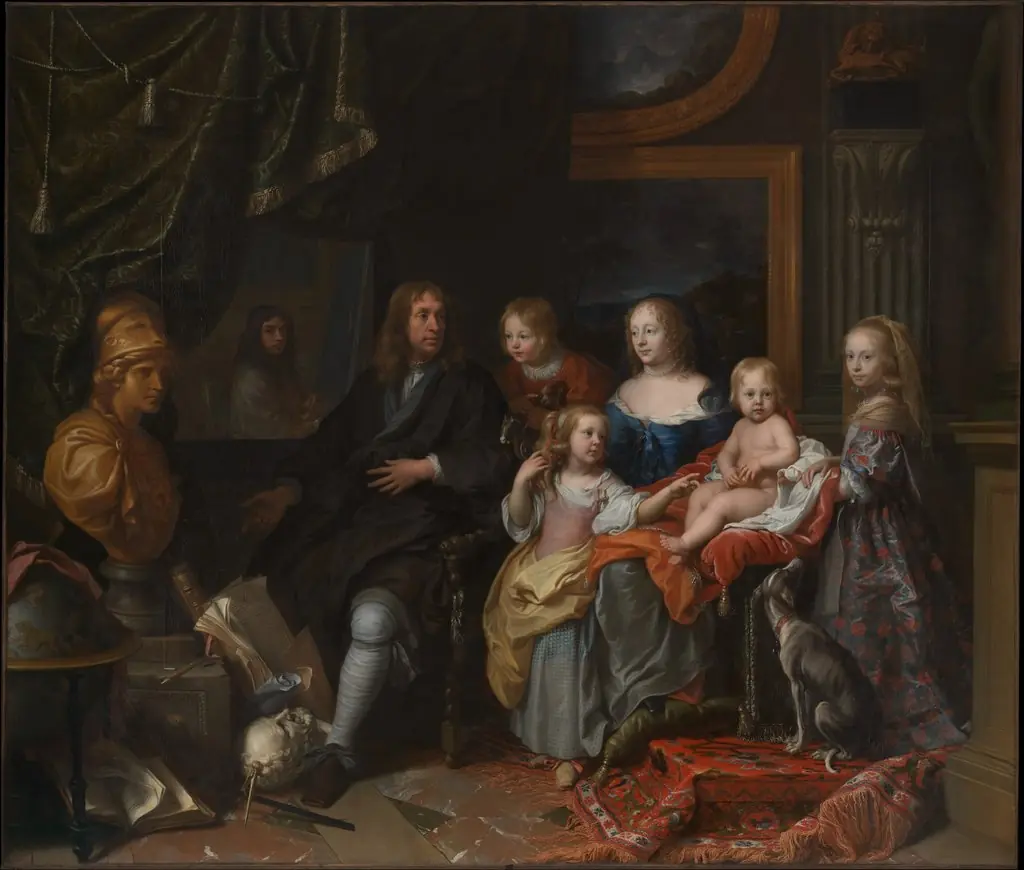 Everhard Jabach (1618–1695) and His Family
 The Family of Mr. Westfal in the Conservatory