Attributes of Music by François Bonvin
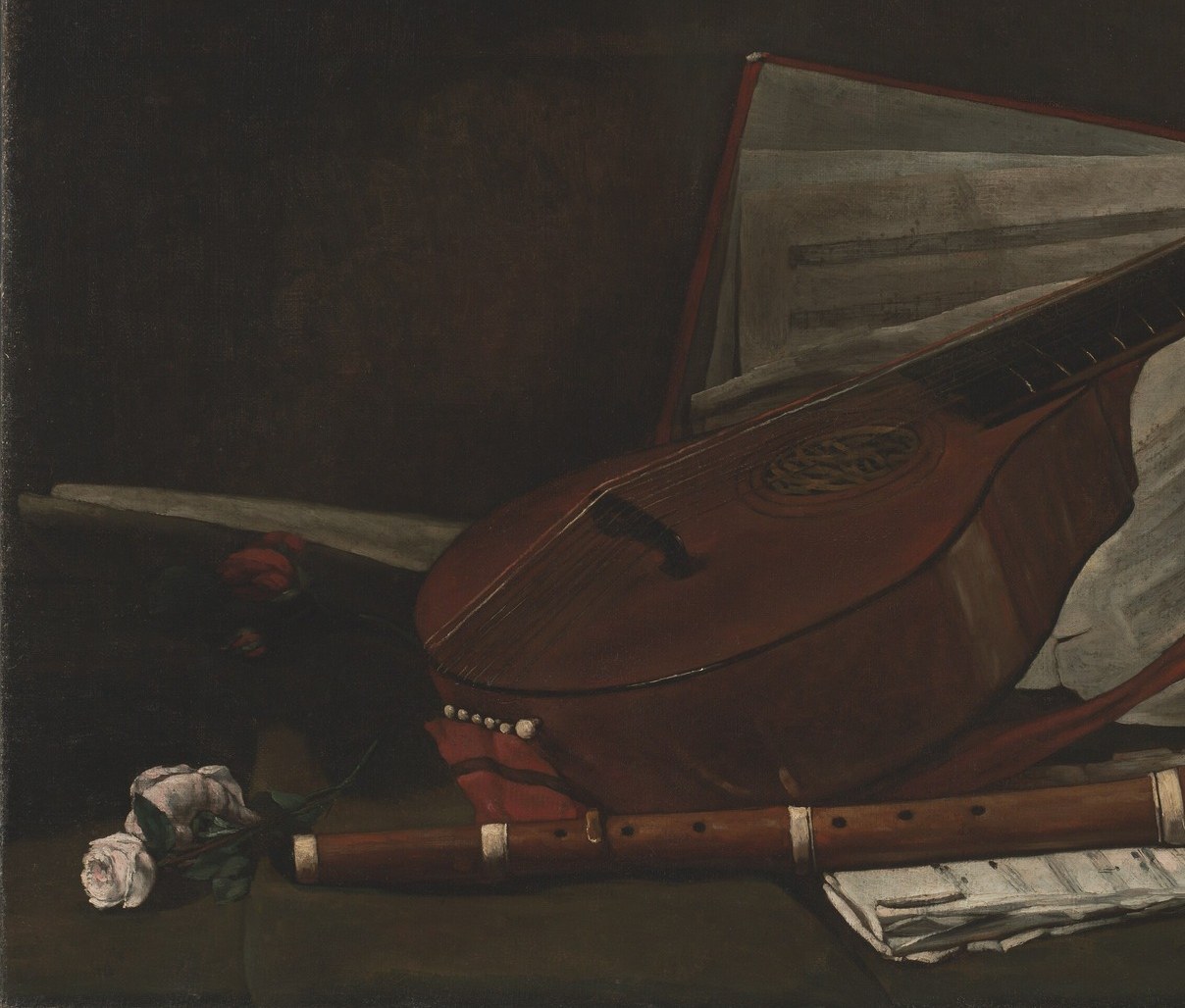
This is François Bonvin’s "Attributes of Music" from 1863, now in the Musée du Louvre. Bonvin was a French Realist who painted what he saw: working-class kitchens, quiet interiors, and here, the objects of a vanished musical world. The painting is a record of absence. Every instrument and page of music is a specific artifact from a specific past.
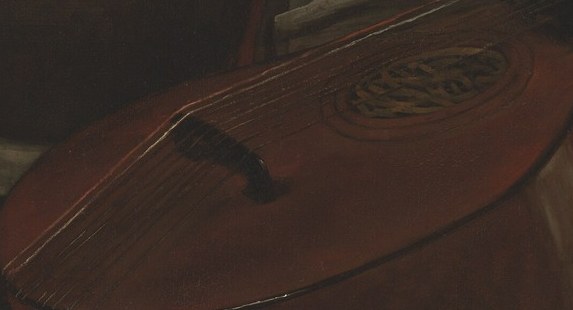
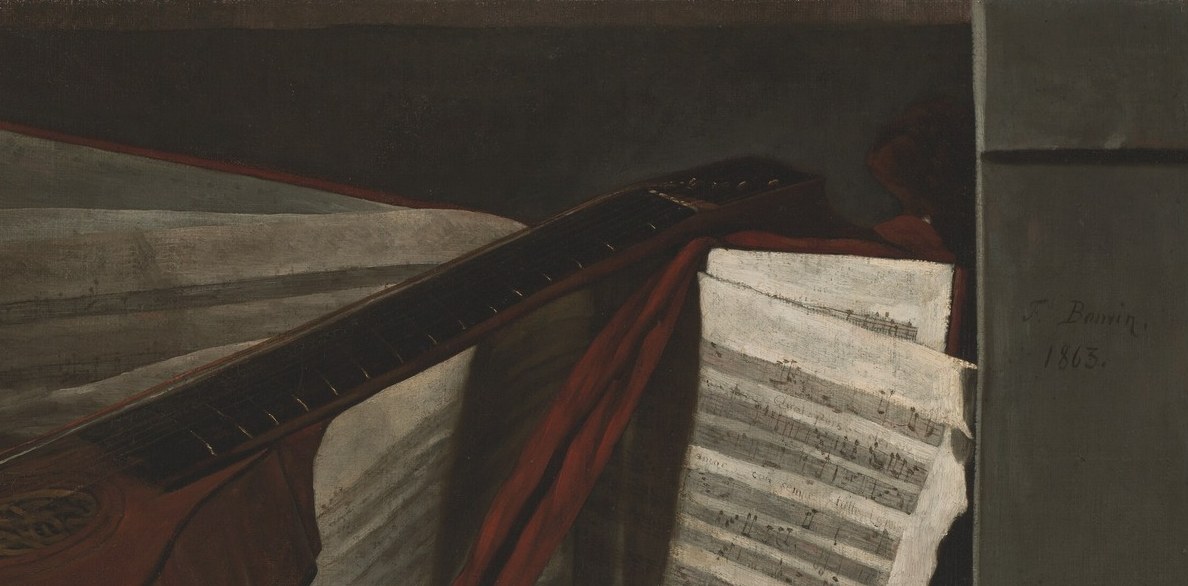
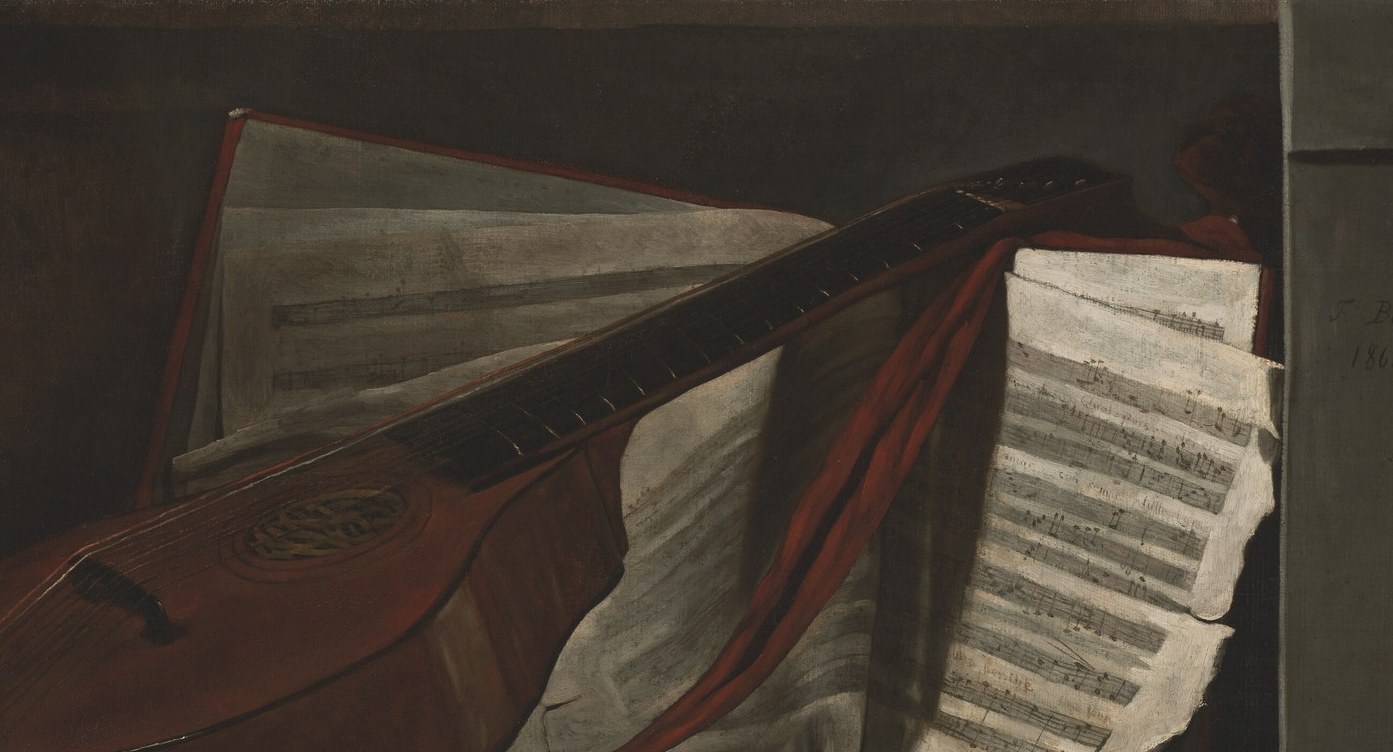
Look at the carved soundhole on the lute. The intricate geometric rose places it firmly in the baroque era. The crumpled sheet music on top is not decoration. The notation is legible enough that musicologists have identified the pieces as French baroque airs. The recorder, half-buried under the scores, was already an antique in the 1860s. Even the lute’s strings appear worn or broken, completing the theme of silence.
These instruments would have been expensive and rare in Bonvin’s day. He was assembling a museum of sound on his table, a composition where every object is a document. In a decade when photography was ascendant, he used paint to do what a camera could not, record the specific texture of time on paper, wood, and gut string. The warm amber highlight traveling across the lute’s upper rib is a single, masterful passage of observation.
The painting doesn’t mourn music. It remembers it as something tangible and real, preserved in wood and ink but now silent. It invites us to consider what records we trust to carry our own culture forward, and what gets lost when the playing stops.
Details

Transcript
Before the photograph, painting held the record of light. Look at the carved rose in the soundhole. That intricate lacework dates this lute to the 1600s. The sheet music under it is also specific. These are handwritten copies of French baroque airs. Bonvin painted this in 1863, but everything here is from two centuries earlier. No musician. Worn strings. A breath held for two hundred years.