Portrait of the Marquise d'Aguirandes by François-Hubert Drouais
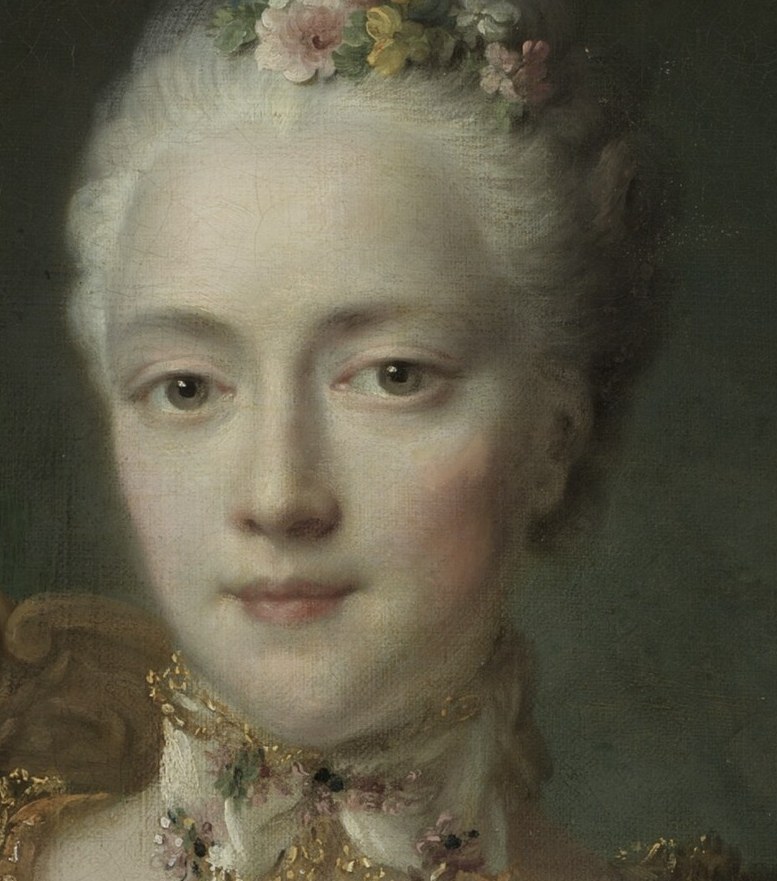
François-Hubert Drouais's "Portrait of the Marquise d'Aguirandes" (1759) from The Cleveland Museum of Art was considered scandalous by its 18th-century audience. The Rococo style, with its emphasis on personal indulgence and elaborate decoration, was increasingly seen as decadent, and this portrait exemplified that perceived excess.
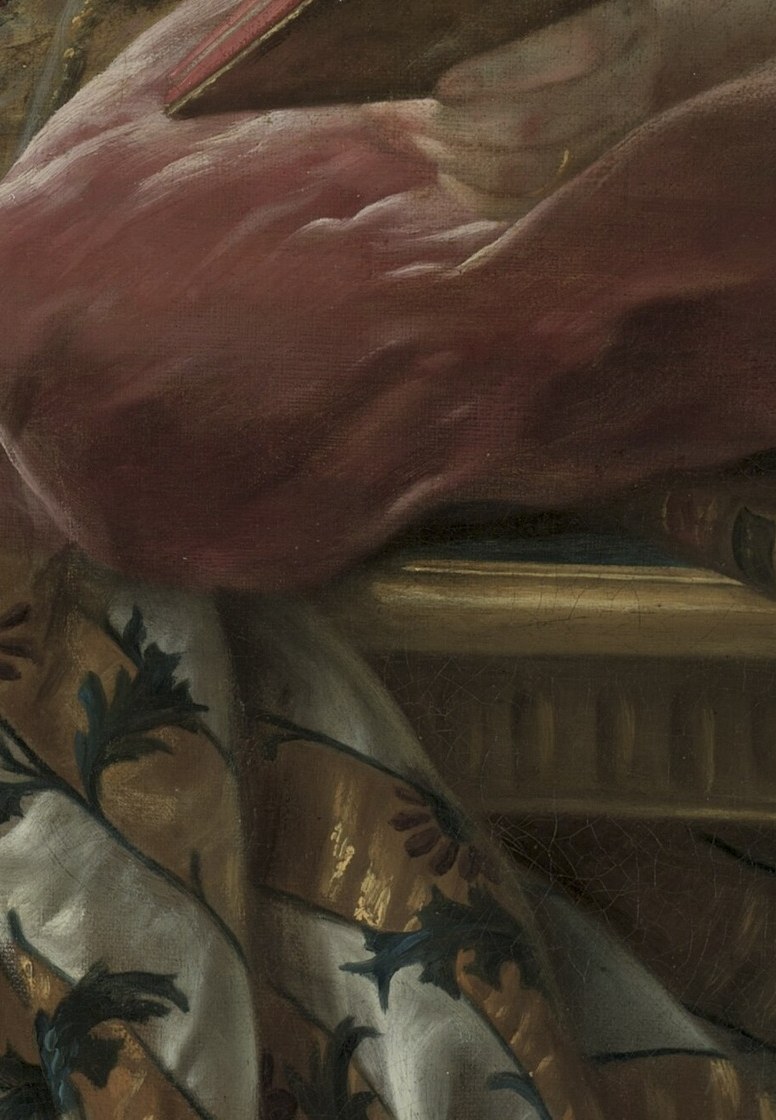
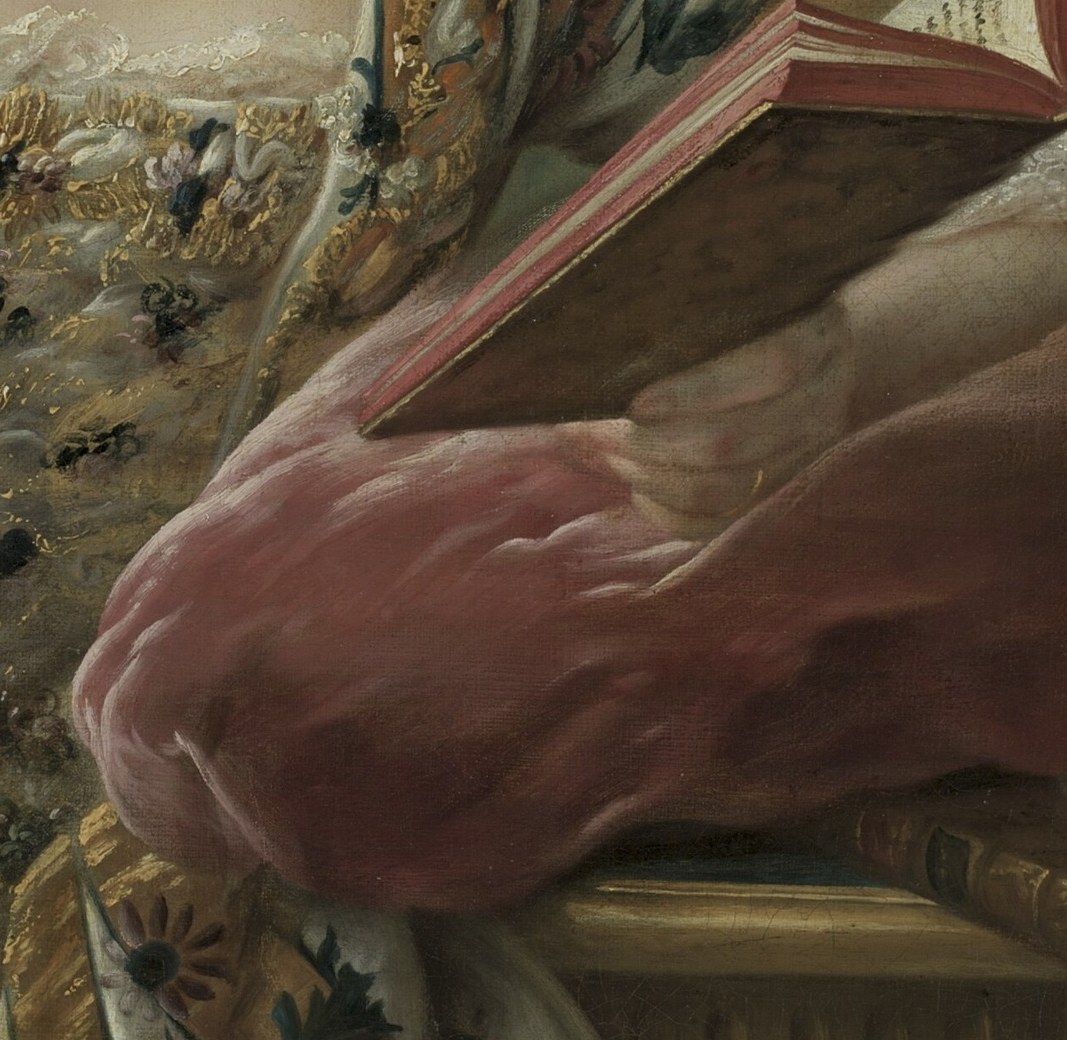
Drouais captures the Marquise with a serene, almost detached expression. Her heavily embroidered silk dress, adorned with metallic threads and delicate lace, speaks to the height of Rococo fashion and the sitter's elevated status. Notice the fan she holds, a subtle symbol of playful coquetry, and the luxurious pink velvet cushion beneath her.
Painted in 1759, during a period of lavish court life under Louis XV, this portrait reflects the era's refined yet increasingly criticized aesthetic. Drouais, a favored portraitist of the French aristocracy, was known for his ability to capture the opulence and intimate presence of his sitters, which, in this case, contributed to the painting's controversial reception.
The combination of the sitter's confident presentation and the overtly decorative style pushed the boundaries of acceptable portraiture, eliciting public disapproval. What aspects of this portrait do you find most compelling?
Details
Transcript
She looks out calmly, as if from a dream. Her dress is embroidered silk with metallic threads. This Rococo style was seen as decadent and too personal. Look at the delicate lace trim on her bodice. The artist painted her in 1759, a year of excess. Her hand holds a fan, a symbol of coquetry. This style of portraiture caused outrage at the time.