Windmill by moonlight by Jacob Maris
Jacob Maris's "Windmill by Moonlight," painted in 1900, is a stunning example of the Hague School’s atmospheric landscapes, now housed at the Rijksmuseum.
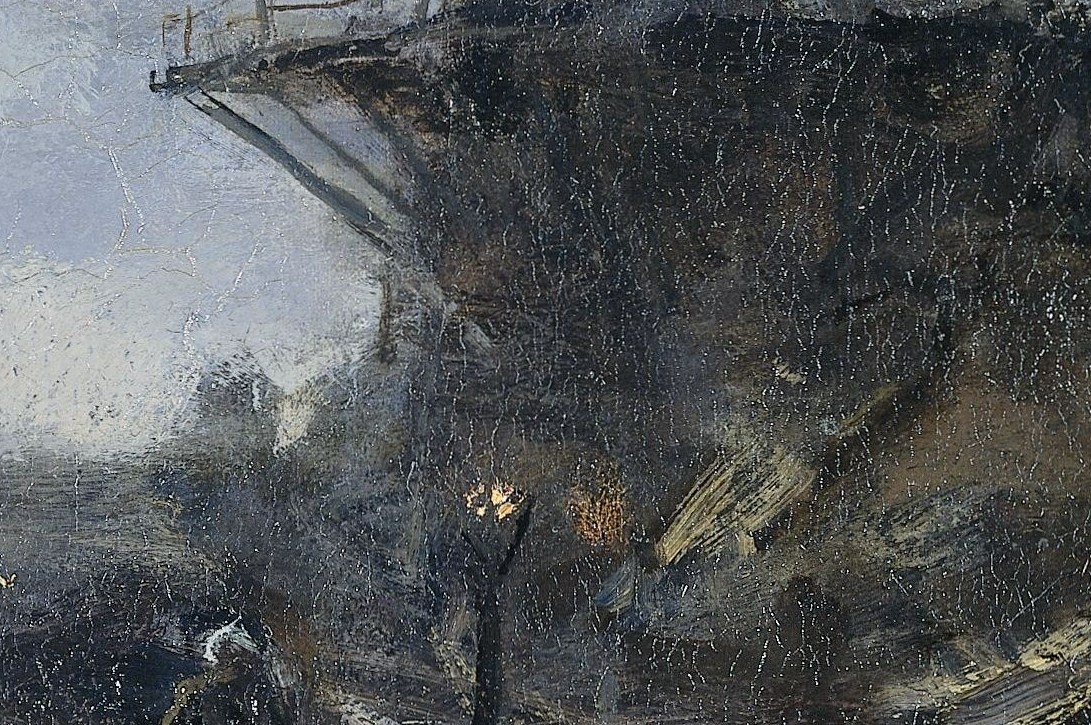
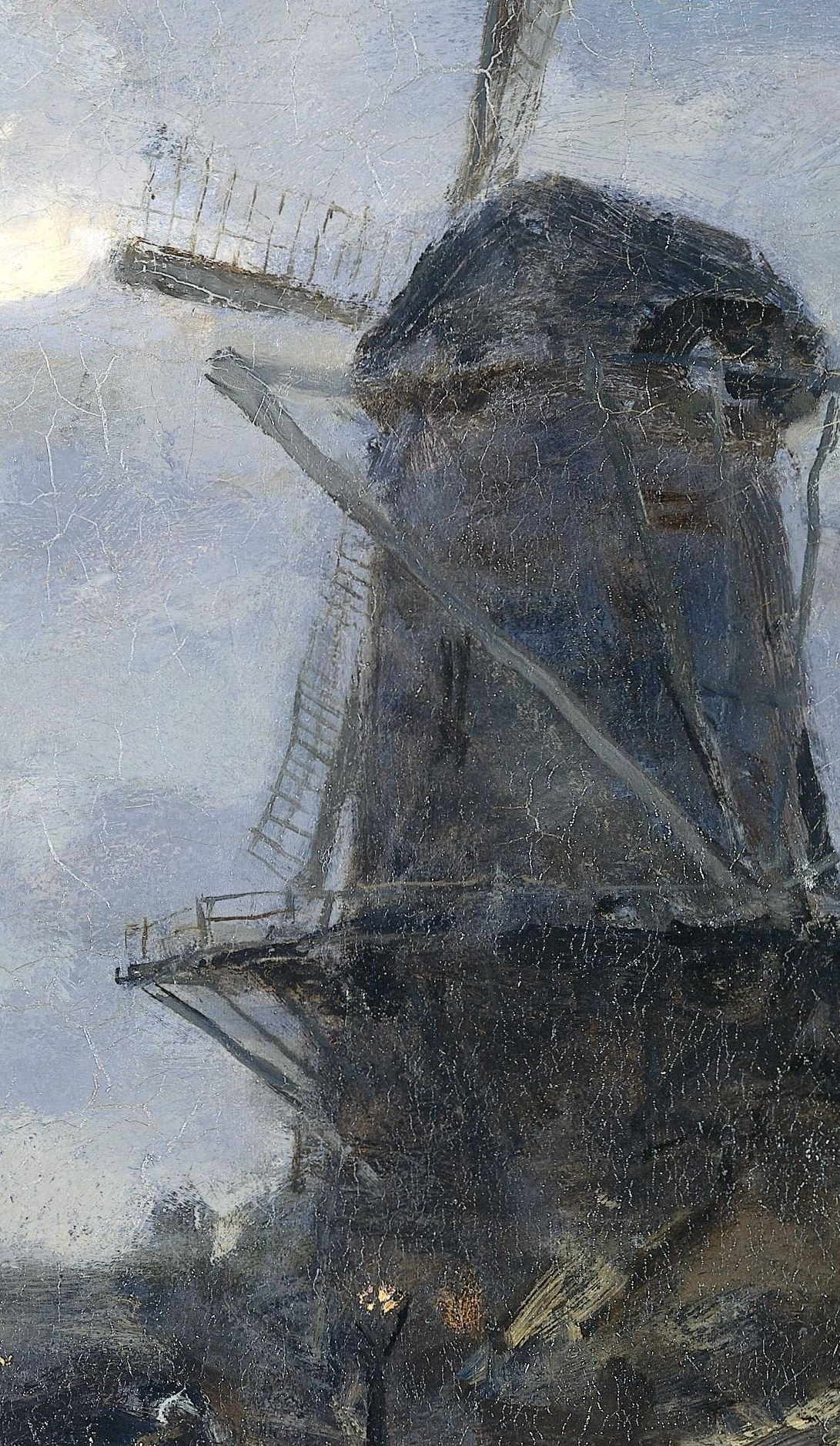
Observe how Maris masterfully uses thick, impasto brushwork, particularly on the windmill's structure, to convey texture and volume. The interplay of light and shadow, created through subtle shifts in paint, gives the scene a haunting, almost three-dimensional quality.
Maris, a leading figure of the Hague School, was known for his ability to depict the Dutch environment with both realism and profound atmosphere. This painting exemplifies his shift toward Impressionist influences, focusing on the transient qualities of light and mood.
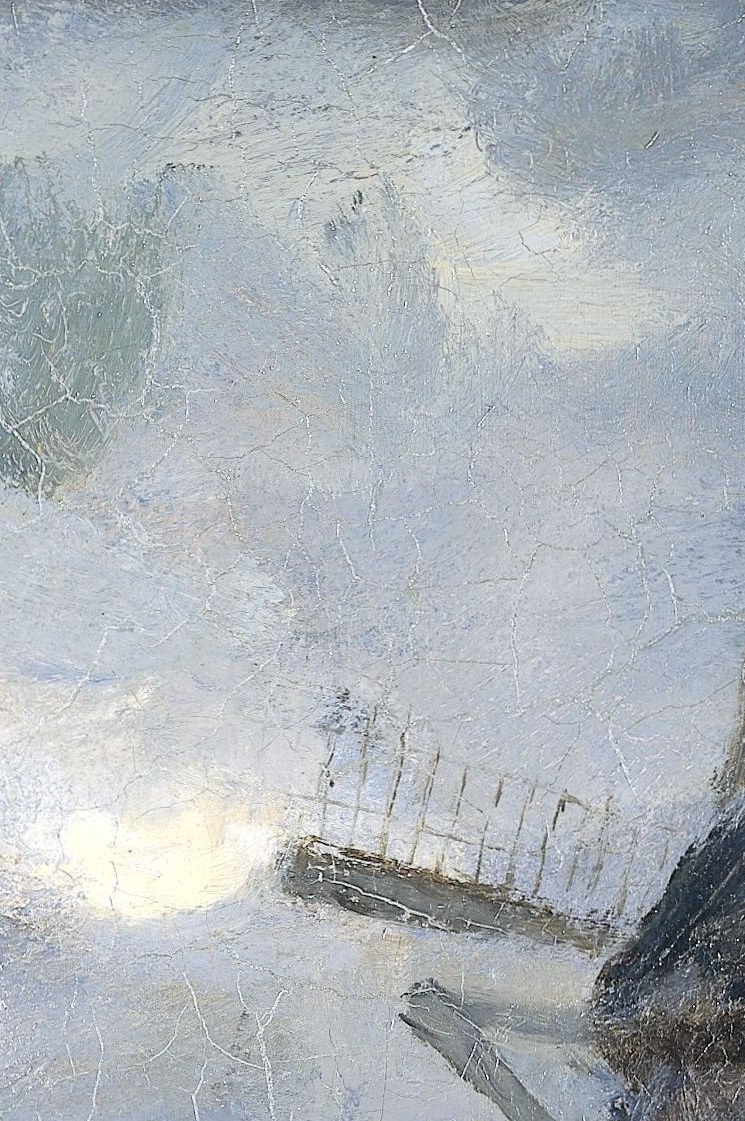
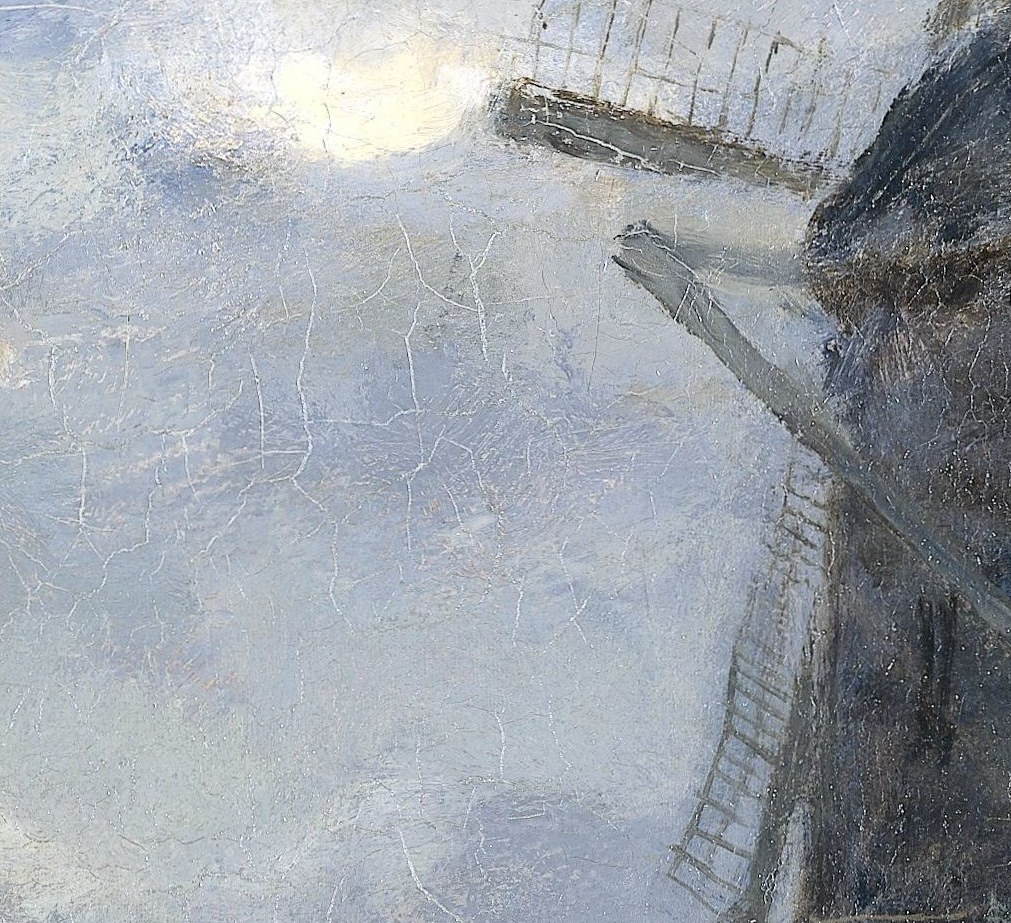
What details do you notice in the moonlight?
Details
Transcript
This painter was a master of capturing moonlight. He built up thick, impasto paint for the windmill's wood. Notice the subtle shifts of light and shadow on the structure. The soft glow behind the clouds is almost three-dimensional. He used quick, visible strokes to make the clouds feel real. This technique gives the painting its haunting atmosphere.