Still Life with Milk Jug and Fruit by Cezanne, Paul
View the artwork: Still Life with Milk Jug and Fruit →
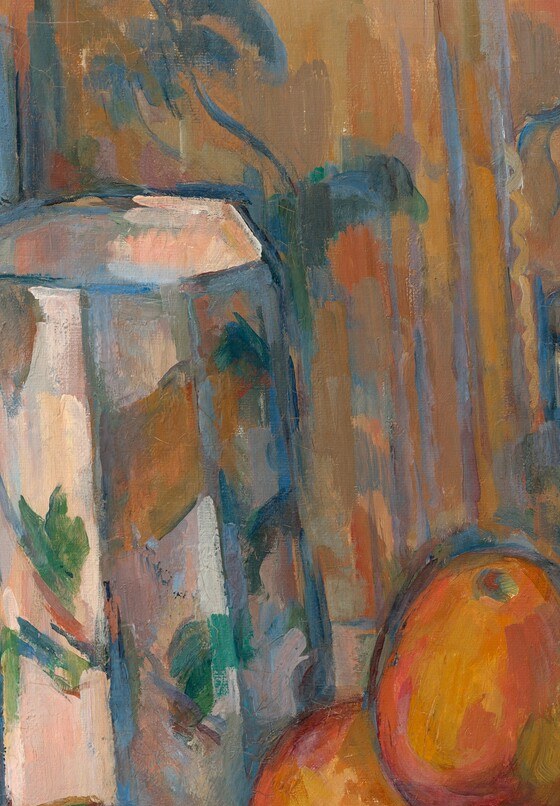
This oil painting by Paul Cézanne, Still Life with Milk Jug and Fruit (c. 1900), survived Nazi looting, a limestone quarry, and a house fire before finding its way to a museum. It now hangs in the National Gallery of Art in Washington, D.C.
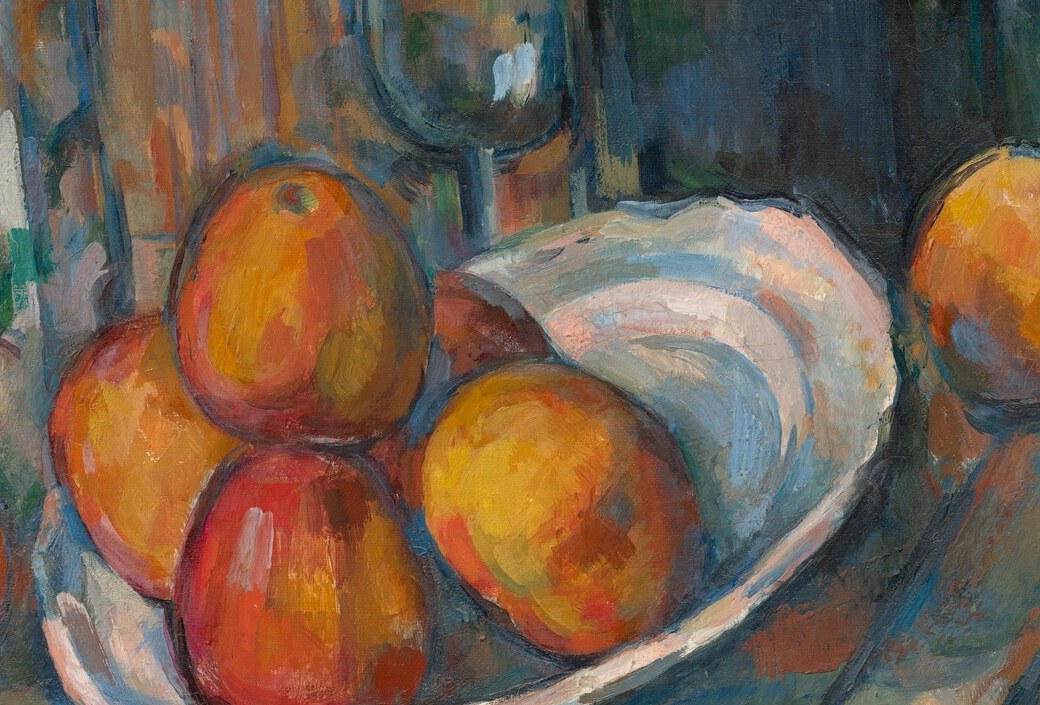
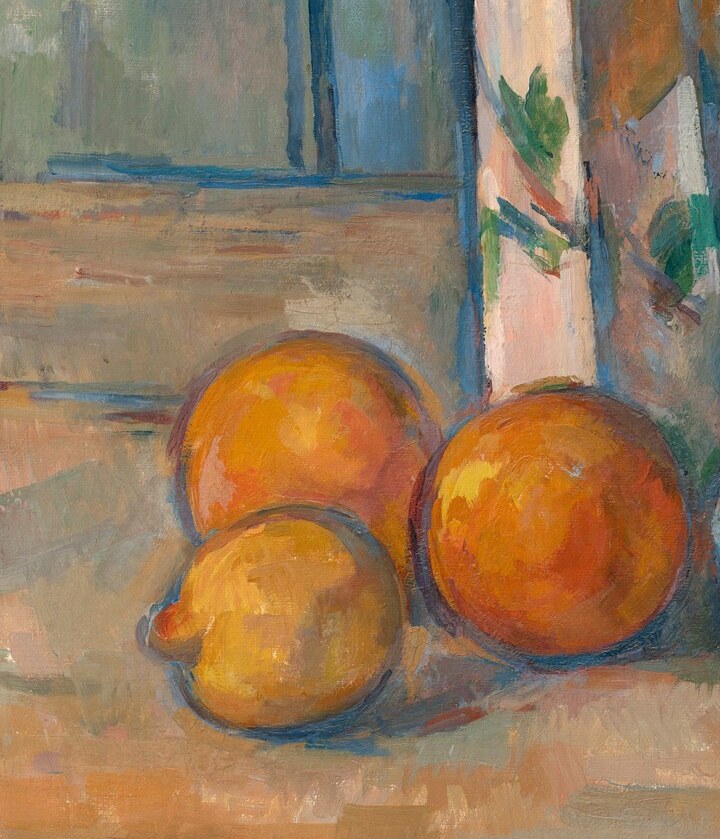
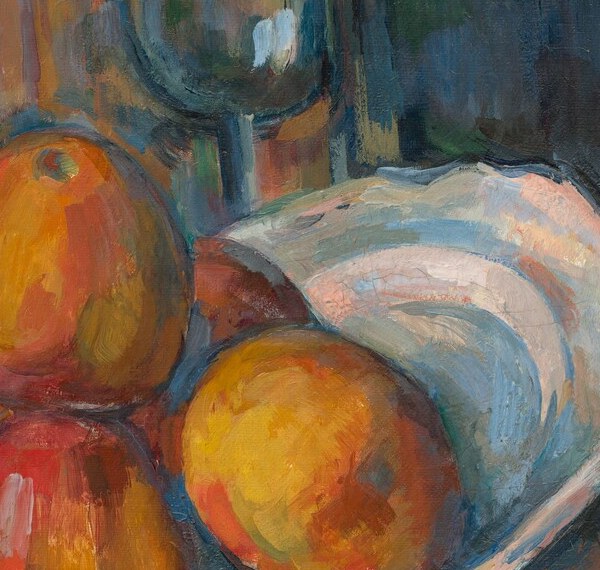
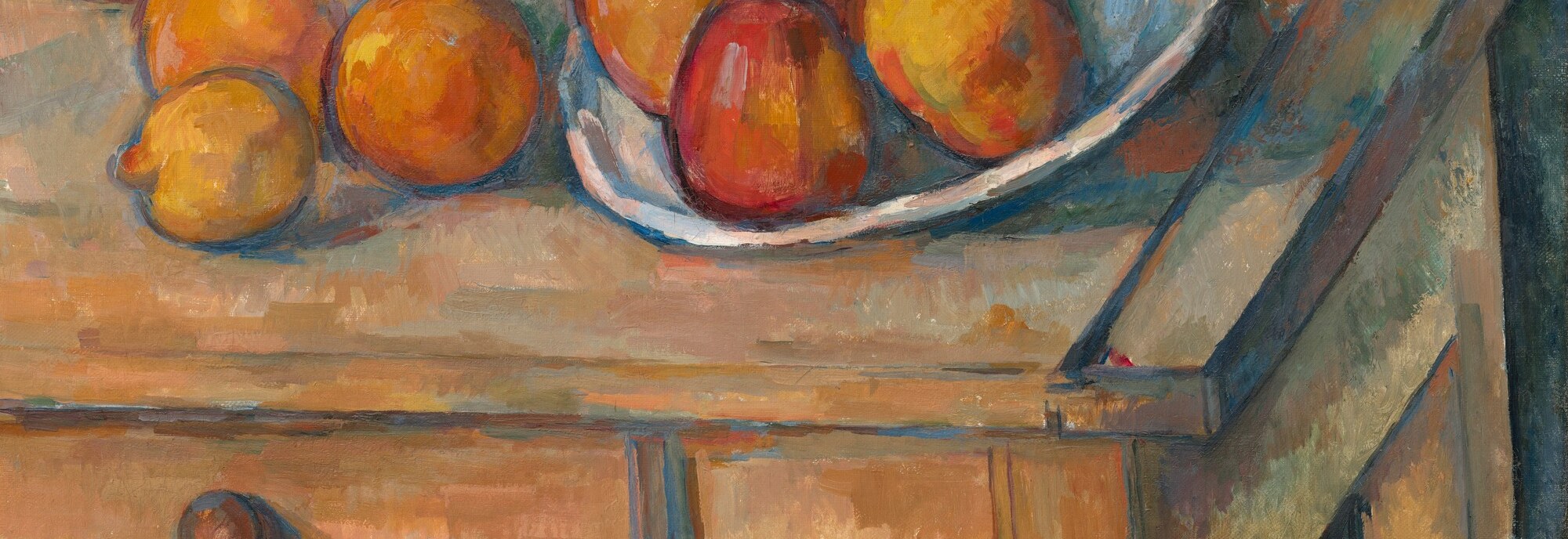
Look at how the white dish holding the oranges seems tilted up toward you, its ellipse deliberately distorted. Cézanne wasn't trying to get perspective wrong. He was showing you the dish from two angles at once, a trick that would lead directly to Cubism. The orange resting in the center is the warmest point in the whole composition, a chromatic anchor against the cool whites and green-grey curtain.
During the German occupation of France, the Nazis systematically seized art collections. This painting was hidden in a limestone quarry near Cézanne's hometown of Aix-en-Provence. After the war, it was stored at the house of the quarry keeper, where a fire broke out. A local garbage collector pulled the canvas from the flames.
Cézanne once said of his own work that he was 'the primitive of a new art.' The painting that nearly burned lived to prove him right.
#arthistory #cezanne #stolenart
Details
Transcript
Paul Cézanne painted this quiet kitchen table around 1900. He tilted the white dish toward you, flattening the space. The oranges are built from short strokes of warm and cool. Four decades later, Nazi looters hunted his work across France. This painting was hidden in a limestone quarry near Aix-en-Provence. After the war, it survived a fire at the quarry keeper's house. A garbage collector pulled it from the flames.