Artwork
Still Life with Milk Jug and Fruit
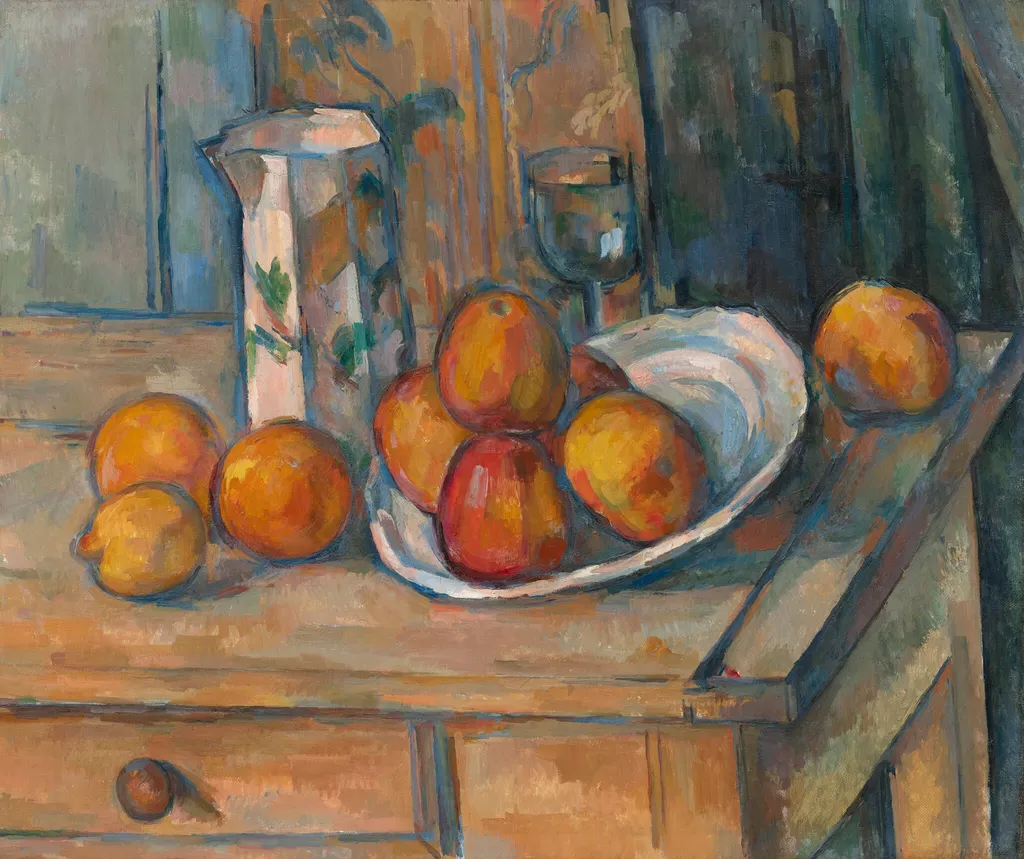
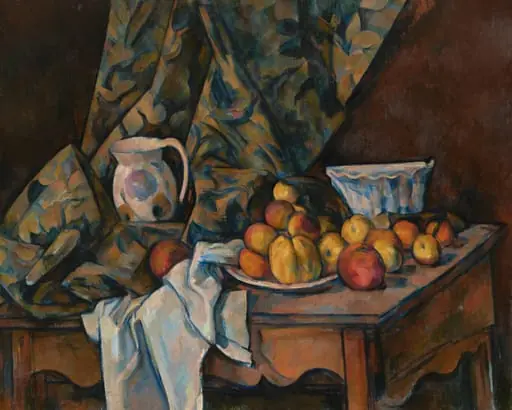
Still Life with Milk Jug and Fruit is an oil painting by the Post-Impressionist artist Paul Cézanne. It dates from 1900 and is held in the collection of the National Gallery of Art.
About this work
Technique & Style
Paul Cézanne's Still Life with Milk Jug and Fruit is executed in oil paint on a canvas support, measuring 45.
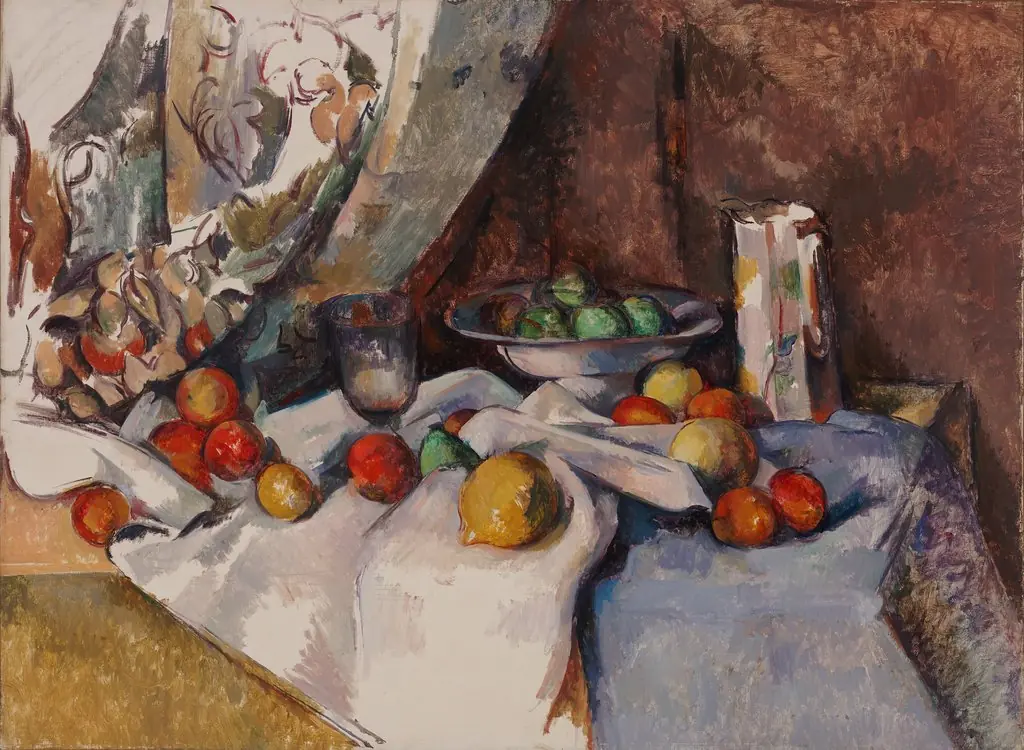
Paul Cézanne's Still Life with Milk Jug and Fruit is executed in oil paint on a canvas support, measuring 45.8 by 54.9 centimeters. Created in 1900, the work exemplifies the artist's mature still-life style, focusing on the structural arrangement of everyday objects including a creamer, fruit, stemware, and a table. The painting's formal qualities reflect Cézanne's characteristic approach to depicting volume and spatial relationships through color and distinct brushwork, rather than traditional linear perspective.
The canvas remains in the collection of the National Gallery of Art in Washington, D.C., having entered the institution in 1972 as a gift from the W. Averell Harriman Foundation. The medium and dimensions are consistent with the artist's late-period production, where the manipulation of oil on canvas served to deconstruct and reconstruct the visual field.
History & Provenance
Created around 1900, this oil on canvas by Paul Cézanne entered the collection of Claude Monet in Giverny before passing to Prince Antoine Bibesco, who held the work across Paris, London, Leningrad, and Strehaia, Romania. The painting was subsequently acquired by the Parisian dealer Paul Guillaume. In May 1930, Guillaume sold the piece to Marie N. Harriman and W. Averell Harriman in New York, where it was displayed at the Marie Harriman Gallery.
Following its time with the Harrimans, the work entered the holdings of the W. Averell Harriman Foundation. In 1972, the foundation gifted the painting to the National Gallery of Art in Washington, D.C., where it remains part of the permanent collection.
The painting Still Life with Milk Jug and Fruit is held by the National Gallery of Art in Washington, D.C. It entered the museum’s collection through a 1972 gift from the W. Averell Harriman Foundation, having previously been owned by Prince Antoine Bibesco, Claude Monet, and Paul Guillaume, and sold in May 1930 to Marie N. Harriman and W. Averell Harriman (Marie Harriman Gallery). The work is catalogued in the National Gallery’s collection records and was included in the exhibition “Monet Collector,” which highlighted the artist’s influence on later collectors.
Legacy
After Cézanne’s death, Still Life with Milk Jug and Fruit passed through a series of distinguished owners, Prince Antoine Bibesco, Claude Monet, dealer Paul Guillaume, and the Harrimans, before being gifted to the National Gallery of Art in 1972 by the W. Averell Harriman Foundation. Its provenance highlights the work’s appeal to major collectors and its eventual placement in a leading American museum. The painting was also included in the exhibition “Monet Collector,” underscoring its historical connection to Monet and its ongoing relevance in scholarly and public discourse.
Overview
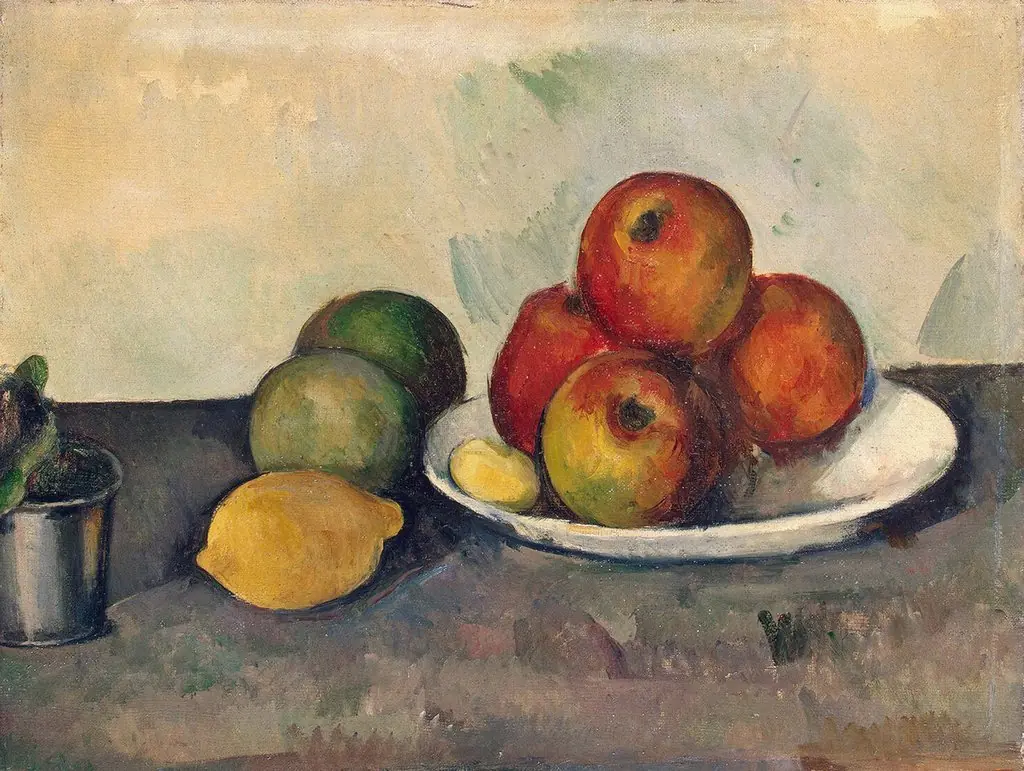
Still Life with Milk Jug and Fruit is an oil painting on canvas that presents a modest domestic scene. The composition features common household items such as a milk jug, various fruits, and stemware, all arranged on a table. The artwork captures a moment of quiet observation, focusing on the subtle interplay of light and form within an everyday setting, characteristic of the still life genre.
Subject & Meaning
The painting portrays a humble collection of objects typically found in a domestic environment. A ceramic milk jug stands alongside an assortment of fruit and delicate stemware, all resting upon a plain table surface. This deliberate arrangement evokes a sense of calm and simplicity, elevating ordinary household items to subjects worthy of contemplative study, rather than depicting an elaborate or symbolic narrative.
Own this work as a print
Artist & collection

Artist
Paul Cézanne ( say-ZAN, UK also siz-AN, US also say-ZAHN; French: ; Occitan: Pau Cesana; 19 January 1839 – 22 October 1906) was a French Post-Impressionist painter whose work introduced new modes of representation,…

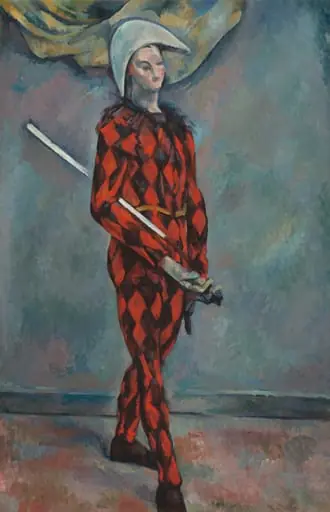 Harlequin
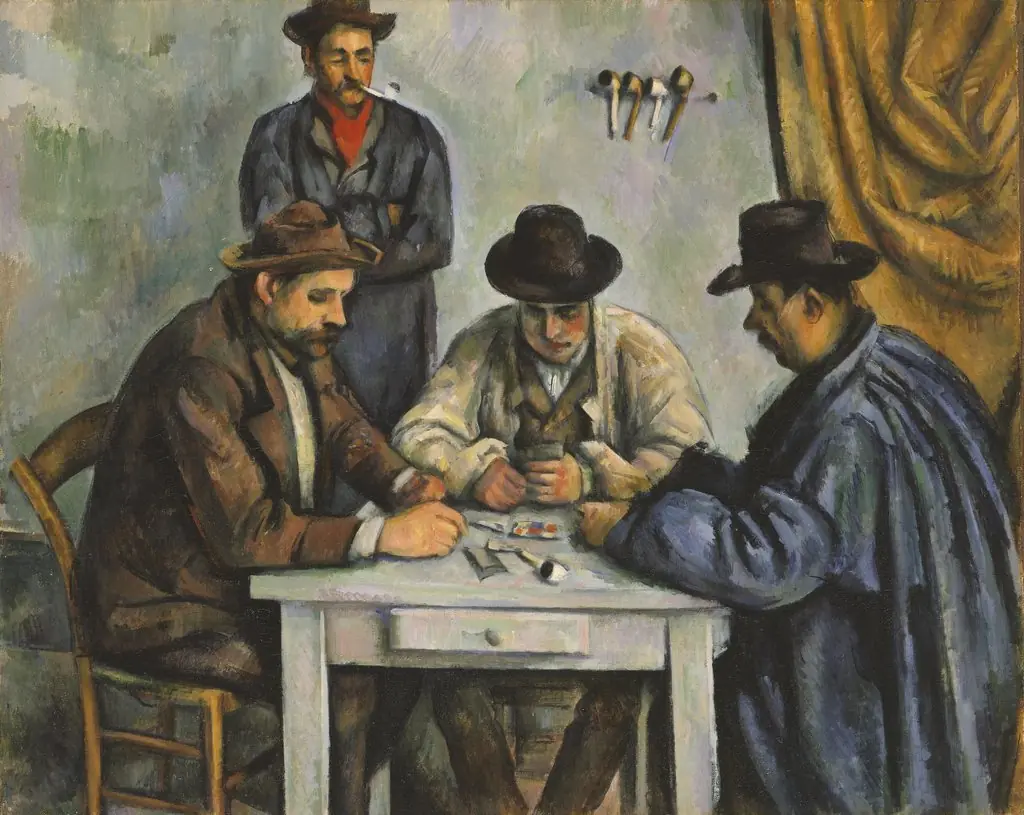 The Card Players
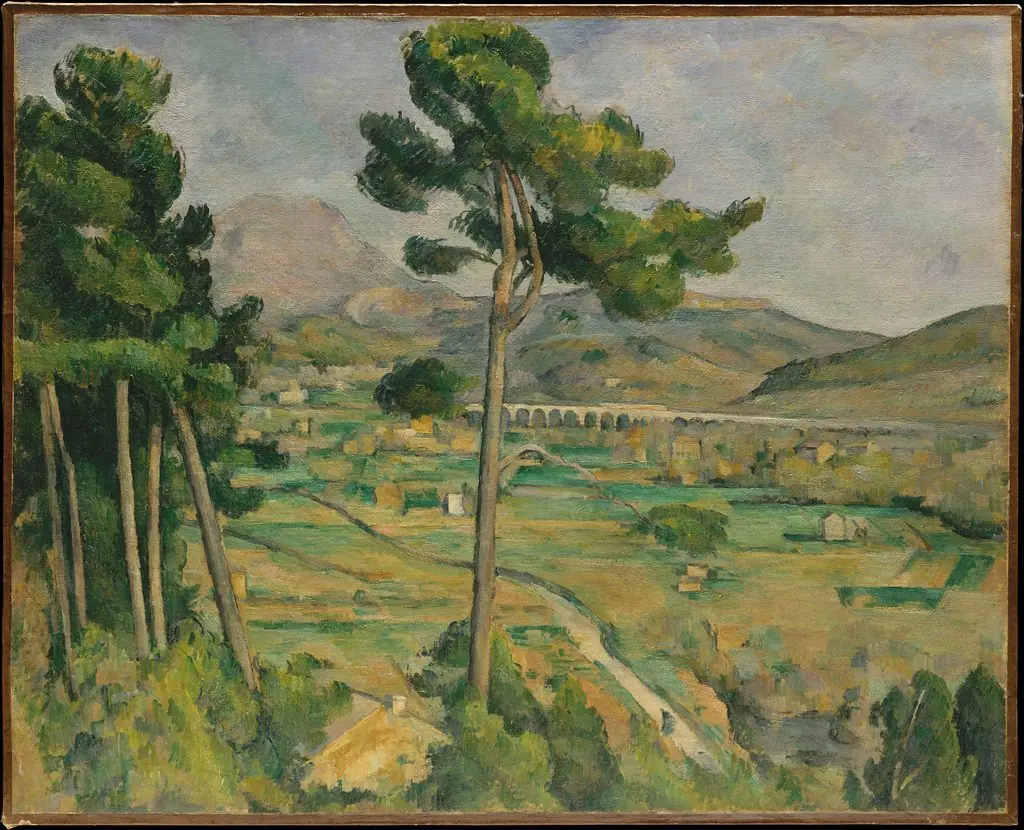 Mont Sainte-Victoire and the Viaduct of the Arc River Valley
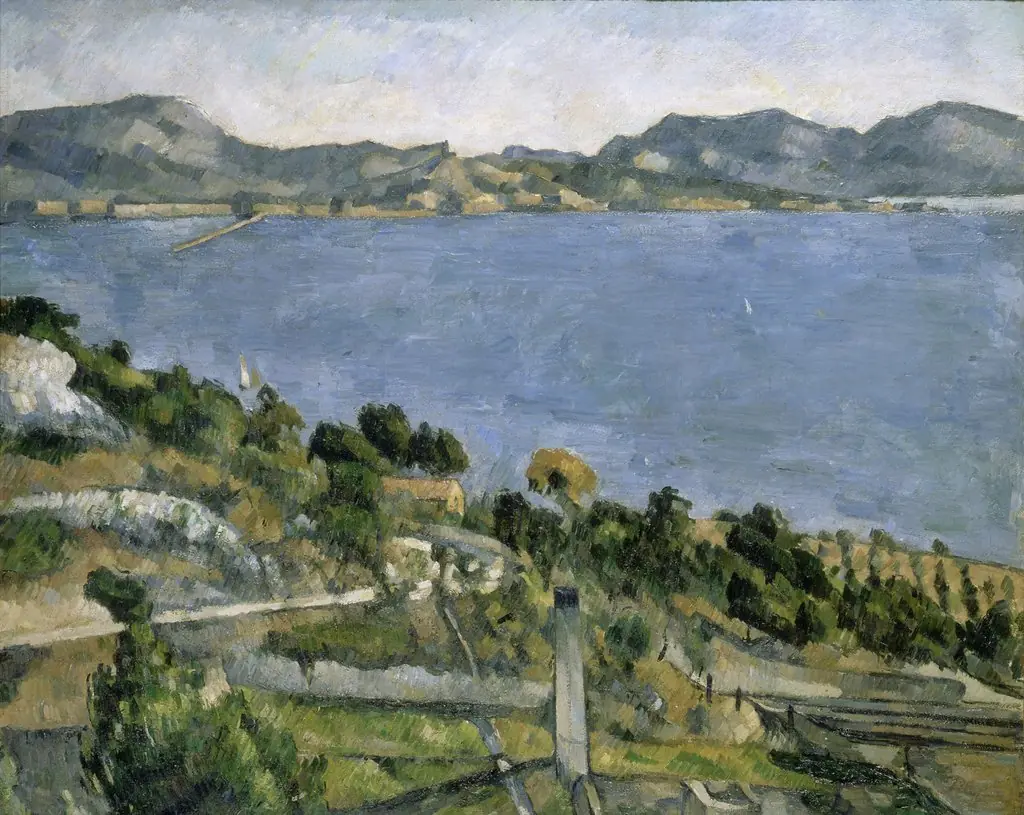 Le Golfe de Marseille vu de l'Estaque (The Gulf of Marseille Seen from L'Estaque)
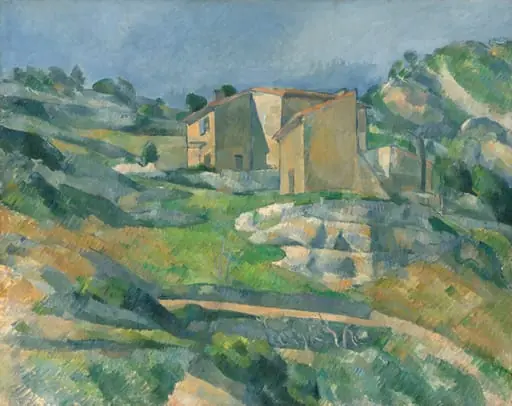 Houses in Provence: The Riaux Valley near L'Estaque
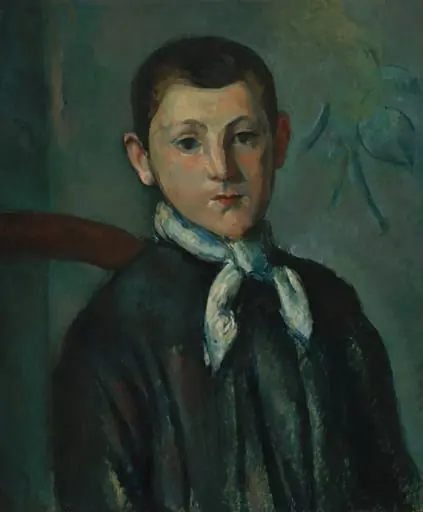 Louis Guillaume
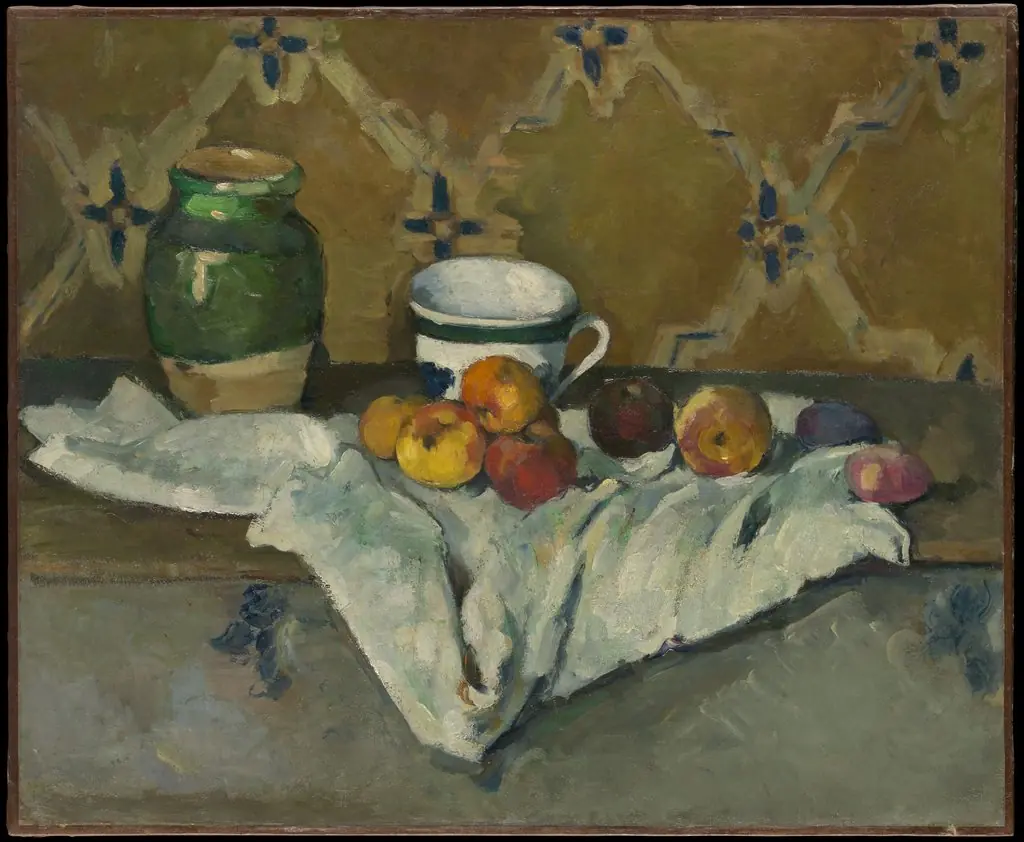 Still Life with Jar, Cup, and Apples
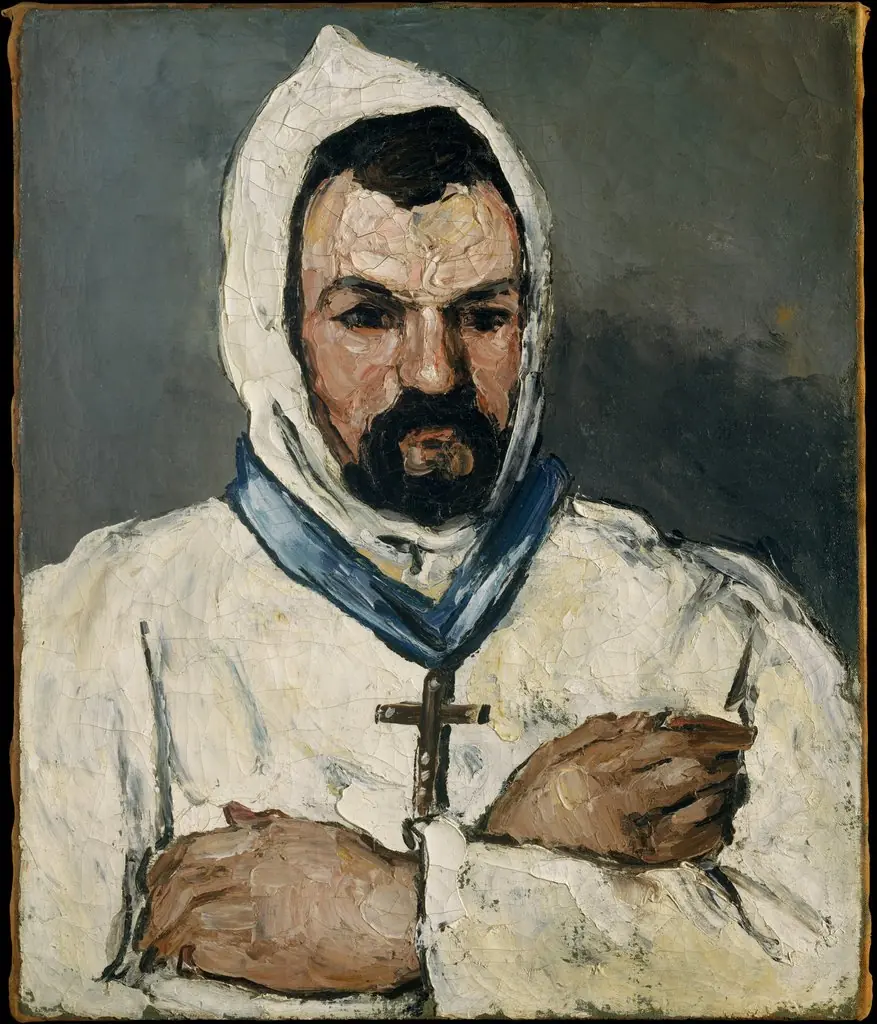 Portrait d'un moine (Monk's Portrait)