Interior of a Kitchen by Willem Kalf
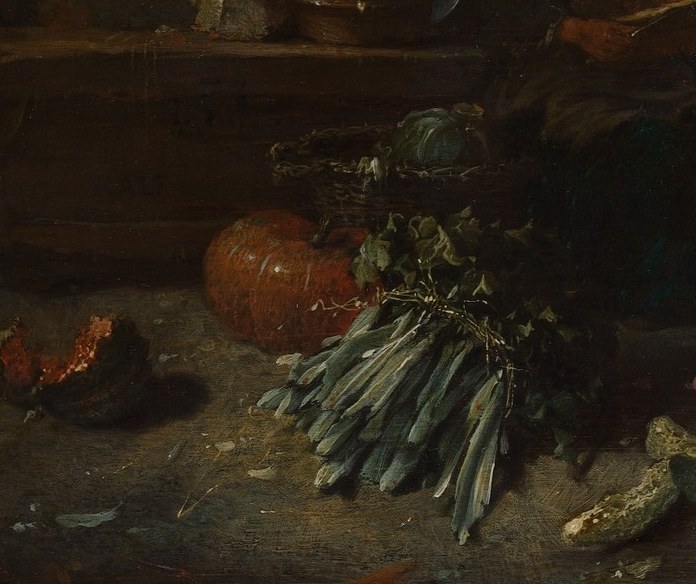
Willem Kalf painted *Interior of a Kitchen* in 1642, when he was just 23 years old. It hangs today at The Metropolitan Museum of Art. What makes it remarkable is where Kalf chose to put his details. The foreground cabbage and basket get the light, but the upper right corner of the canvas is nearly black at first glance. He was already showing the obsessive attention to texture that would later make his golden pronkstilleven pieces legendary, but here it serves a quiet domestic scene.
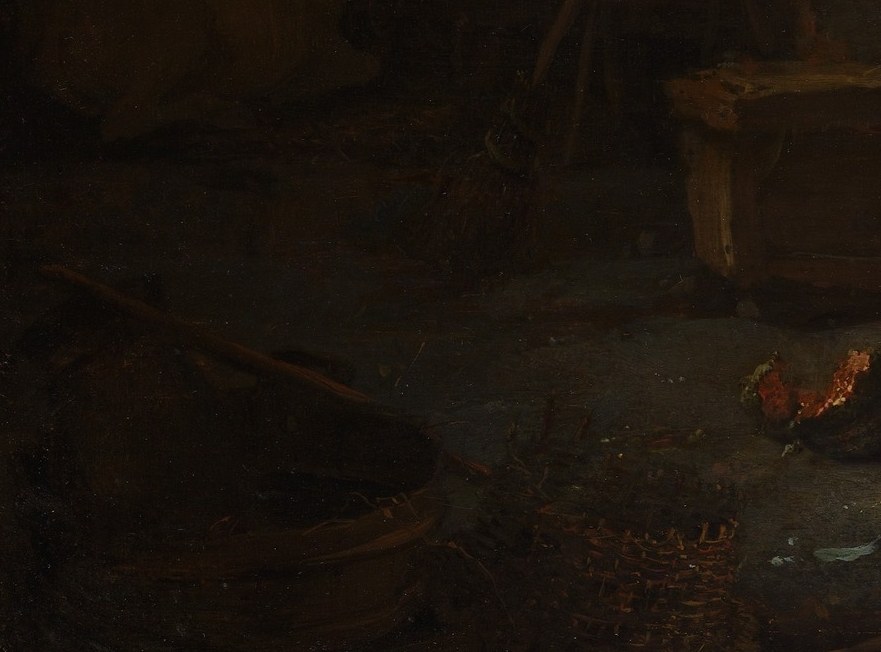
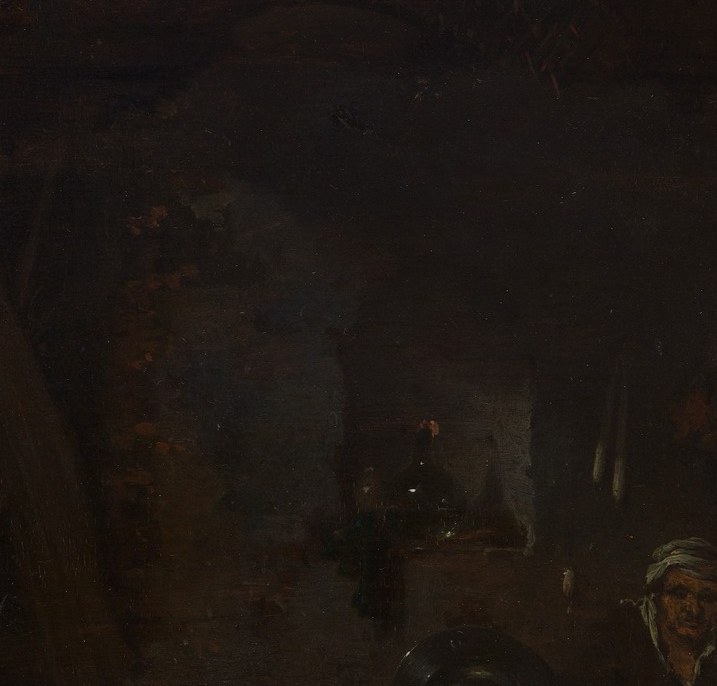
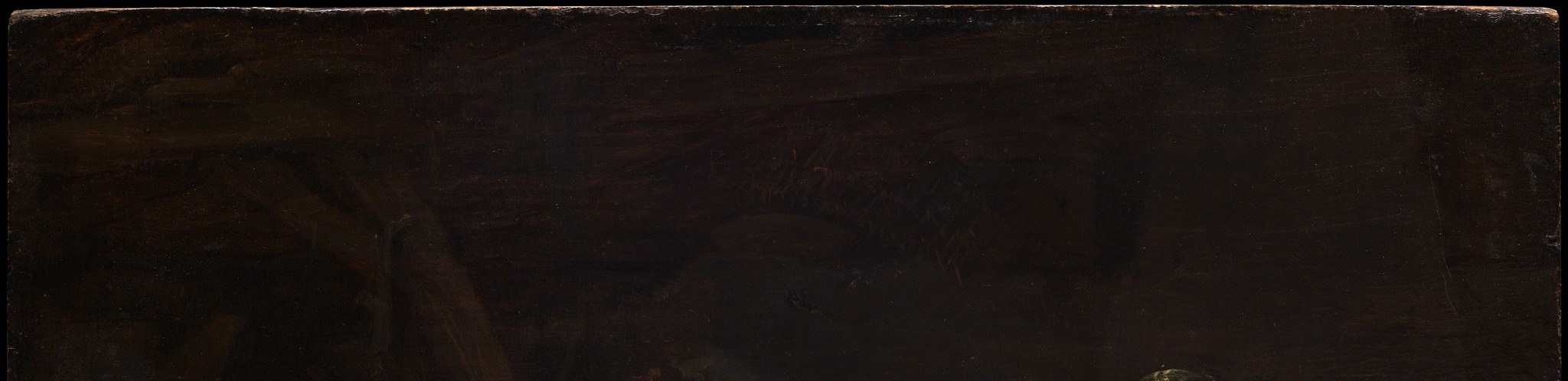
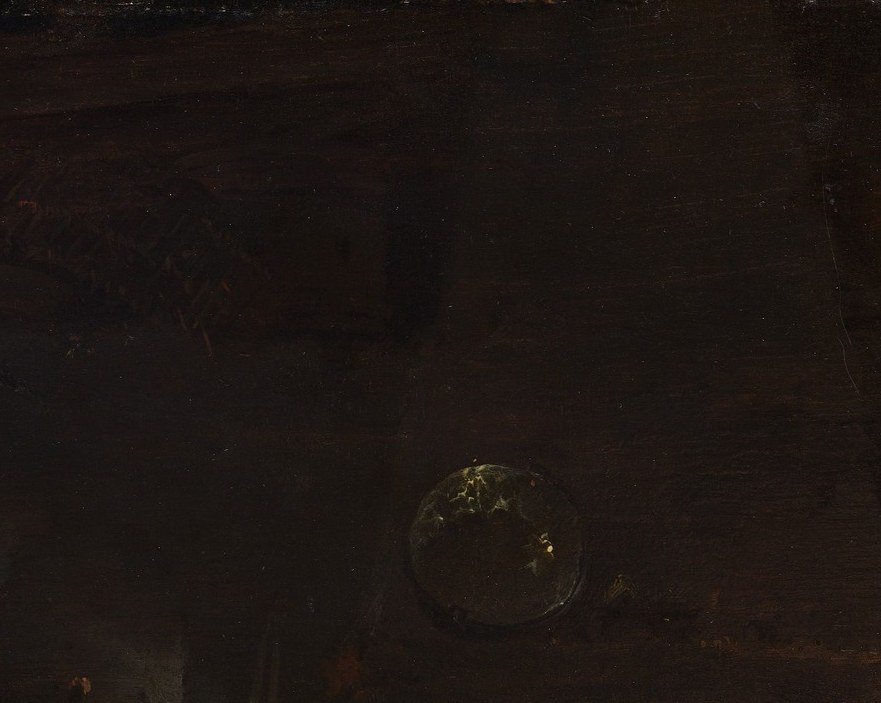
Look at the hanging objects in the upper right. The painting has darkened over centuries, and in person the area reads as a void unless you really stop on it. Give your eyes a moment and shapes resolve: a suspended basket, possibly a fowl or iron implements, hanging in the kitchen's upper register. Kalf coded an entire secondary inventory into the shadow zone. The woman's face catches a tiny flame below it all, anchoring the whole domestic world.
Kalf was one of the most celebrated still-life painters of the Dutch Golden Age, admired during his lifetime for both his art and his affable personality. *Interior of a Kitchen* is an early work, made before he shifted fully into the pronkstilleven style that became his signature. It shows a young painter already in command of atmospheric shadow and the quiet dignity of ordinary things. The Met acquired it as part of its deep collection of 17th-century Dutch genre painting.
So much of Dutch Golden Age painting rewards slow looking. Kalf didn't waste the canvas. The darkness at the edges of this kitchen still has a story to tell.
Details
Transcript
A dark kitchen in 1642. A man and a woman at work. Kalf was 23, still years from the golden goblets he'd become famous for. Here he paints humble things: a cabbage, a basket, a worn cloth. The light pulls you into the figures. Then you stop looking up. Now look into the near-black space above them. Shapes emerge from the shadow. A basket. Suspended game or iron. Kalf buried an inventory of the kitchen in the darkness itself.