Portrait of a Man with a Shell by Thomas de Keyser
This is Thomas de Keyser's Portrait of a Man with a Shell, painted around 1625. Long before Rembrandt dominated Dutch portraiture, de Keyser was the most sought-after portrait painter in Amsterdam, and this painting shows exactly why.
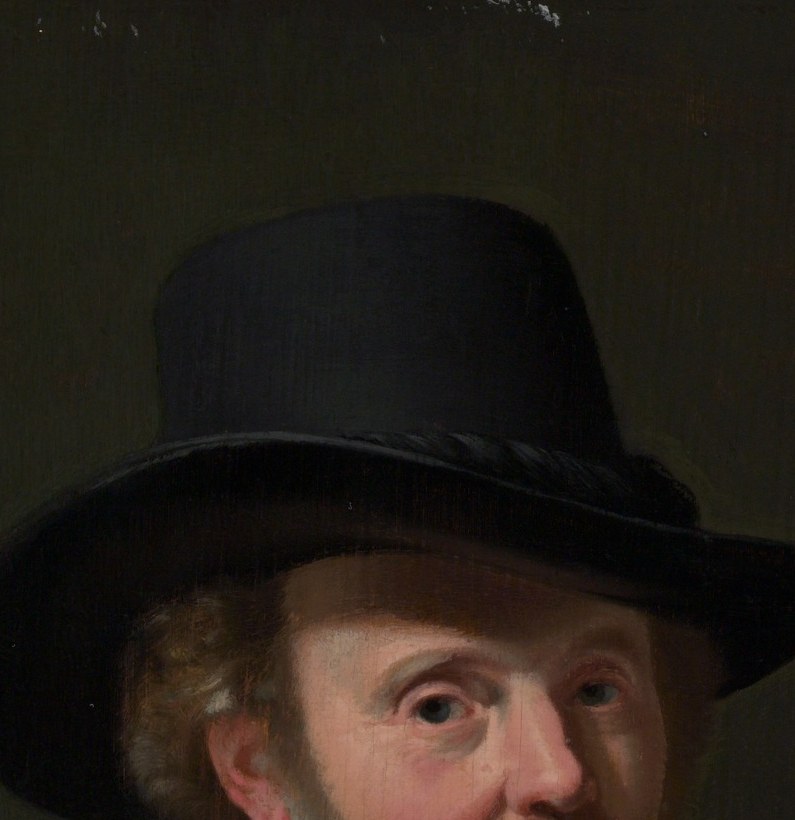
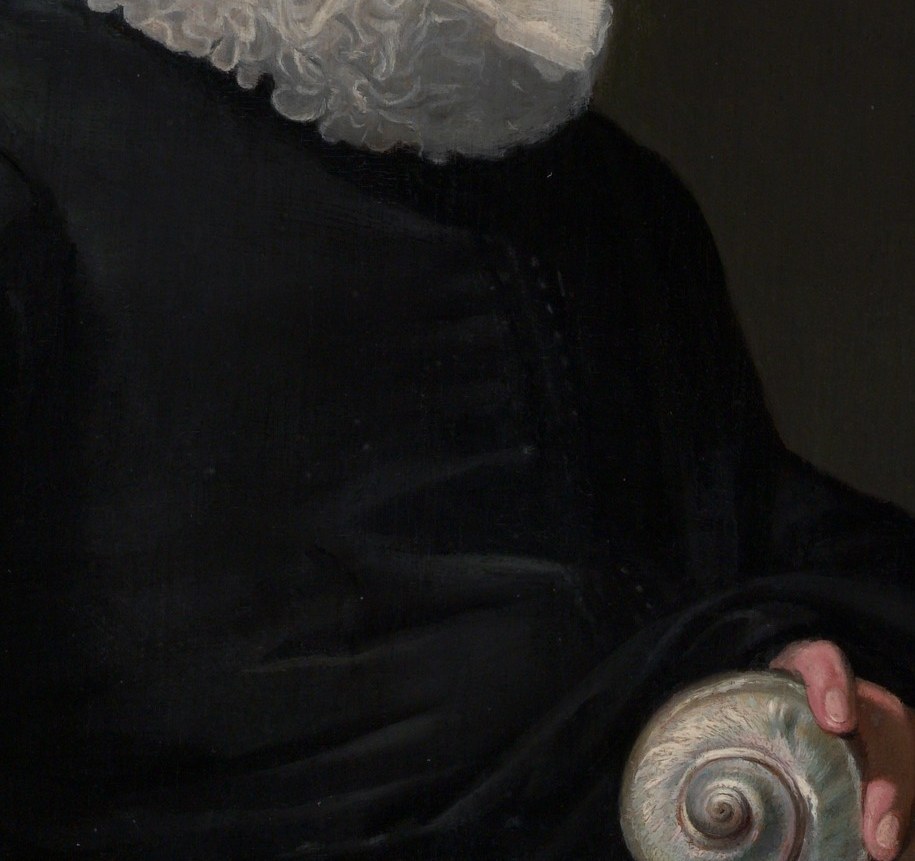
At first glance, you see the standard toolkit of a Dutch Golden Age portrait: the broad-brimmed black hat, the elaborate white lace ruff, the direct, unflinching gaze. But the painting is named for what the sitter holds. Cradled in his hands is a large spiral shell, likely a nautilus or volute, painted with the same care de Keyser gives the man's own face. Follow your eye to the shell's interior lip; the artist has rendered the spiral aperture with a depth that pulls you in.
In 17th-century Holland, exotic shells were prized Wunderkammer objects, collected by scholars, natural philosophers, and wealthy burghers as evidence of the natural world's marvels. The man does not brandish his shell like a status symbol. His hands present it tenderly. He is a custodian of curiosity, not a merchant of goods.
De Keyser would soon be overshadowed by Rembrandt, who absorbed lessons from his confident handling of light and shadow. Many of de Keyser's works were later misattributed to Rembrandt himself. What do you think this man is thinking as he meets your eye across four centuries?
Details



Transcript
He looks like any wealthy Dutch merchant. The hat, the lace, the confident gaze. But the painting is called Portrait of a Man with a Shell. Look at what he holds. A large spiral shell, cradled like a specimen. In the 1620s, shells like this were collected as objects of wonder. He is not selling it. He is its custodian. This is a portrait not of wealth, but of curiosity itself.