Italian landscape with figures by Johannes Lingelbach
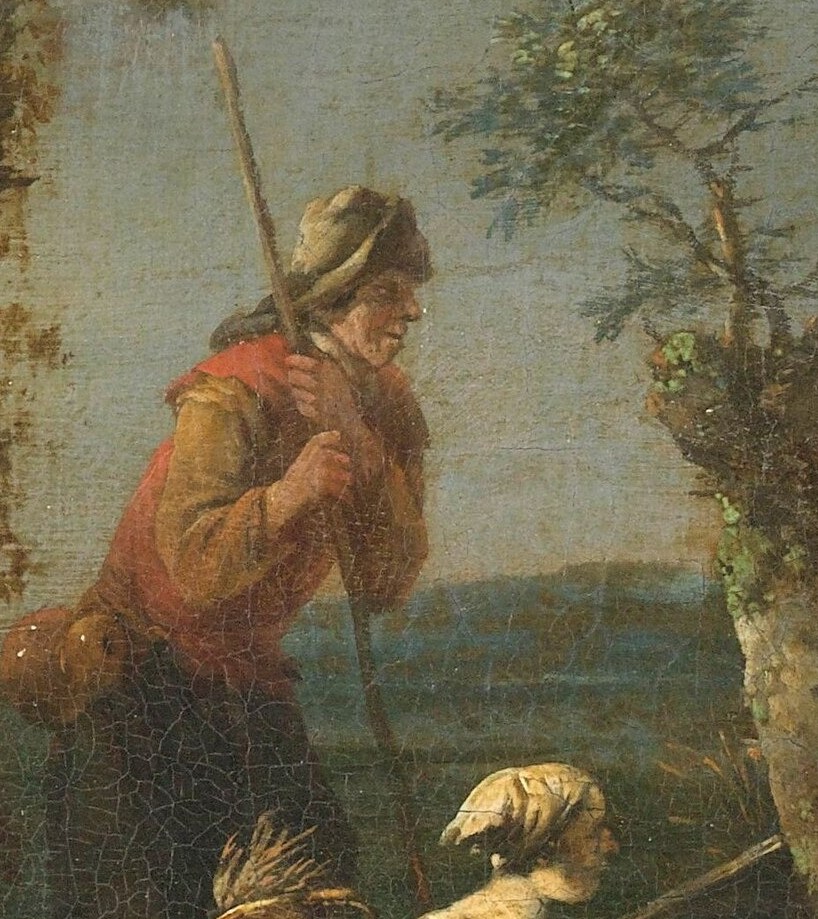
Around 1650, Johannes Lingelbach, a Dutch painter living in Rome, captured this ordinary scene: a journey through the Italian countryside. His *Italian landscape with figures* shows travelers moving along a dusty path, highlighting the everyday reality of transport and trade in the mid-17th century.
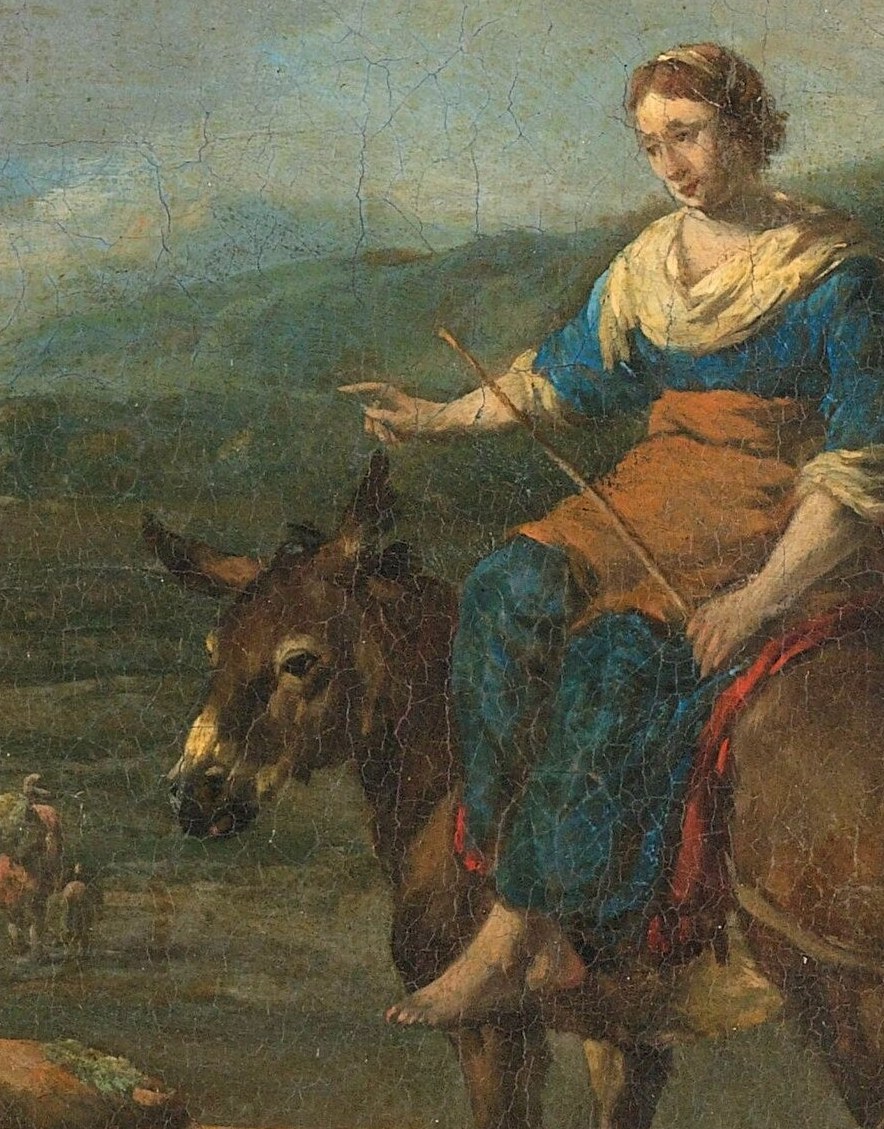
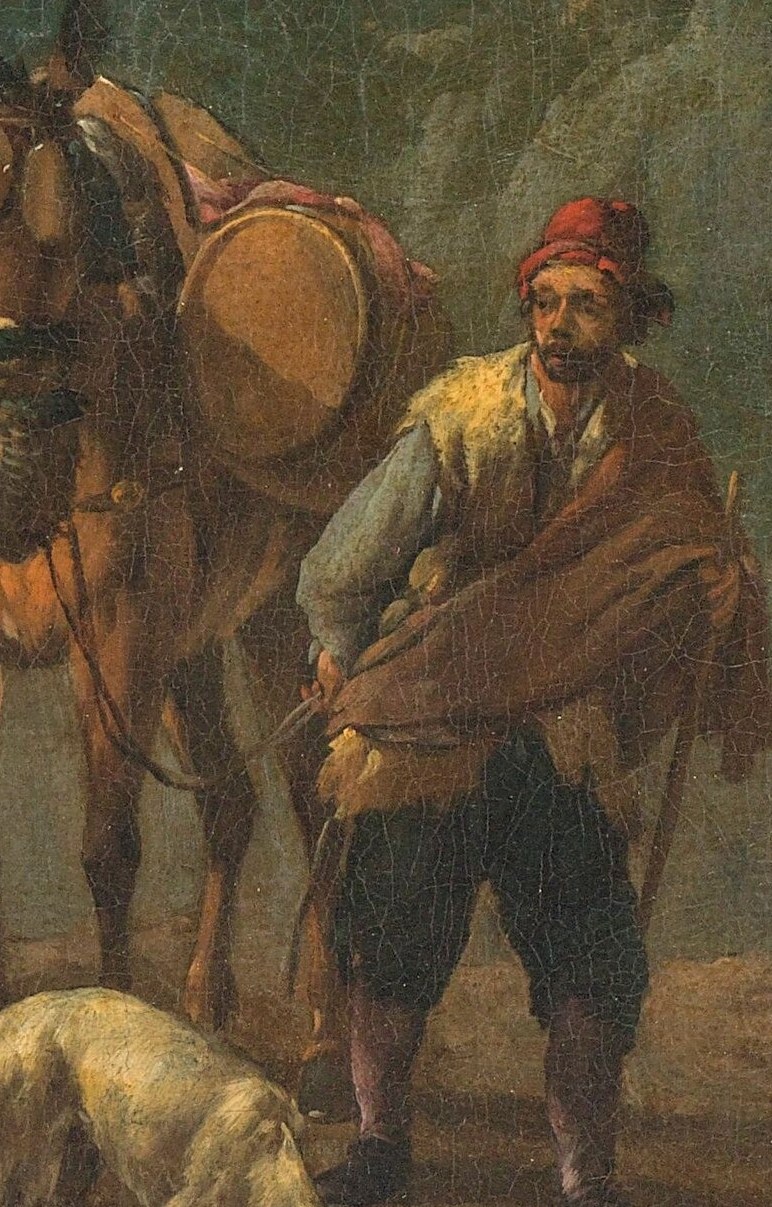
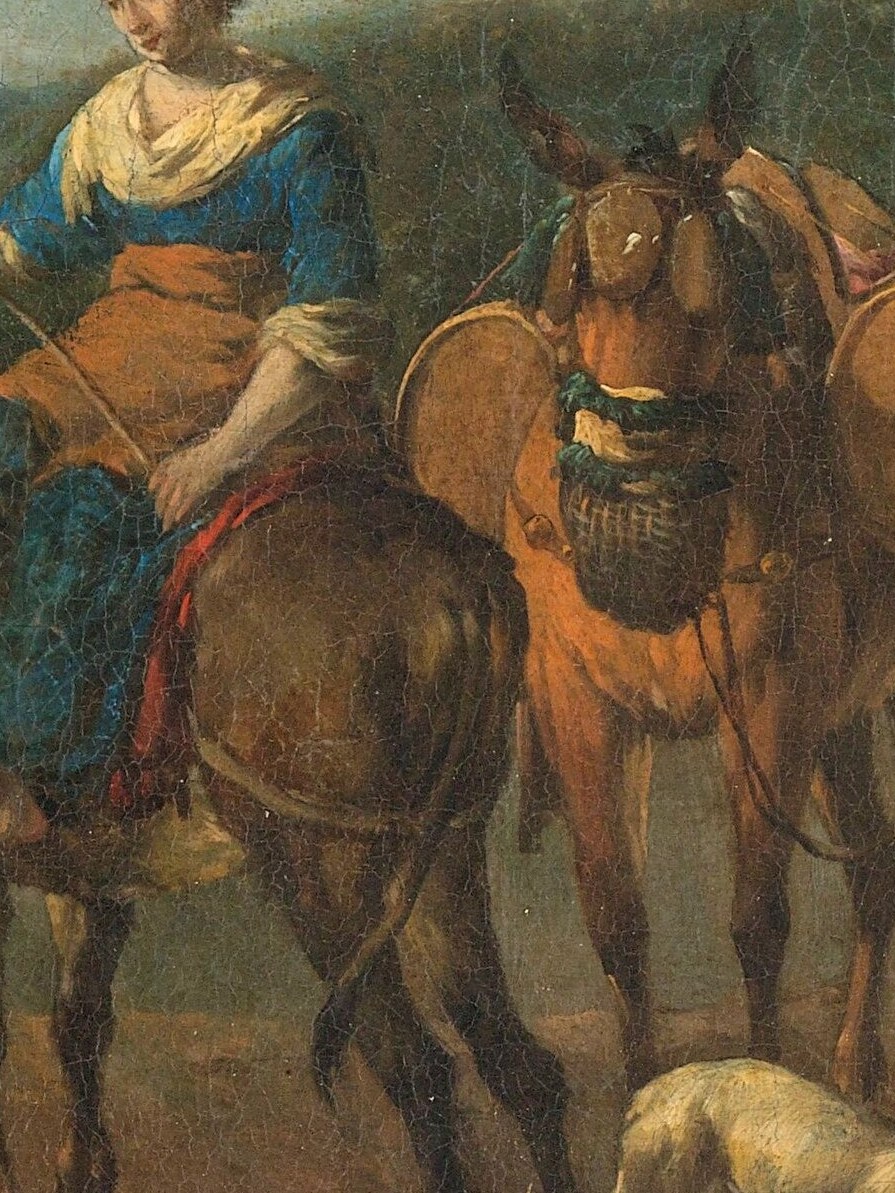
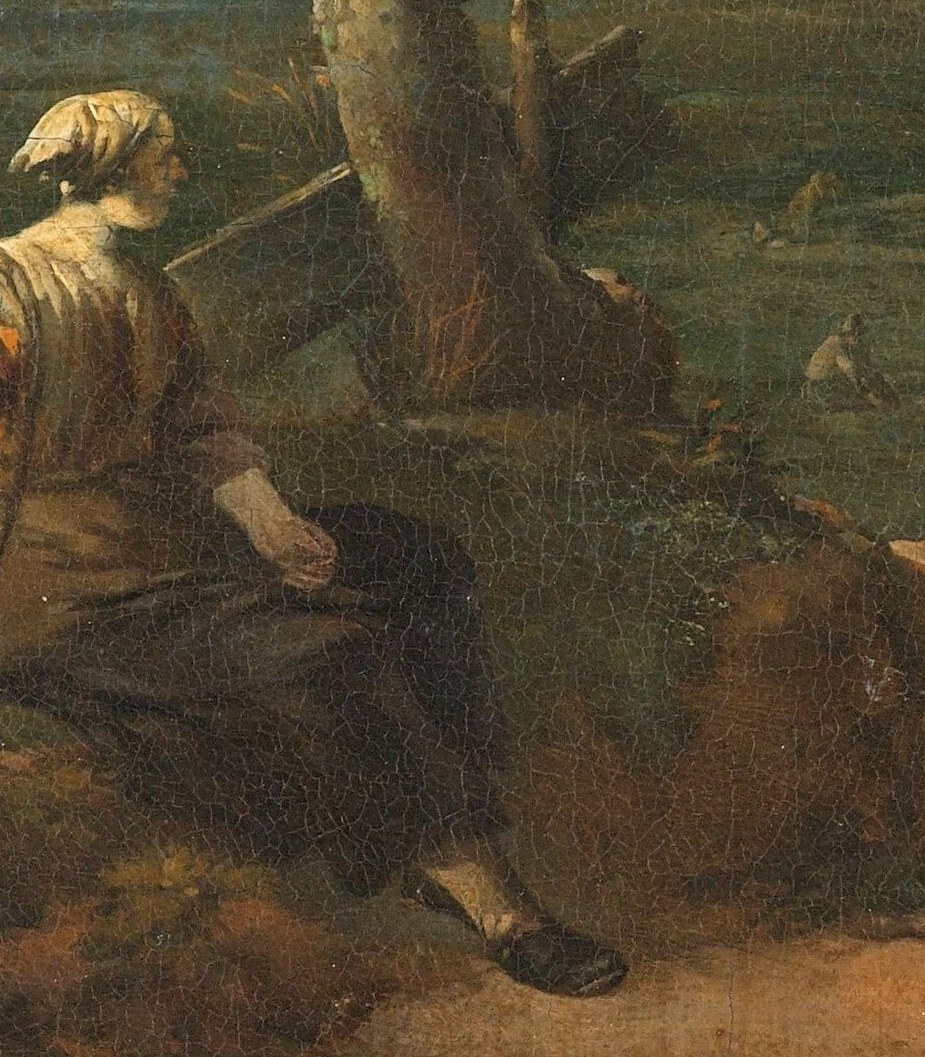
Look closely at the figures and their burdens. The woman on the donkey, the man leaning on his staff, and the pack animals laden with barrels all speak to the constant movement of people and goods. Even the child, weary from travel, is part of this common scene.
Lingelbach was part of a group known as the Bamboccianti, Northern European artists who documented the daily lives of common people in Italy. His work offers a window into the bustling, yet often overlooked, aspects of 17th-century European life. The painting is held in the collection of the Rijksmuseum.
What details do you notice that tell a story of travel and daily life?
Details
Transcript
This is a typical journey, mid-17th century Italy. A woman rests on her donkey, carrying her bundle. Many Dutch painters came to Rome to capture daily life. These travelers carried goods like these barrels. Even a small child would contribute to the journey. The painter worked in Rome, documenting ordinary life.