Procris' Prayer to Diana by Luini, Bernardino
Bernardino Luini's "Procris' Prayer to Diana," painted around 1521, is a fresco that has a surprising history. Originally applied directly onto a wall, this work was later meticulously removed and is now displayed as a movable piece of art.
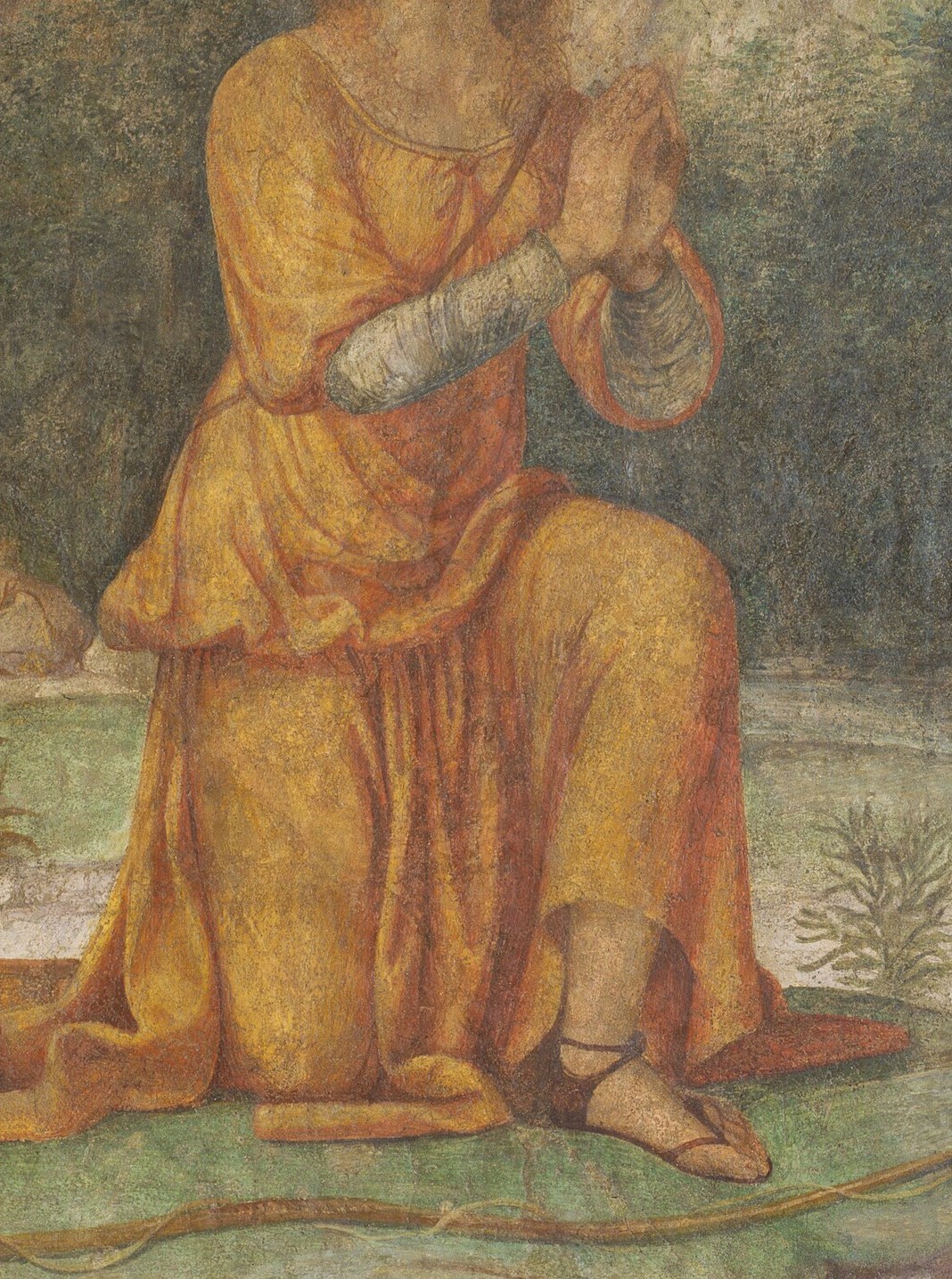
Look closely at Procris, a figure from classical mythology, as she kneels in prayer. Her vibrant orange-yellow gown is a striking contrast to the subdued natural setting, drawing attention to her devout pose and delicate features.
Fresco painting is a demanding technique, requiring pigments to be applied rapidly to wet plaster. This particular fresco underwent a significant transformation when the entire section of the wall was carefully removed. It was then moved and hidden during a world war to protect it from damage, a testament to its enduring value.
This fascinating journey from wall to museum frame highlights how art can transcend its original medium and location, surviving through tumultuous times to be appreciated by new generations. What do you notice about the detailed foliage in the foreground?
Details
Transcript
This fresco was painted onto a wall around 1521. The technique required paint to be applied quickly to wet plaster. Procris, a figure from mythology, kneels in prayer. The vibrant gown draws the eye to her devotion. Later, the entire section of wall was removed. It was moved and hidden during a world war. Today, you can see it in a museum, framed like a painting.