The Holy Family by Joos van Cleve

Joos van Cleve’s The Holy Family, painted in 1512 for a private patron, places the Virgin’s nursing scene inside a modest Flemish home, now displayed at the Royal Museum of Fine Arts Antwerp.

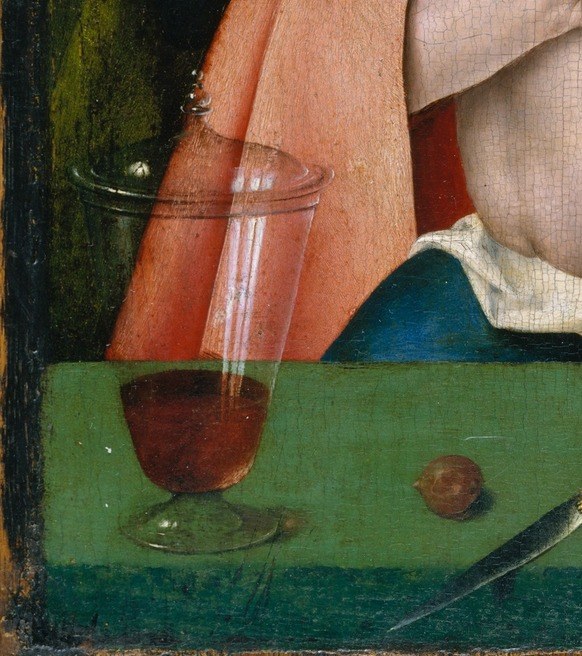
Look for Mary’s folded hands cradling the infant, the plate of grapes, pomegranate and melon, and a glass of red wine on a green cloth. A shelf of books and a bottle sits in the background, adding quiet scholarly depth.

Van Cleve worked in Antwerp after 1511, blending Early Netherlandish detail with emerging Renaissance influences. The work follows the Madonna Lactans tradition, using everyday objects to make the divine feel reachable.

The quiet devotion captured here invites reflection on how simple care can hold sacred meaning. What quiet acts of love shape your world?

#arthistory #JoosVanCleve

Details
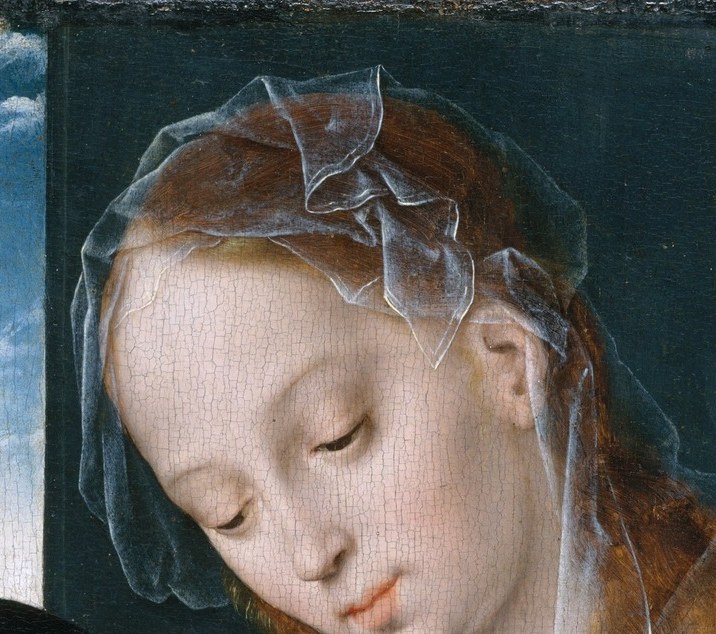
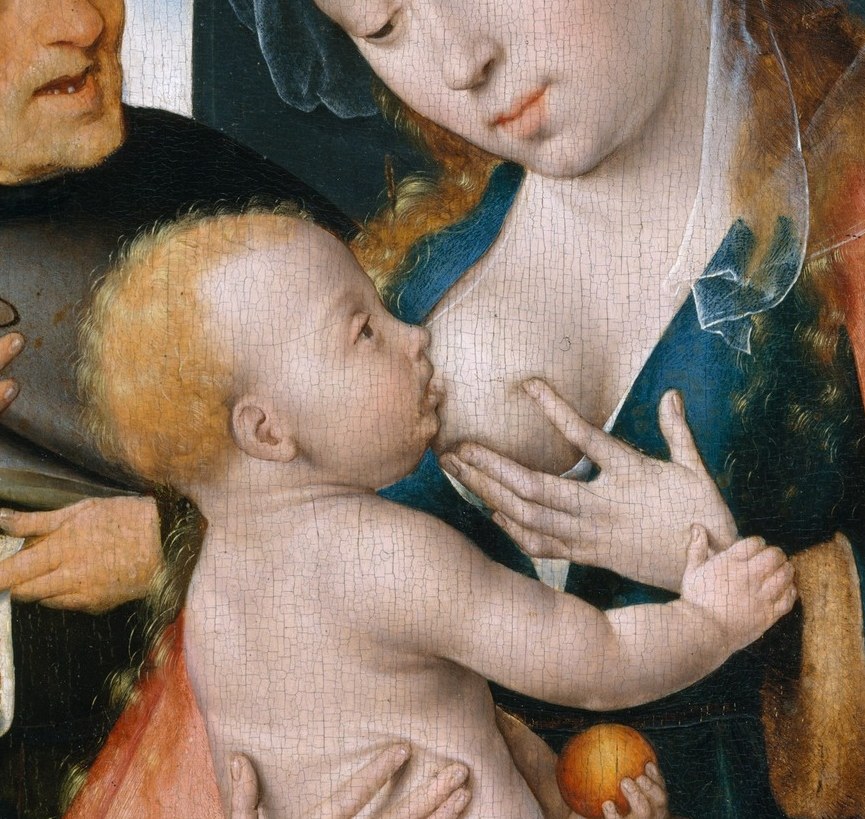
Eyes cast down in tender absorption , the emotional anchor of the entire composition; her expression carries quiet devotion.
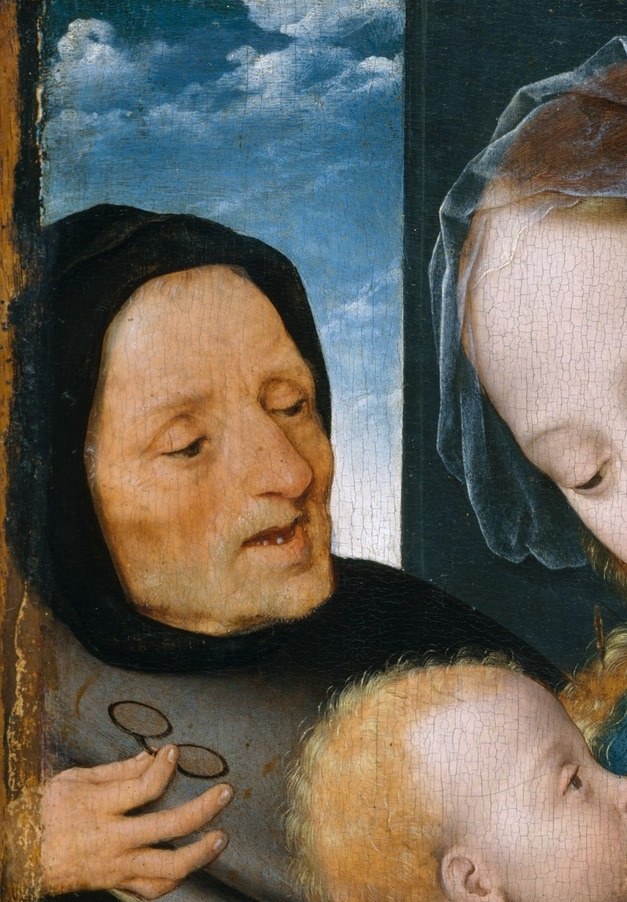
Positioned as an observer rather than participant, Joseph's calm gaze and grey beard mark him as witness and guardian , subtly subordinate to Mary.
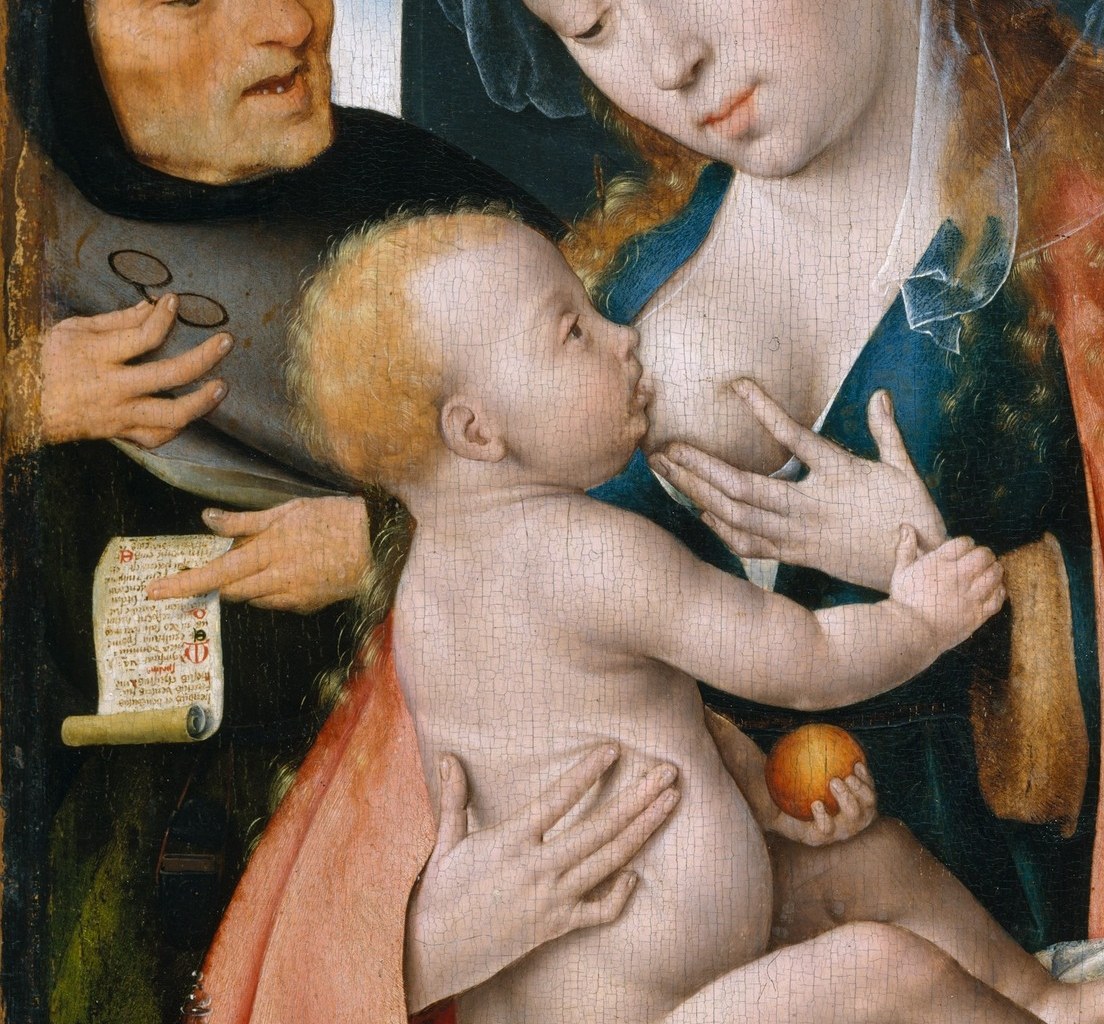
The Virgo Lactans motif , Christ's plump, living body pressed against Mary grounds divinity in radical physical humanity.
The saturated red garment is the dominant colour mass; red traditionally signals Christ's Passion , worn by Mary, it already mourns what the nursing scene celebrates.
Grapes are the clearest Eucharistic symbol in the composition, echoing the wine in the glass and together forming a paired visual argument.
Transcript

A mother nurses her child in a humble kitchen. Her hands are folded, cradling the infant gently. The fruit on the plate alludes to the Eucharist. A shelf of books and a bottle hints at devotion. The sliced melon points to Christ’s future sacrifice. A glass of red wine rests on the green cloth. Painted in Antwerp, 1512, for private devotion.