Artwork
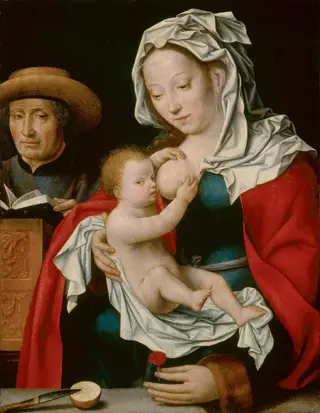
The Holy Family
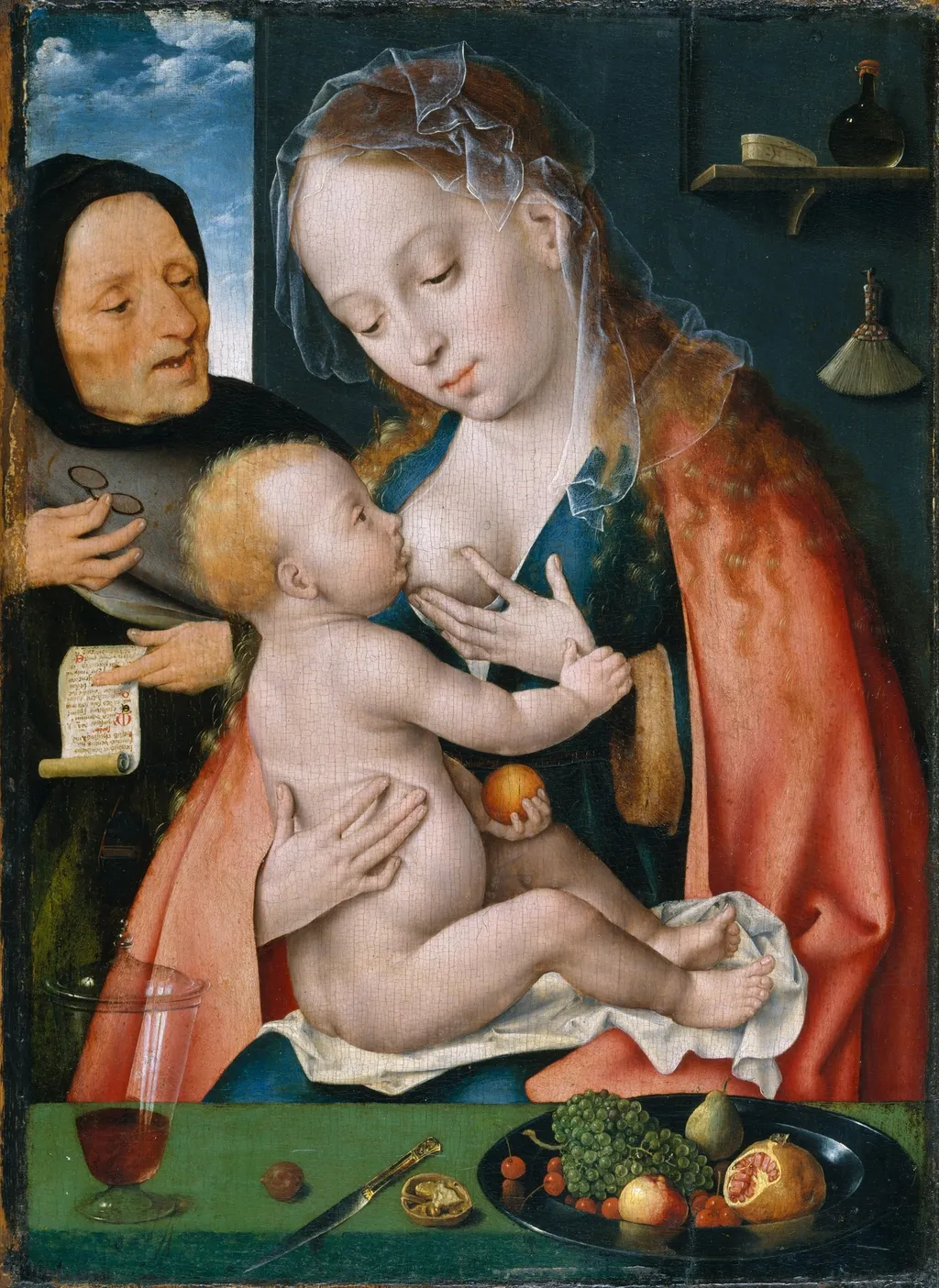
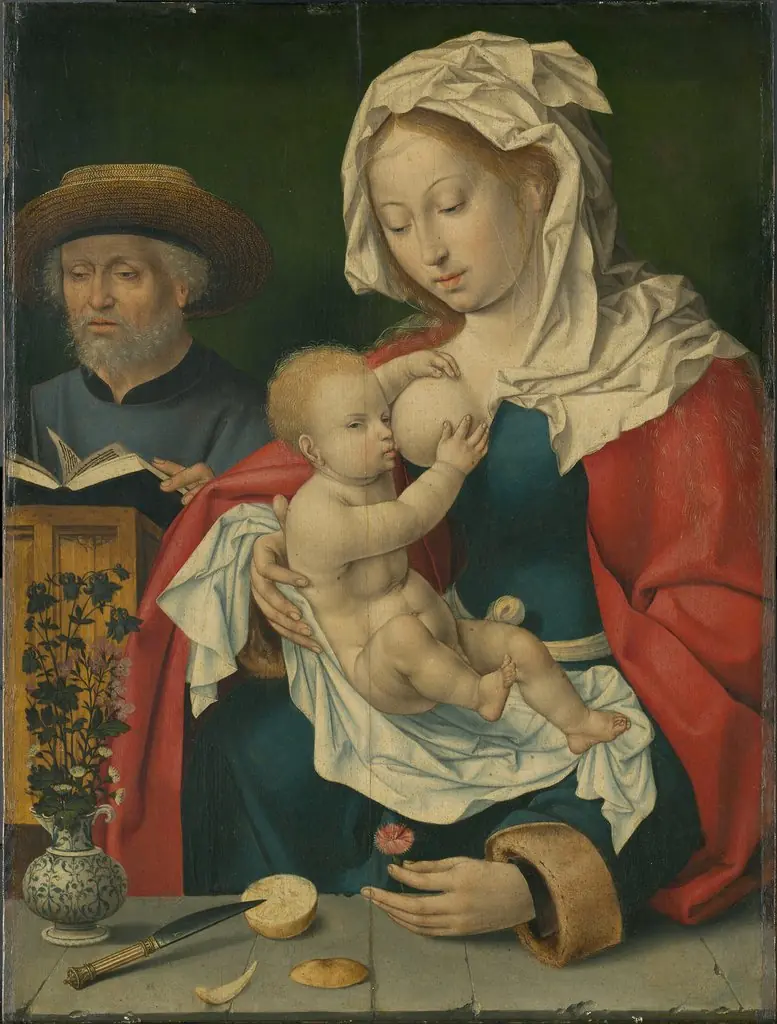
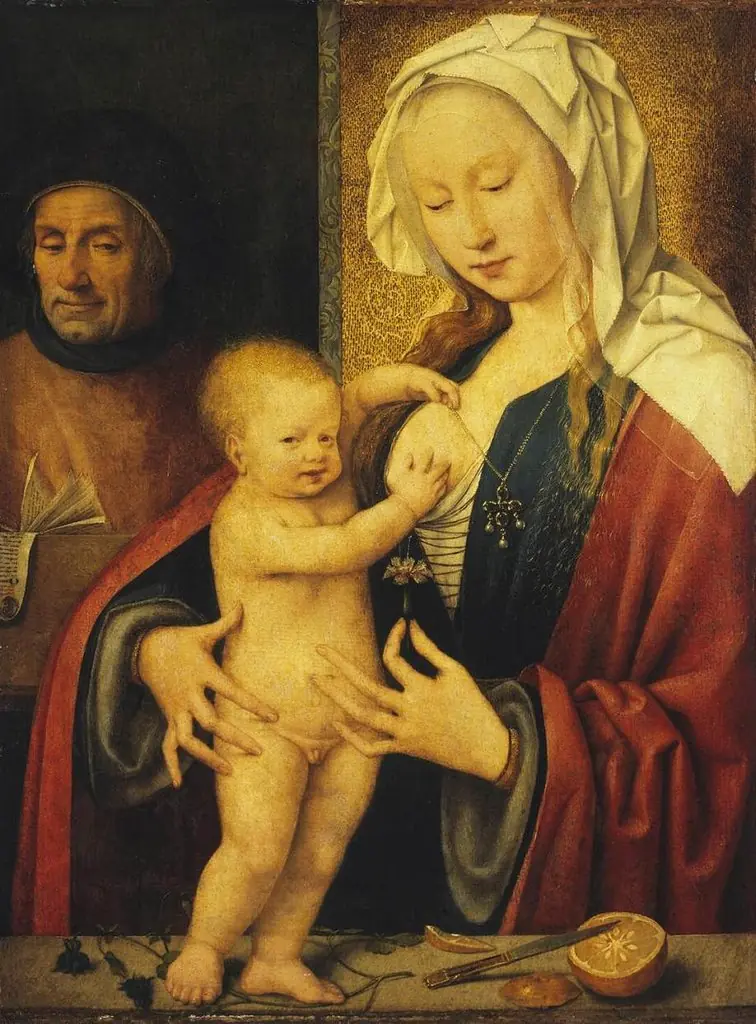
The Holy Family is an oil painting by the Northern Renaissance artist Joos van Cleve. It dates from 1512 and is held in the collection of the Metropolitan Museum of Art.
About this work
A veiled Virgin nurses the Christ Child while a bearded Joseph looks on, holding a rolled paper and glasses. On the floor sits a tray of grapes, a pear, and sliced melon, with a glass of red wine and a knife on a green cloth. Joos van Cleve painted the panel around 1512 in soft reds, blues, and earthy greens.
Subject & Meaning
The composition includes domestic objects such as glasses, a bottle, glassware, and a knife, which ground the sacred scene in everyday life.
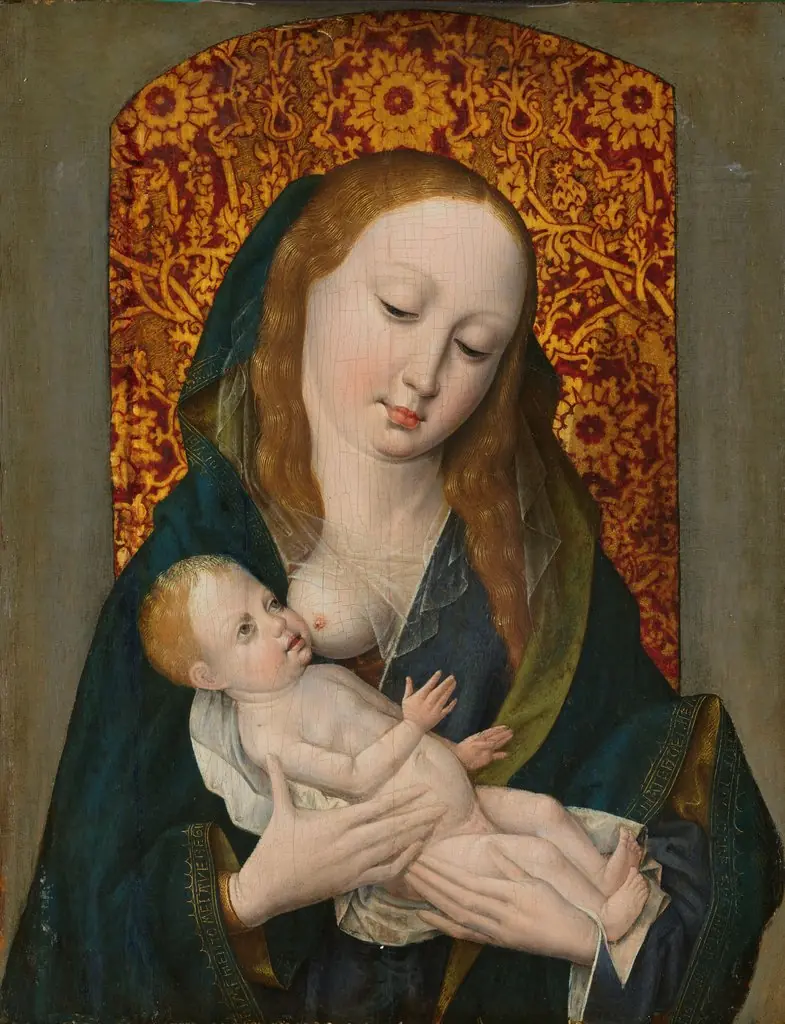
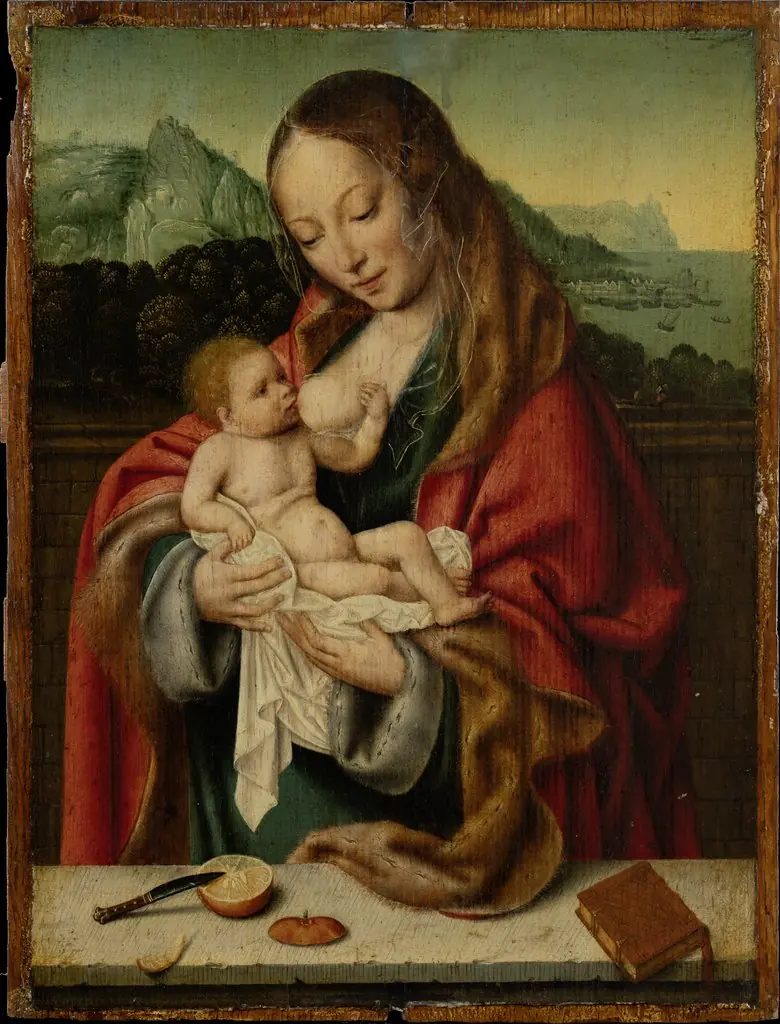
The painting depicts the Holy Family, centered on the Nursing Madonna, a common subject in Renaissance religious art. Mary is shown breastfeeding the infant Jesus, emphasizing her role as nurturing mother and the humanity of Christ. The composition includes domestic objects such as glasses, a bottle, glassware, and a knife, which ground the sacred scene in everyday life.
Fruits including grapes, pears, cherries, and a pomegranate carry symbolic weight: the pomegranate traditionally represents resurrection and eternal life, while the cherry can allude to the sweetness of Christ’s sacrifice. These elements together convey a layered meaning that balances the divine nature of the Holy Family with intimate, relatable domesticity, reinforcing the theological concept of the Incarnation through visual details.
History & Provenance
The painting was created in 1512, as indicated by the date on the work. Its provenance includes ownership by the collector Eugène Secrétan and later by Michael Friedsam. It is currently held in the collection of the Metropolitan Museum of Art.
No records of a specific commission or further details of the creation history are provided in the sources.
Overview
This oil painting, titled The Holy Family, presents a domestic scene centered on the Virgin Mary nursing the infant Jesus, with Saint Joseph observing them from behind. The composition integrates these religious figures into an intimate setting, characterized by warm light and a subdued color palette. Various still-life elements are arranged in the foreground, contributing to the painting's quiet atmosphere and potential symbolic depth.
Technique & Style
The artist employs oil paint to create a soft, inviting atmosphere. The palette features gentle reds, blues, and earthy greens, contributing to the painting's serene mood. Warm light bathes the figures, enhancing the sense of intimacy and domesticity.
The careful rendering of textures, from the drapery to the fruit, demonstrates a considered approach to naturalism within the devotional subject matter, emphasizing human connection.
Context
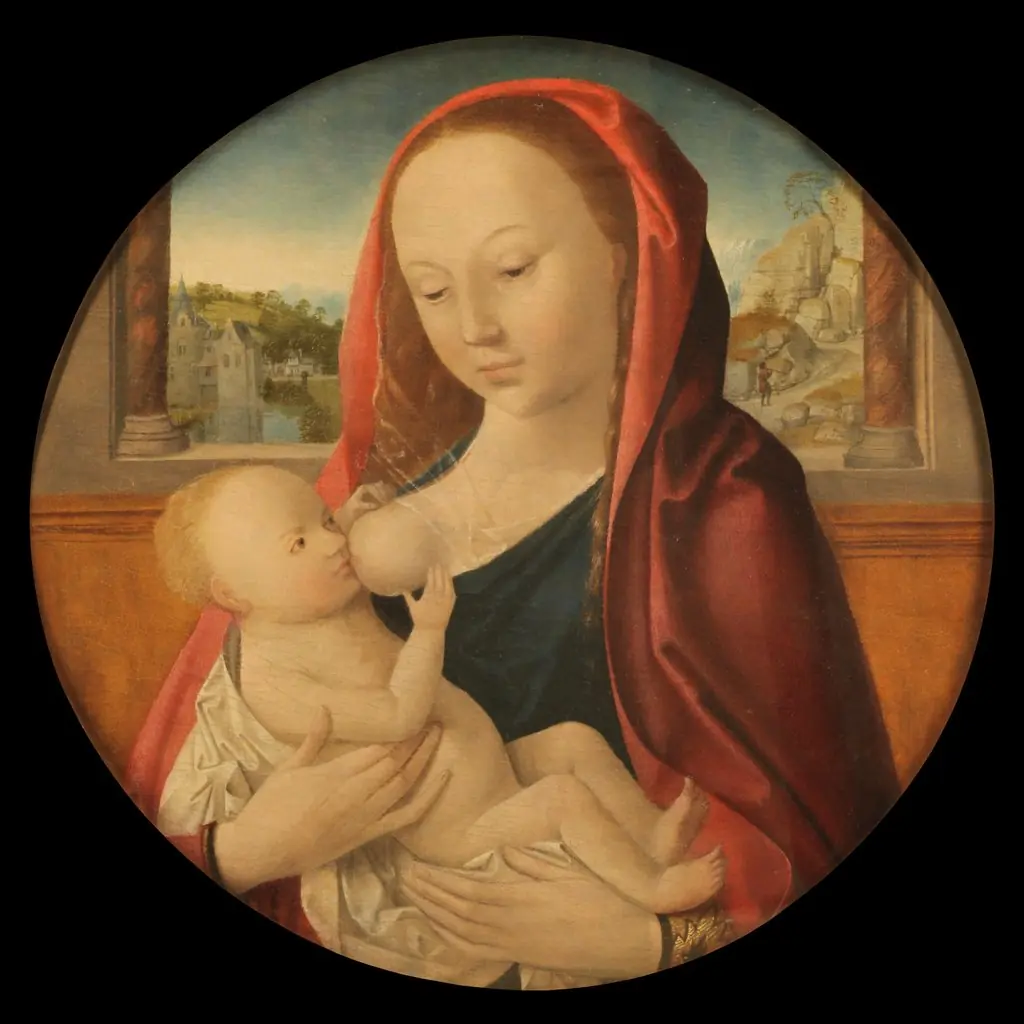
This depiction of the Virgin Mary nursing the Christ Child aligns with the long-standing tradition of the Madonna Lactans, or Nursing Madonna, in Christian art. Such images emphasize Mary's humanity and maternal role, presenting a tender and accessible portrayal of the divine family. The inclusion of Joseph and everyday objects grounds the sacred narrative in a relatable, domestic sphere, a common approach in devotional art across various periods.
Own this work as a print
Artist & collection
Artist
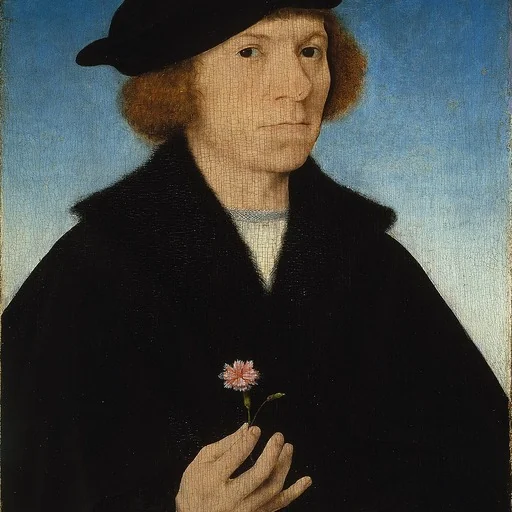
Joos van Cleve (; also Joos van der Beke; c. 1485–1490 – 1540/1541) was a leading painter active in Antwerp from his arrival there around 1511 until his death in 1540 or 1541. Within Dutch and Flemish Renaissance…

 Studied in the Renaissance Florence course