Dancers in the Rehearsal Room with a Double Bass by Edgar Degas
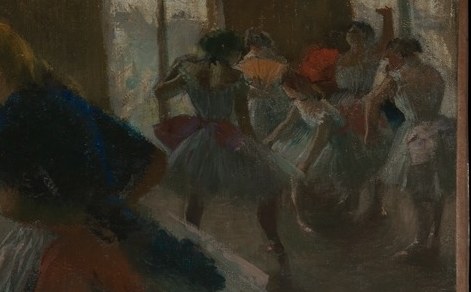
Edgar Degas's 1882 oil painting, "Dancers in the Rehearsal Room with a Double Bass," captures a candid moment behind the scenes of a Parisian ballet studio. This work, held at The Metropolitan Museum of Art, showcases Degas's dedication to depicting the unseen labor of ballet dancers.
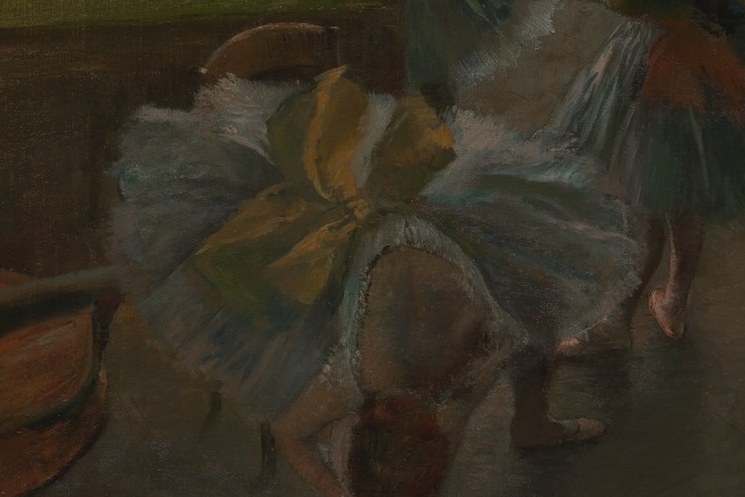
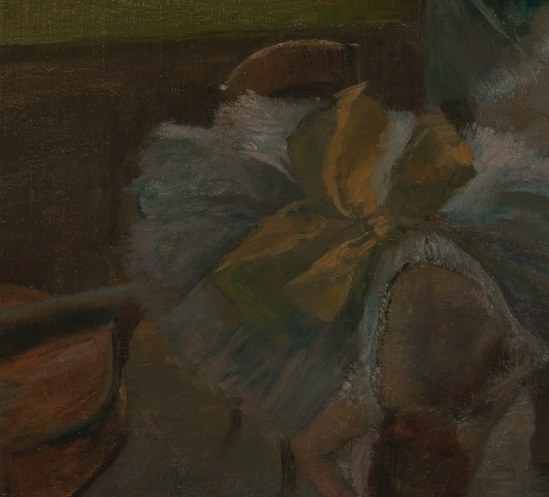
The painting focuses on a seated dancer in a blue dress, seemingly lost in thought, holding a yellow ribbon. Nearby, a double bass player provides a grounding presence, while other dancers stretch and wait in the background. Degas uses an asymmetrical arrangement and a high vantage point, characteristic of his interest in unconventional perspectives and the influence of photography.
Created during the height of his focus on ballet subjects, this work exemplifies Degas's mature style. He employed loose, visible brushwork to convey movement and the fleeting nature of the rehearsal process, prioritizing observed, everyday gestures over idealized poses. The muted, earthy tones of the studio walls contrast with the figures, emphasizing the intimate ambiance of the rehearsal space.
What details in this painting make it feel like a genuine, unposed moment to you?
Details

Transcript
Degas often showed ballet dancers off stage, in rehearsal. This dancer in blue seems lost in thought, holding a yellow ribbon. A double bass player grounds the scene with his quiet presence. Other dancers stretch and wait, showing the labor behind the spectacle. Degas used loose, visible brushwork to capture this fleeting moment. He observed everyday gestures, avoiding idealized poses.