Dishes with Oysters, Fruit, and Wine by Beert the Elder, Osias
View the artwork: Dishes with Oysters, Fruit, and Wine →
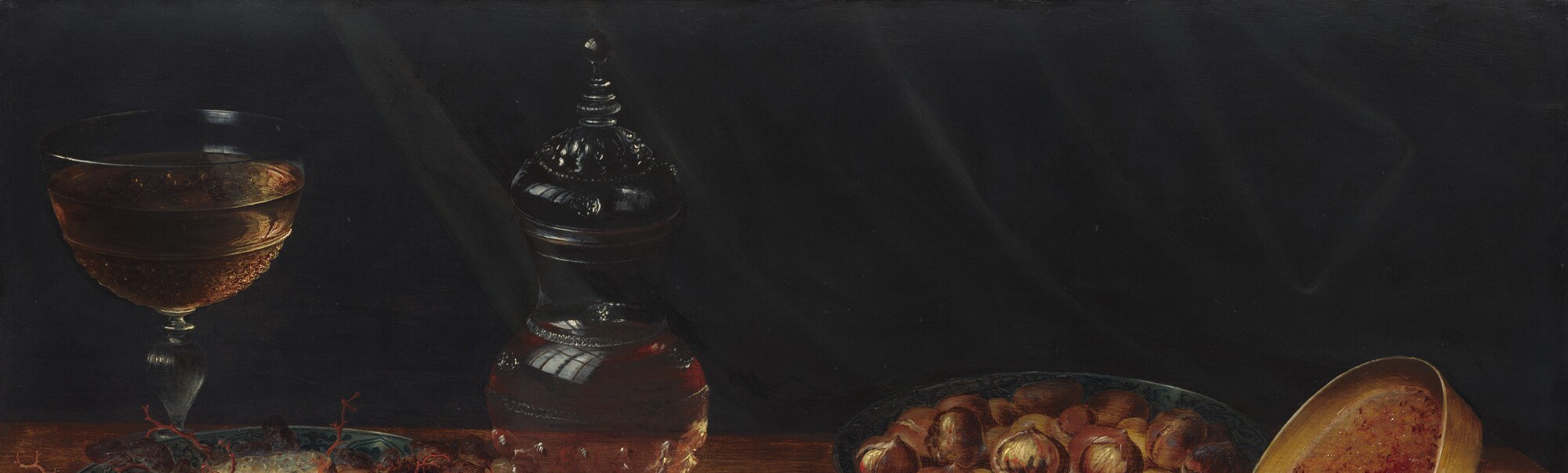
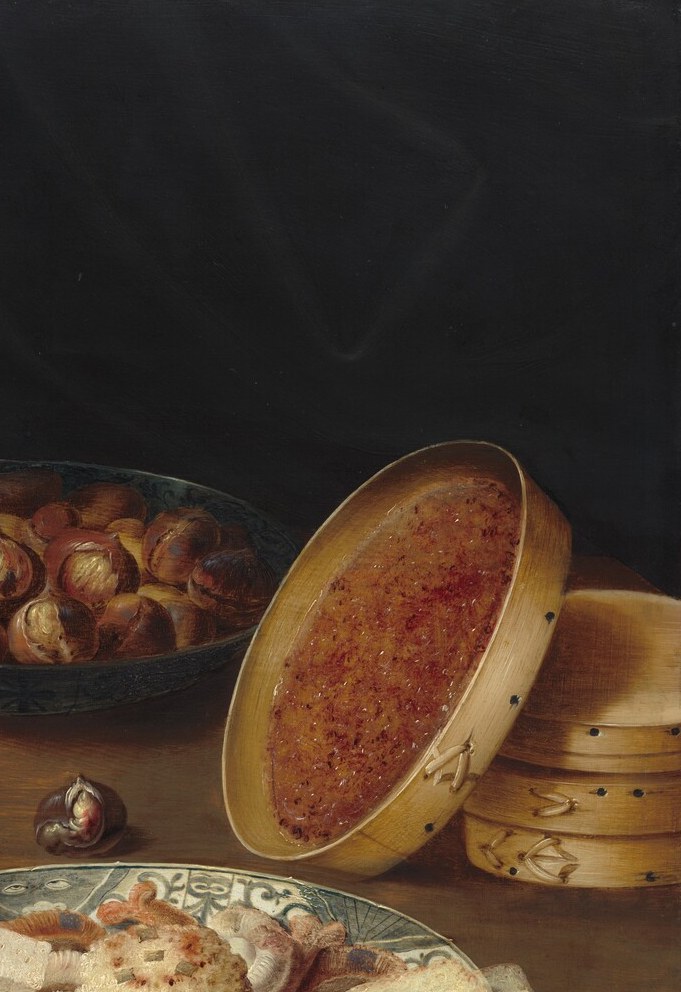
Dishes with Oysters, Fruit, and Wine, painted by Osias Beert the Elder around 1620, is a small oil on panel that functions as a quiet manifesto on what paint can do. Beert was an early Flemish still-life specialist who turned everyday luxury goods into a checklist of optical puzzles: glass, silver, wet flesh, wicker, each requiring a completely different set of technical solutions.
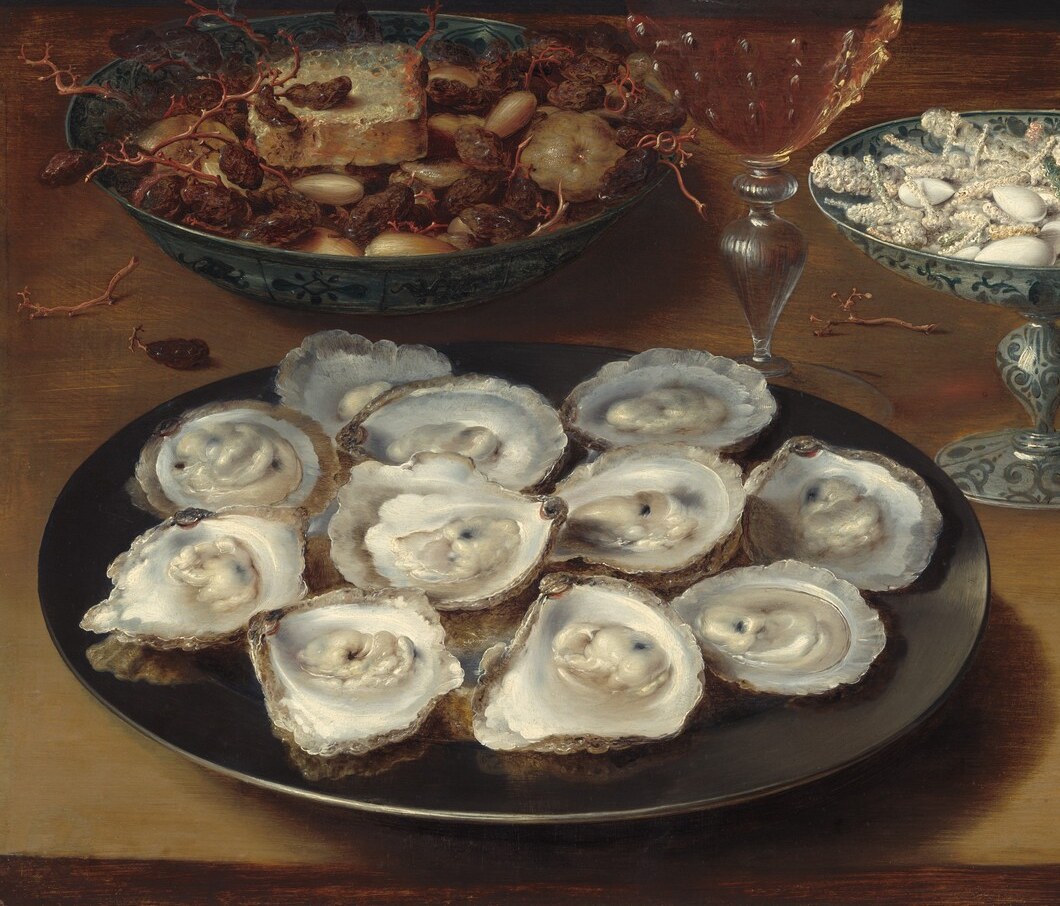
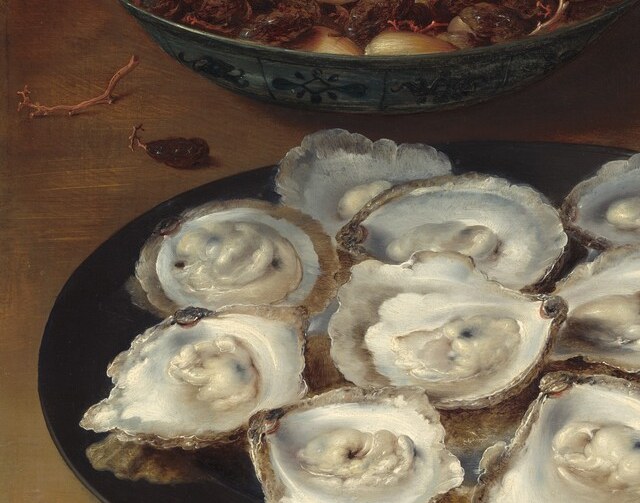
Watch the pewter plate rim. The brightest value in the entire painting is a single strip of white pigment laid along that metal edge. Beert understood that a polished rim does not catch light evenly, so he paints it as one decisive calligraphic stroke, cold white against the warm brown table, and suddenly your eye reads the whole dish as heavy, reflective metal.
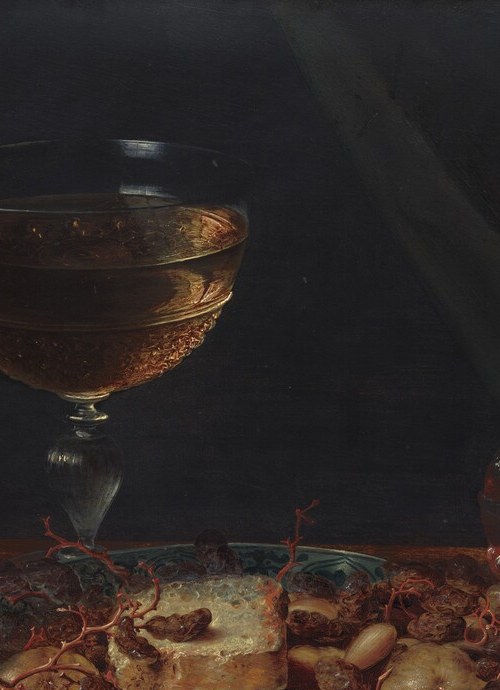
The roemer glass is a separate problem. Wine gives it color, but the stem's green tint and the vessel's transparency require paint to behave like light itself. Beert builds the glass in thin glazes over a dark ground, letting the black void of the background become the shadow inside the glass. The liquid seems to bend and glow not because it is painted brightly, but because it is painted thinly.
Then the oysters. The foreground shell holds wet, translucent meat against a nacreous interior. Beert used layered glazes here, a technique where each transparent layer of oil paint shifts the color beneath it, to achieve the pearlescent shimmer of the shell and the slippery sheen of the flesh. A tiny beetle sits nearby on the bare wood, a classic Flemish reminder that all this abundance is temporary.
What do you notice first: the glass, the metal, or the wetness of the oyster?
#arthistory #flemishpainting #stilllife
Details
Transcript
A table set for a feast you can never touch. Start with the pewter plate. Cold, heavy, holding oysters. Now look at the rim. A single stripe of white paint. That is not light. That is the painter telling you what metal feels like. Now the roemer glass. Red wine, green stem, through glass. Paint became liquid, then air, then light bending through a vessel. And here, in the foreground: wet, glistening oyster flesh. Layered glazes. The meat translucent. The shell nacreous. All pigment.