Weeco Chief, His Wife, and a Warrior by Catlin, George
George Catlin, a lawyer turned artist, dedicated his life to documenting Native American life through his paintings. This piece, *Weeco Chief, His Wife, and a Warrior*, painted around 1861, is part of his extensive effort to create a visual record of Indigenous peoples, now housed in museum collections.
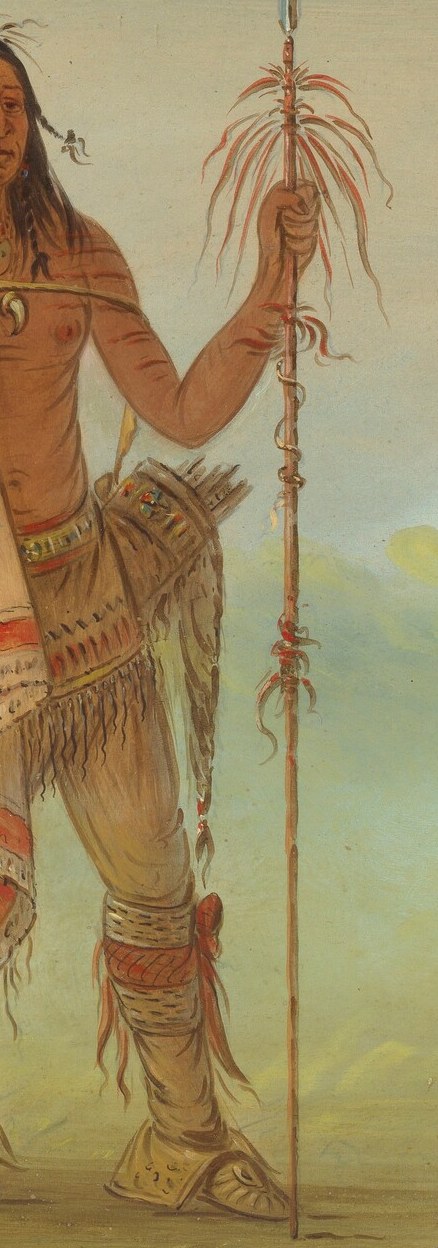
In this portrait, observe the stoic dignity of the chief's face and the protective posture of his wife, shielding their child. The intricate details of their traditional attire, from the chief's feathered headdress to the woman's embroidered dress trim, offer a glimpse into their culture and artistry.
Catlin traveled extensively through the American West in the 1830s and 1840s, driven by a desire to preserve the visual heritage of Native cultures amidst westward expansion. His direct observational style aimed to counteract prevailing stereotypes, creating an invaluable archive.
Catlin's work provides a window into a significant period of American history, inviting us to reflect on the stories and lives he so carefully documented. What do you notice first when looking at this family?
Details
Transcript
This painter turned lawyer spent his life documenting Native American peoples. He sought to record their cultures through individual portraits, like this chief. The chief's face is stoic, conveying dignity and leadership. His wife's averted gaze and stance are protective of the child. A child peeks out, representing the future generation of their culture. He made extensive journeys to the American West in the 1830s to paint these.