Burgomaster Jan van Duren (1613–1687) by Gerard ter Borch
Gerard ter Borch's 1666 portrait, "Burgomaster Jan van Duren," held at The Metropolitan Museum of Art, exemplifies the Dutch Golden Age tradition of portraiture. Ter Borch was celebrated for his ability to capture subtle psychological insights, and this work is a testament to that skill.
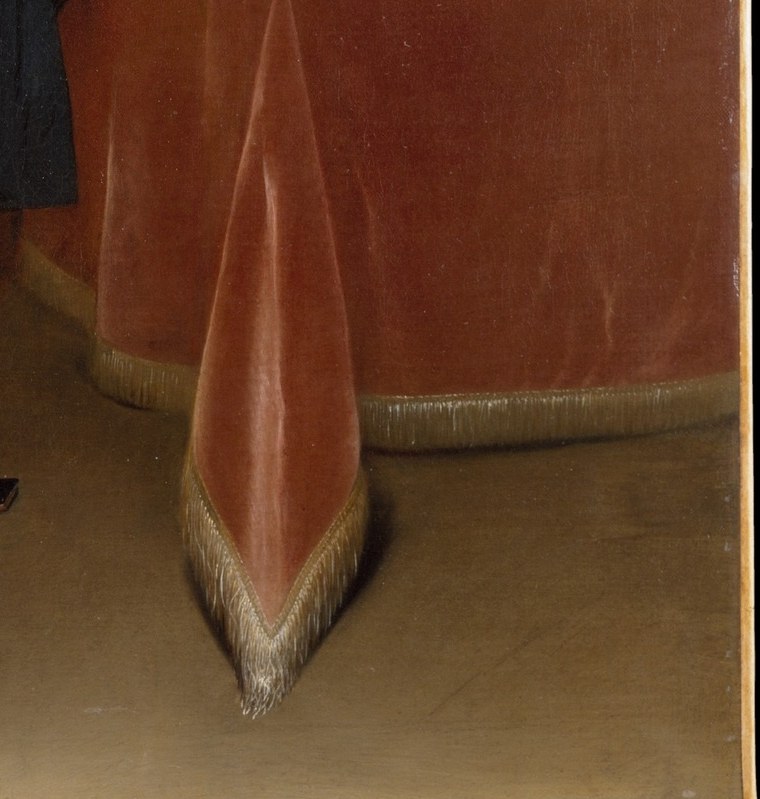
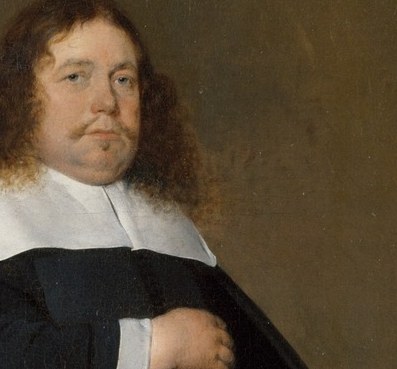
Observe the details: the exquisite rendering of his crisp white collar, a clear indicator of his status, and the rich red tablecloth that speaks to his affluence. Even the discarded black hat adds a touch of narrative, hinting at a moment of informality within a formal setting.
Completed in 1666, this oil painting reflects the era's interest in individual character. Ter Borch's refined technique, visible in the precision of textures and light, makes this a significant piece in the history of portraiture, offering a window into 17th-century Holland.
What details in the painting speak to you most about the burgomaster's personality?
Details
Transcript
This Dutch burgomaster, Jan van Duren, was painted in 1666. His crisp white collar was a symbol of his wealth and status. Notice how the light subtly highlights its intricate folds. The discarded black hat suggests a moment of informality, even in a formal portrait. The rich red tablecloth also underscores his affluent position. The painter, Gerard ter Borch, was known for these quiet psychological insights.