Salvator Mundi by http://www.wikidata.org/.well-known/genid/5f677987295a86dafbbcd3a55e2a834e
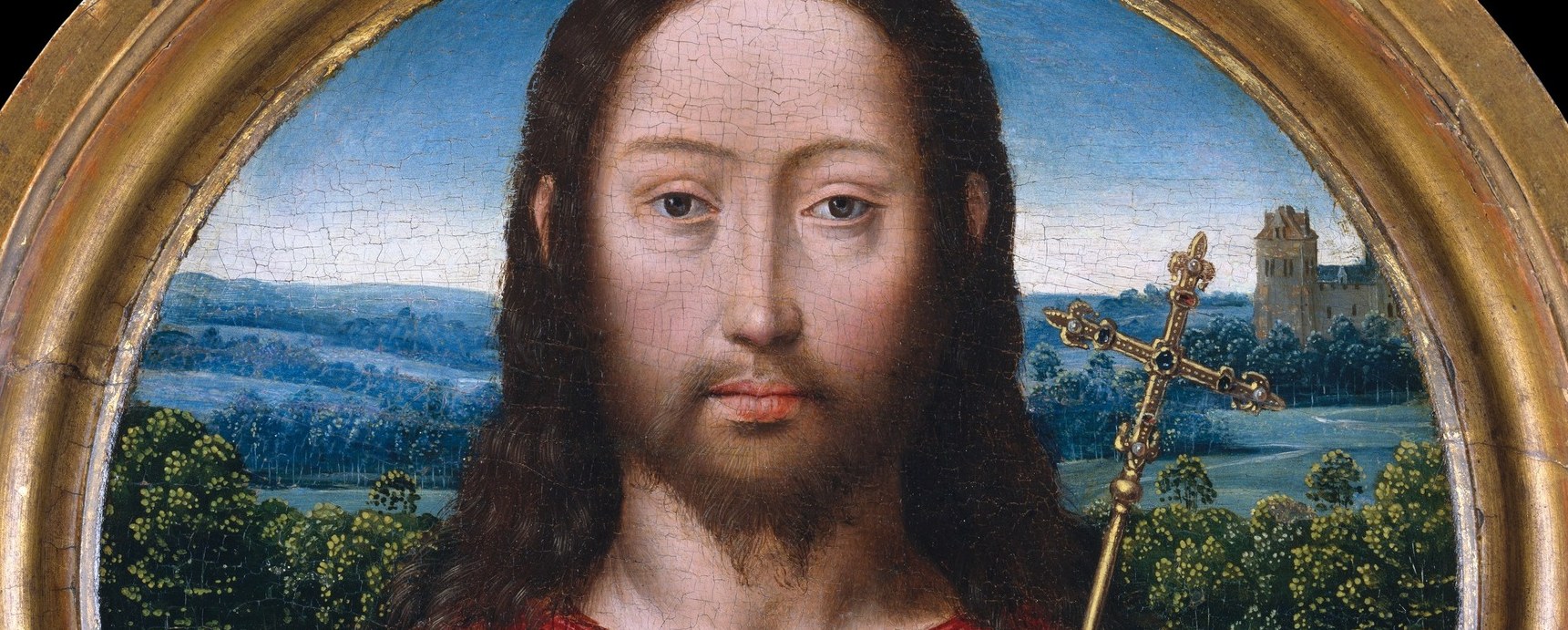
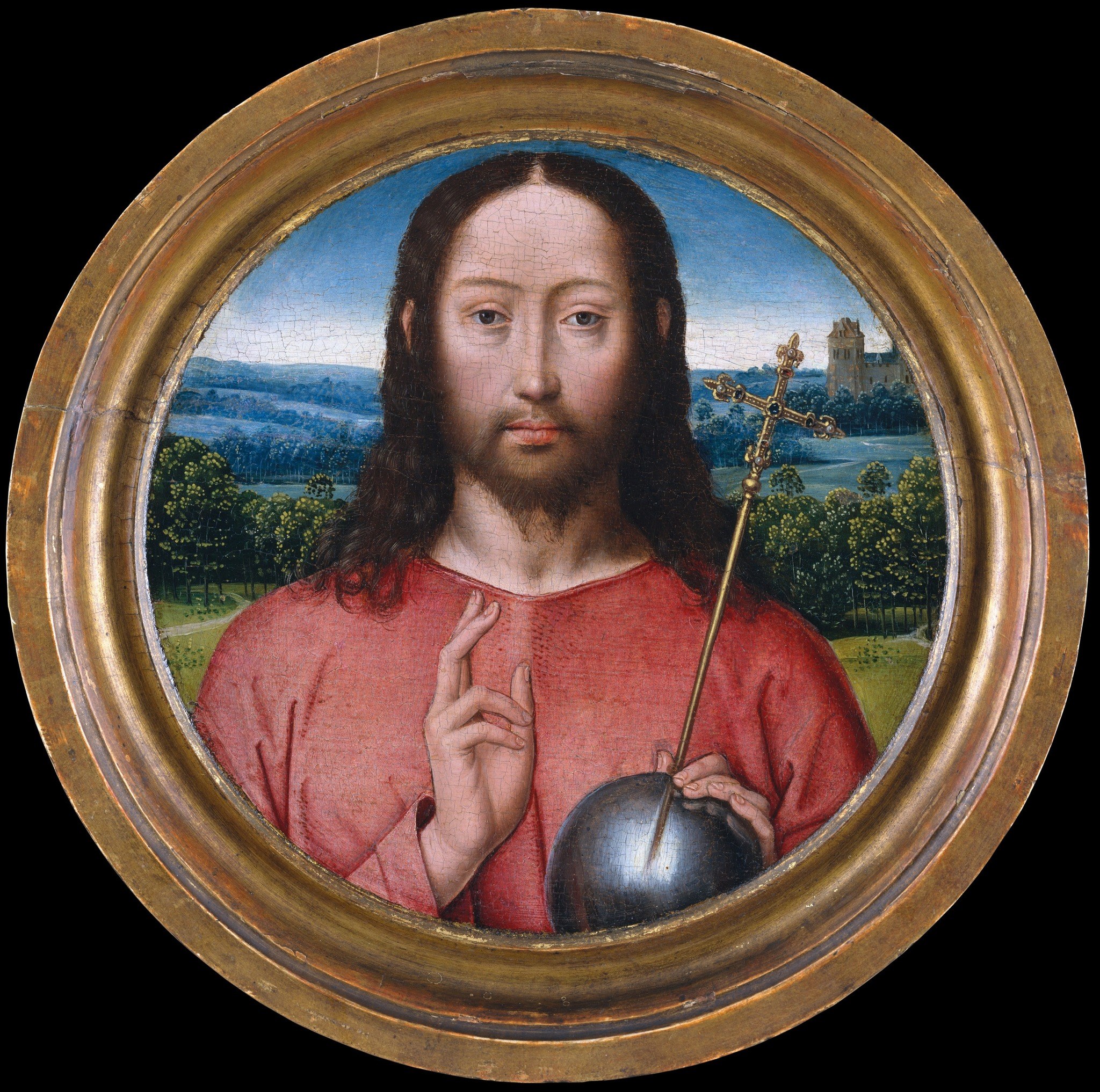
This is Salvator Mundi, painted around 1475 by an artist in the circle of Hans Memling. It is a small, circular devotional painting made for a bedchamber or private chapel, not a public altar. That intimacy is the key to everything unusual about it.
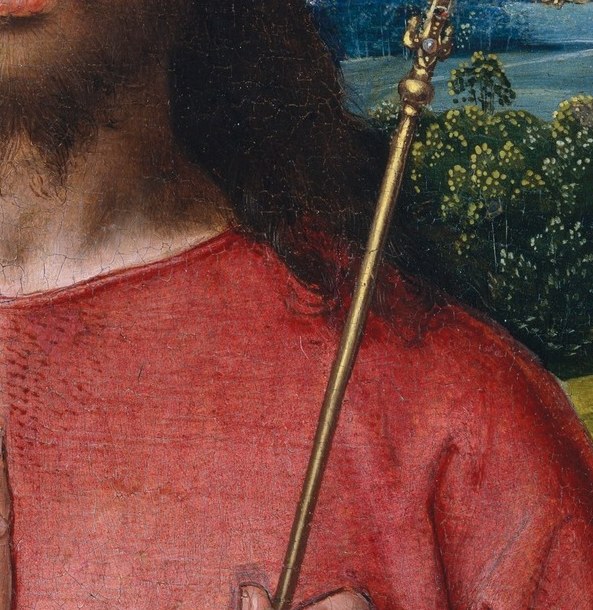
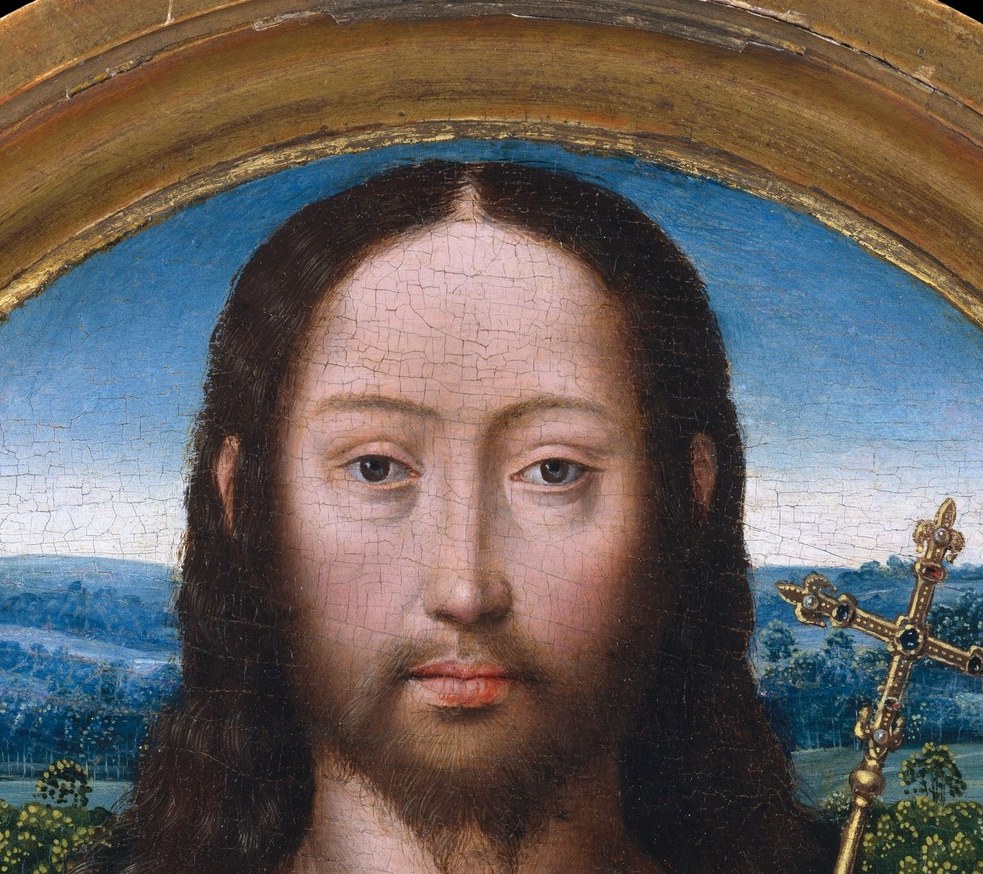
Christ faces you directly, his right hand raised in a Latin blessing gesture. The dark orb in his left hand represents earthly dominion, but unlike the crystal-clear globes in other versions, this one is opaque and heavy. The Flemish technique shows in the smooth modeling of the face, the careful waves of the hair, and the saturated crimson of the robe, which codes simultaneously for kingship and the Passion.
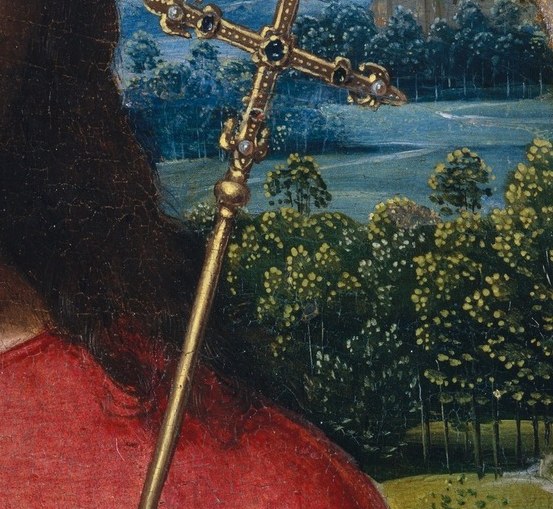
The real surprise, though, is behind him. Most Salvator Mundi images place Christ against gold or a dark void to signal eternity. Here, a pale blue sky and rolling green hills open behind the figure. Tucked into that landscape is a tiny pale building, visible only if you slow down. It may be a Flemish town, or it may reference the Heavenly Jerusalem. Either way, the painter has anchored a timeless icon in a real, habitable world.
What does it do to the idea of the divine when it shares the same sky as a distant farmhouse?
Details
Transcript
You've likely scrolled past this painting a hundred times. A frontal Christ, blessing hand raised, orb in his grip. Byzantine icons made him eternal and untouchable. But this painter placed him not in gold, but in a real sky. Now look past his shoulder, into the green hills. There: a tiny building most people never notice. A Flemish townscape or a heavenly city. Either way, it brings the divine to earth.