清 佚名 米芾(僞款) 雲山圖 卷|Mountain Landscape by After Mi Fu
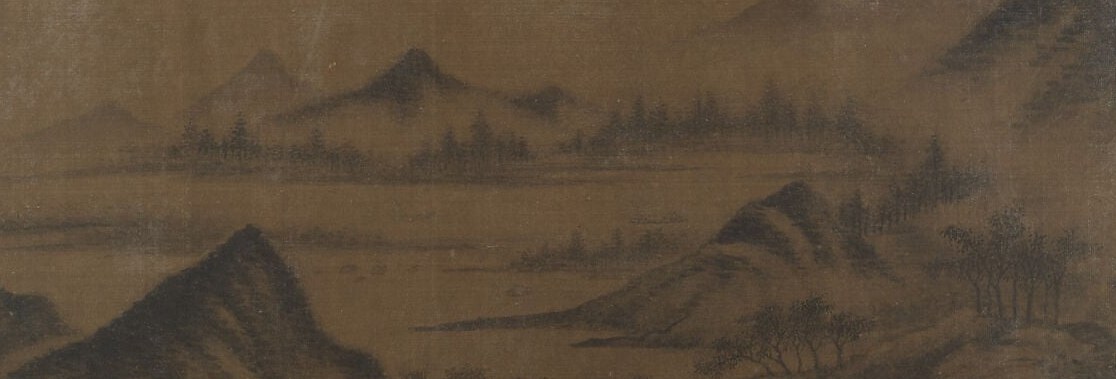
This is a handscroll titled Mountain Landscape, created in 1777 and painted in the style of the great Song dynasty master Mi Fu, who died in 1107. It was part of a thriving market for artistic homage and outright deception during the Qing dynasty.
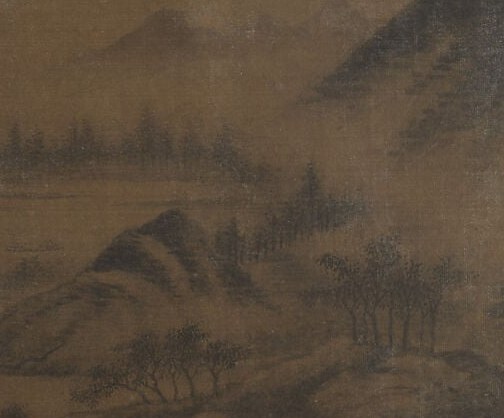
What you see is the 'Mi dot' technique at work: the dark, clustered ink stippling that builds the mountain face on the right without a single outline. The scroll reads from left to right, a journey from pale, retreating peaks through a luminous mist of unpainted silk to a dense, dramatic mountain mass that emerges at the end.
In 1777, a painter executed this work and then affixed a fraudulent signature claiming it was by Mi Fu himself. Attributing a work to a venerated ancient master was a standard way to multiply its value for an increasingly commercialized art market. The true artist's name was never recorded.
It is a painting built around a lie that everyone in the market already knew how to read. The beauty was real; the prestige was purchased. What do you think the buyer valued most?
Details


Transcript
In 1777, someone painted this mountain landscape. And then they signed it with a dead master's name. The name was Mi Fu. Song dynasty, 1100s. These wet, mossy dots are his signature technique. A 600-year stylistic echo, made to deceive a buyer. The forgery was the point. It raised the price.