Hussars by Toulouse-Lautrec, Henri de
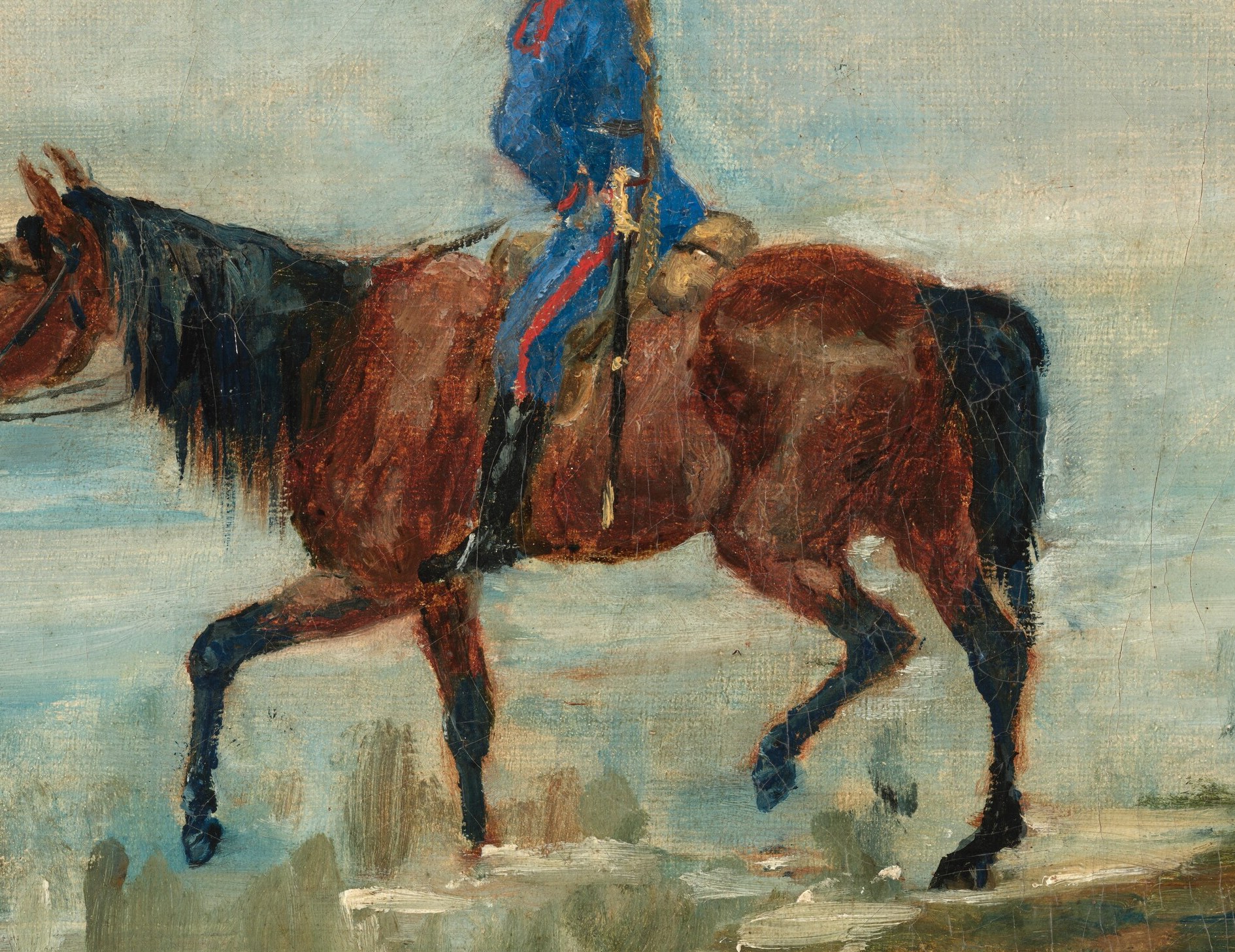
Henri de Toulouse-Lautrec painted *Hussars* in 1878, when he was just 14 years old. This oil-on-canvas work, housed in a private collection, offers a fascinating glimpse into the artist's early career, long before he became renowned for his vibrant depictions of Parisian nightlife.
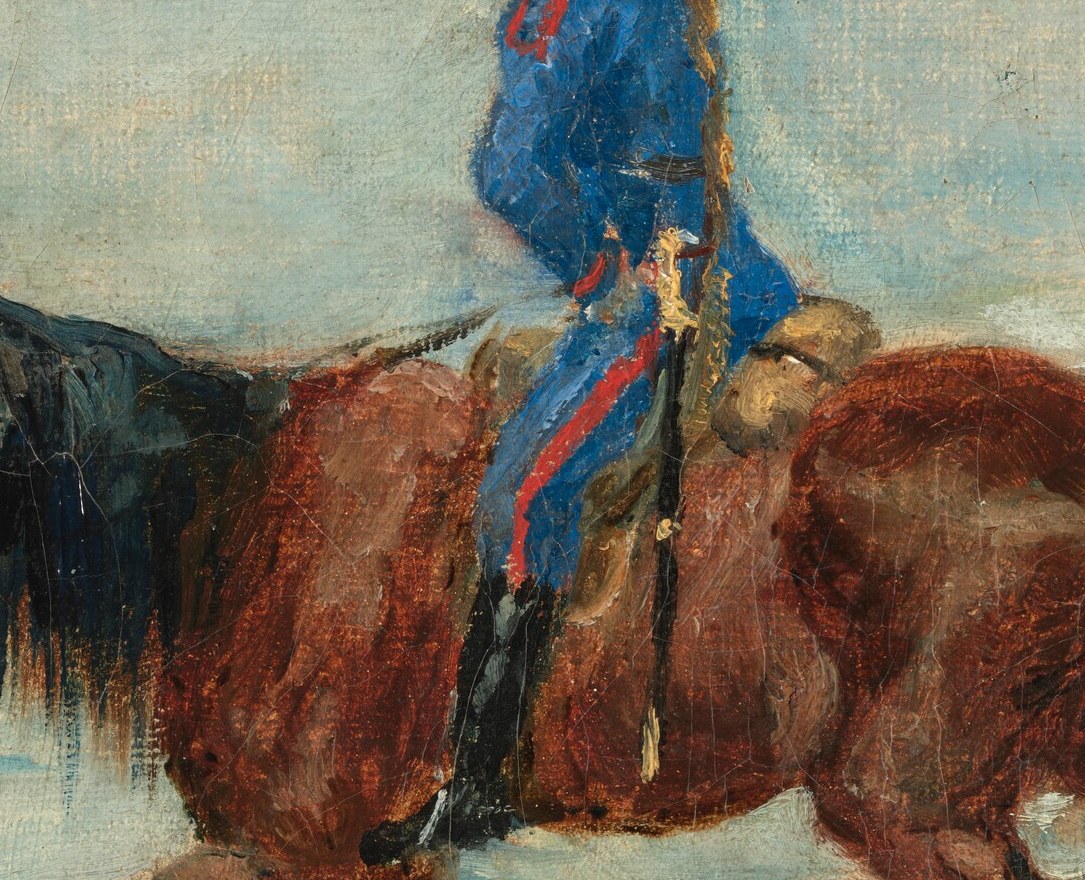
In this piece, Toulouse-Lautrec presents a hussar, a cavalry soldier, not as a heroic figure in battle, but in a more intimate, almost reflective moment. Observe the subtle details: the rich blue of his uniform, the distinctive hat, and the quiet dignity in his profile. The painting eschews grand narratives for a focus on individual character.
This work predates Toulouse-Lautrec's later association with the Post-Impressionist movement and his iconic posters for the Moulin Rouge. It reveals an early inclination towards capturing the human condition, a theme that would mature and define his later, more famous works. It's a foundational step in his artistic journey, showing a budding talent for observation and a sensitivity to his subjects.
What do you notice about the soldier's expression in this early portrait?
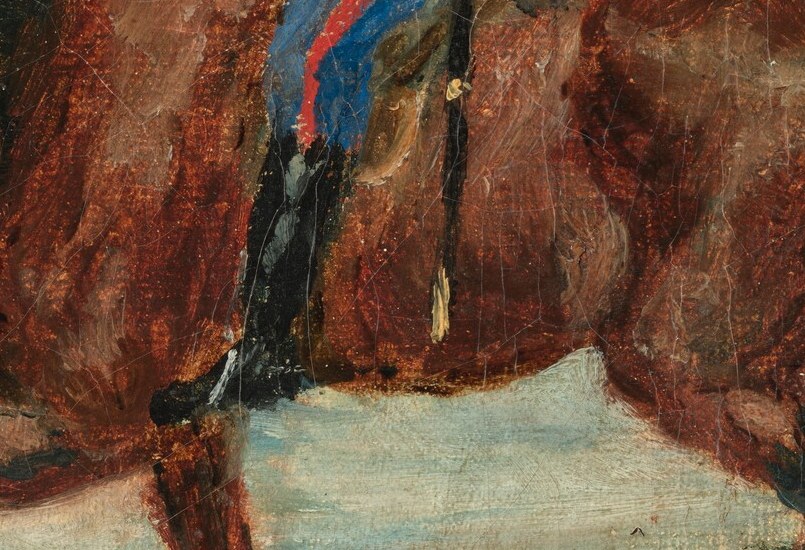
Details
Transcript
This isn't a hero on a battlefield. It’s a portrait of a hussar, a cavalry soldier. The painter was only 14 when he made this. His name was Henri de Toulouse-Lautrec. He captures a quiet, almost weary moment. This was years before his famous Paris nightlife scenes.