Six Angels by Jacopo di Cione
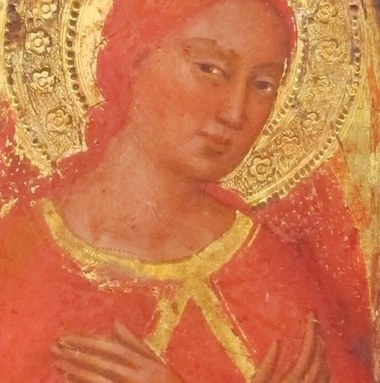
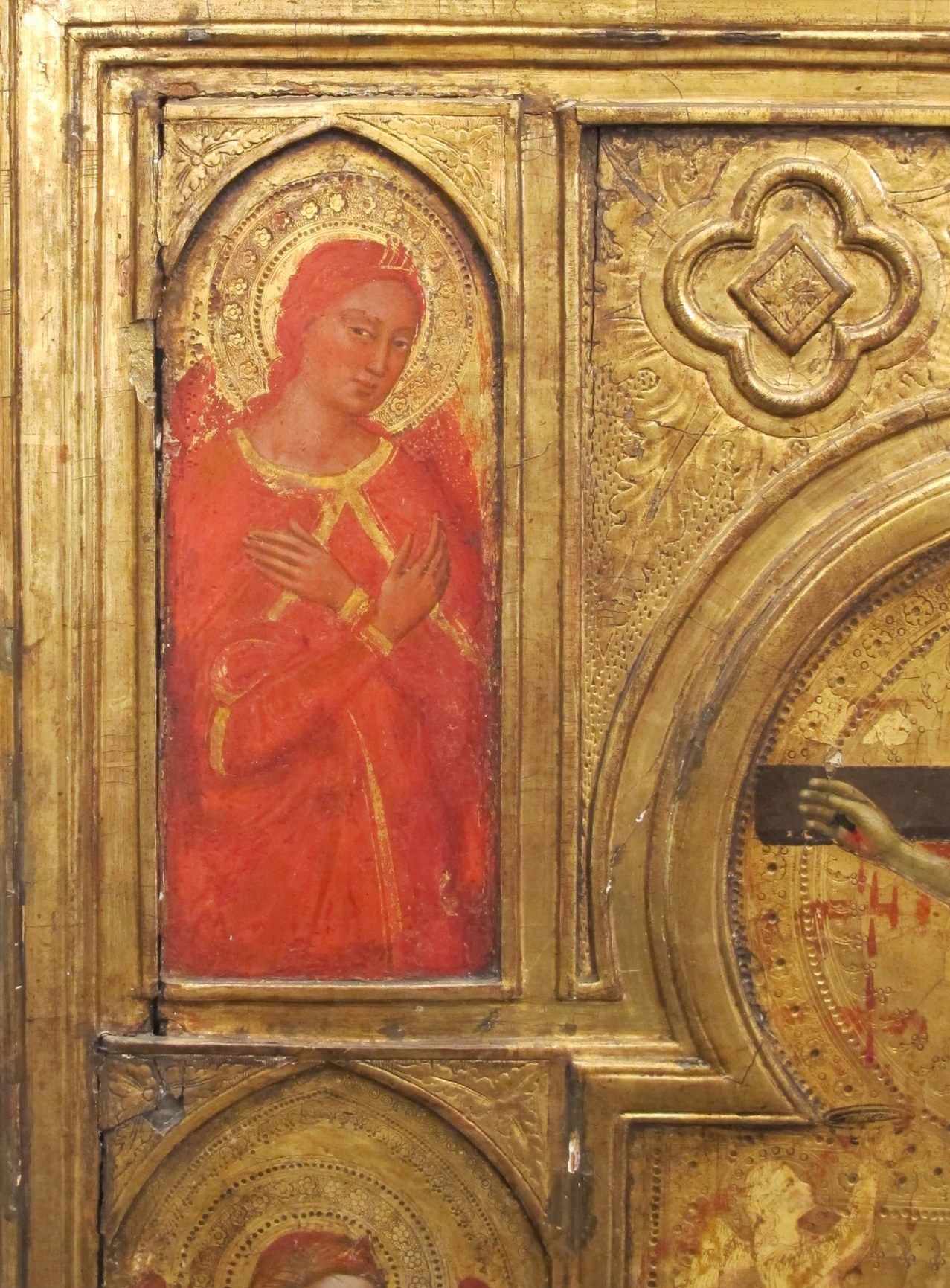
Jacopo di Cione's 'Six Angels', painted around 1365, is a single panel from what was once a grander altarpiece. Now housed at The Metropolitan Museum of Art, this tempera painting presents a solitary angel, richly robed and set against a luminous gold background.
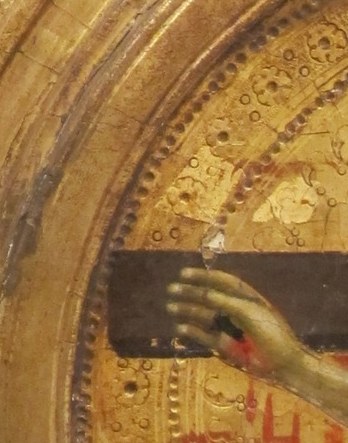
While the title promises 'Six Angels', only one is fully visible. However, a closer look at the lower right reveals a tantalizing fragment: the hand of another angel, hinting at the lost figures that once completed this celestial gathering. This detail underscores the painting's history, as large altarpieces were often disassembled over centuries.
Created using tempera, a medium known for its vibrant colors and crisp details, this work exemplifies the artistry of the late medieval period. The extensive use of gold leaf for the background and halo would have made the altarpiece a truly dazzling sight in its original setting, reflecting divine light for worshippers.
Imagine the full glory of the six angels, united. What stories do you think the other panels might have told?
Details
Transcript
This painting is called 'Six Angels'. But only one angel is visible. Look closely at the lower right corner. That tiny fragment is another angel's hand. This panel was once part of a much larger altarpiece. The other five angels are now lost.