The Blue Envelope by Peto, John Frederick
This is "The Blue Envelope," painted by John Frederick Peto around the 1890s, now in the National Gallery of Art in Washington. For over half a century, it was celebrated as the work of William Harnett, the most famous and valuable American trompe l'oeil painter of the late 19th century. The truth only emerged in the 1940s when a curator at the Brooklyn Museum, examining the signatures on dozens of so-called Harnetts, realized they had been painted on top of an older, scratched-out name: Peto.
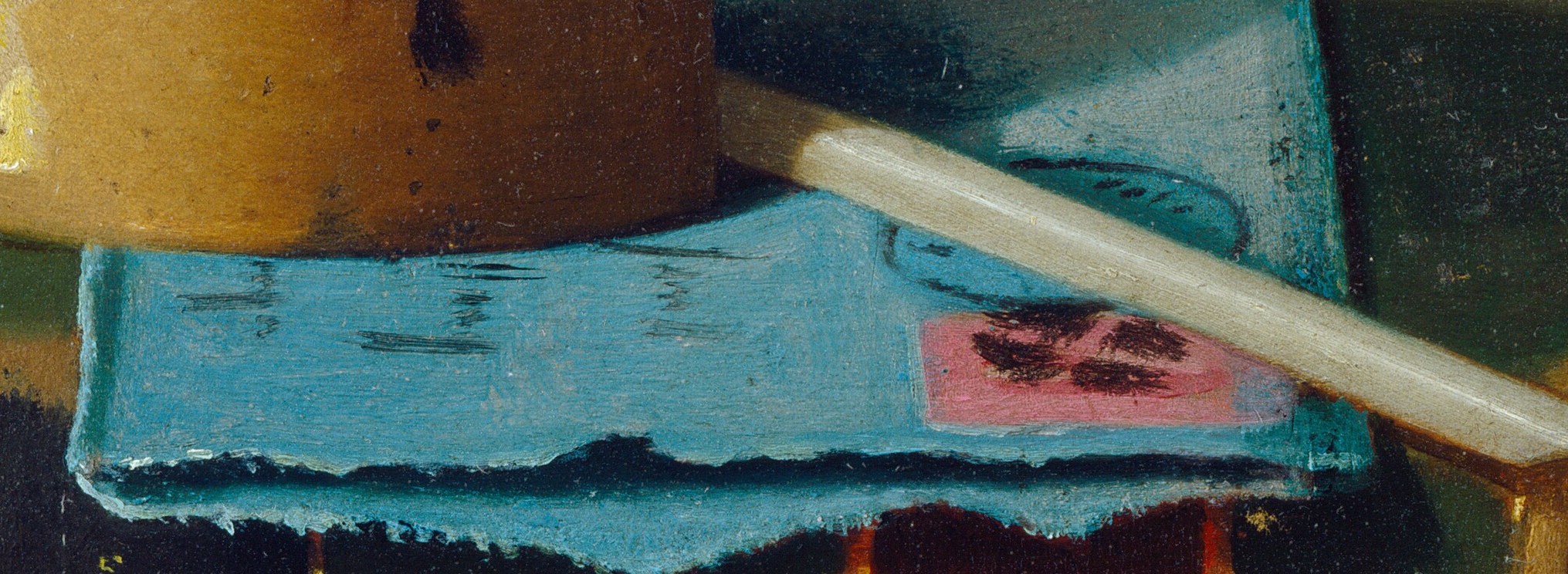
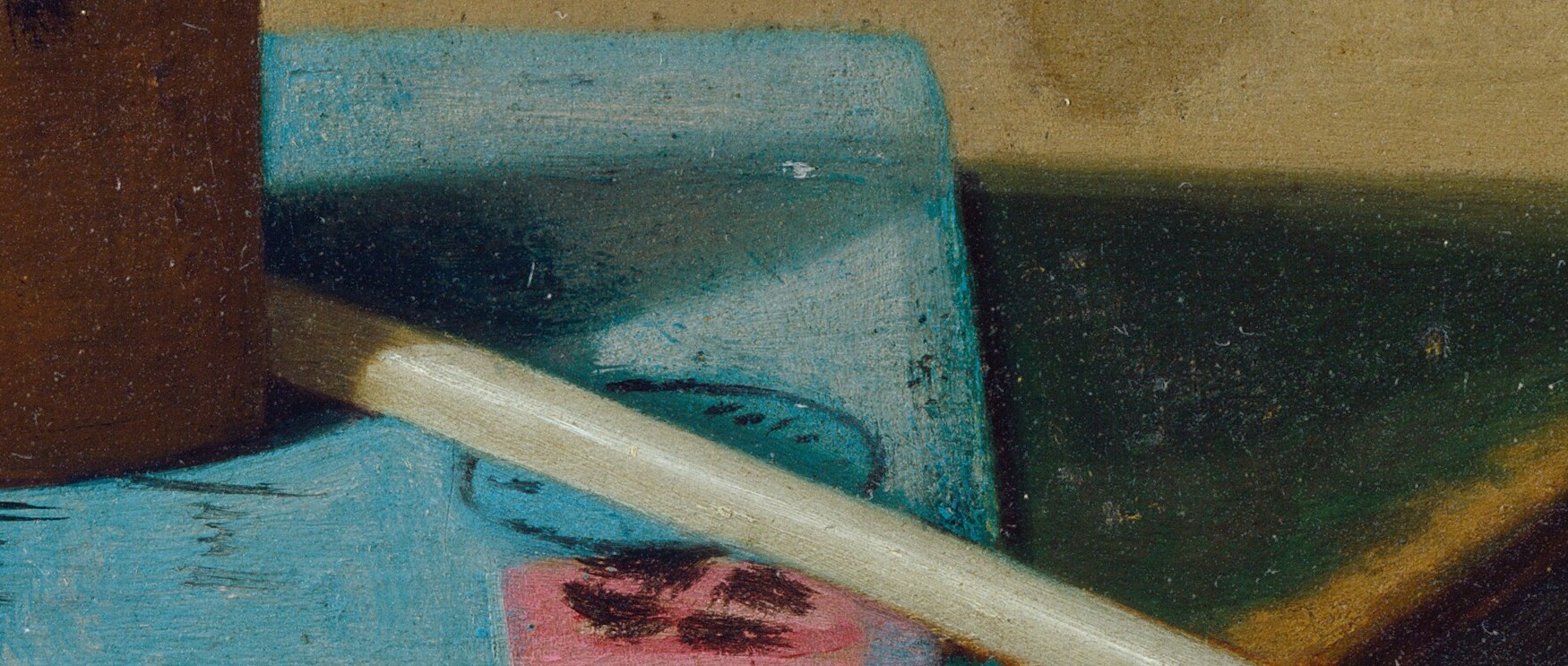
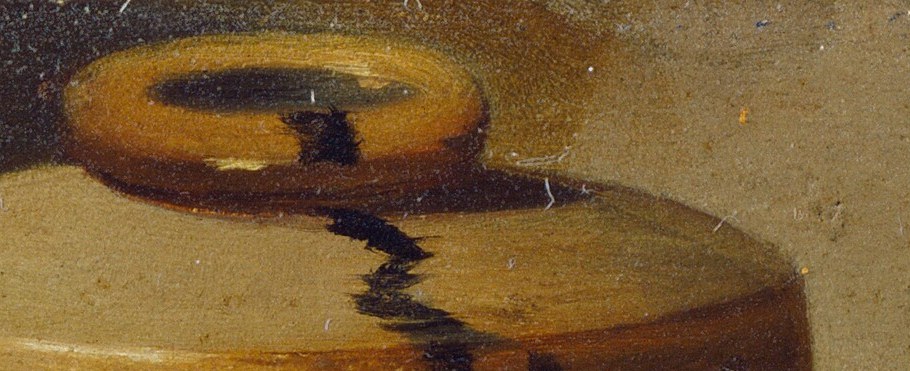
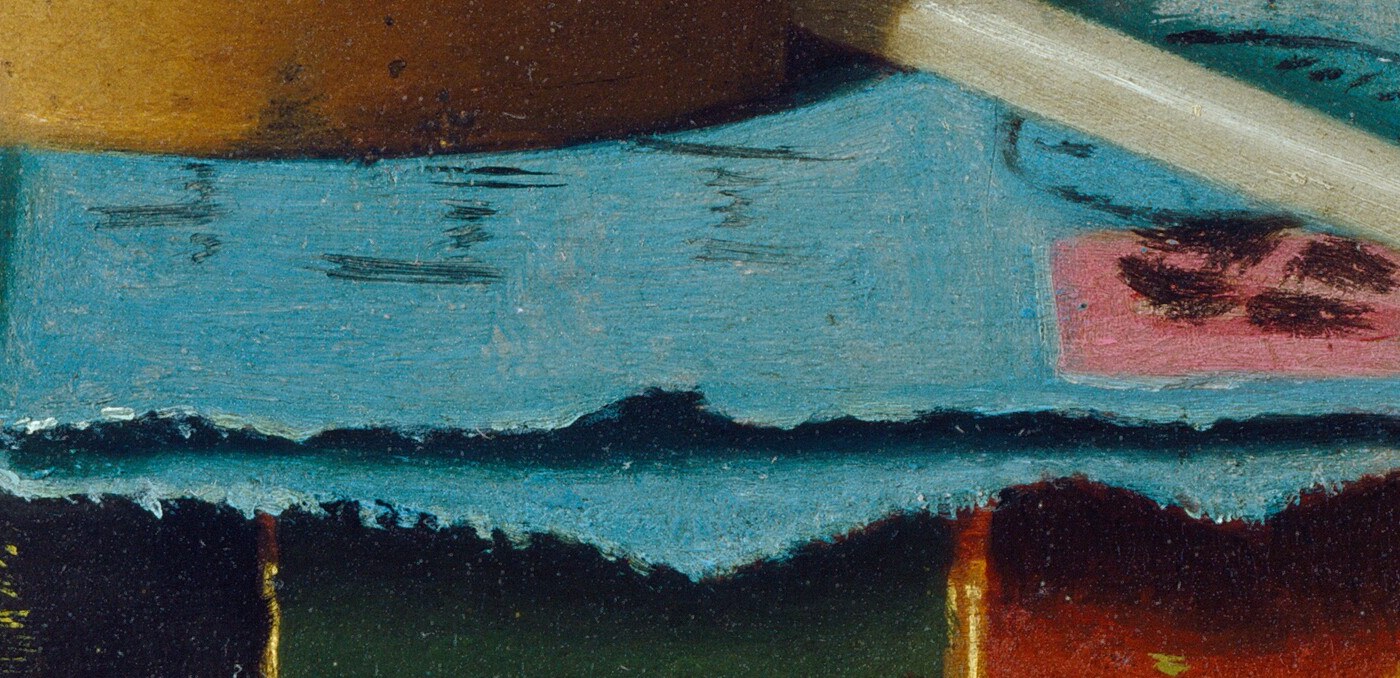
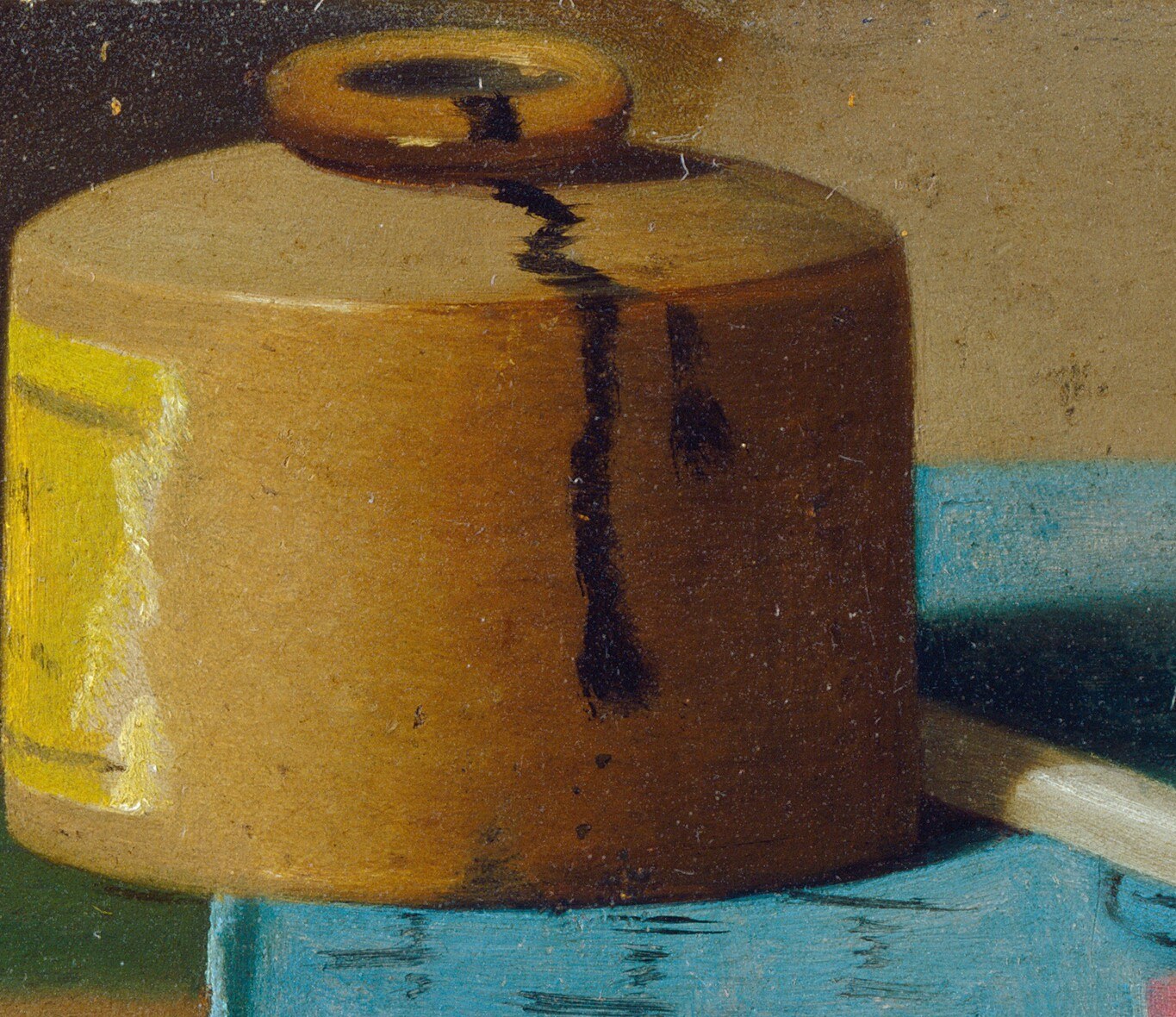
The clues are right here on the panel. Look at the vivid blue envelope that gives the painting its name, it anchors the composition, its unopened seal suggesting a message never read. The worn golden inkwell, the casually abandoned quill, and the soft shadow it casts onto the tired green book beneath it: everything is painted with a soft, dusty stillness. Peto wasn't painting for a market that wanted shiny trophies. He painted objects that looked used, touched, left behind.
The fraud was the work of a Philadelphia dealer who realized that nobody was buying Peto's paintings, but that Harnett's sold for real money. He acquired Peto's canvases, forged Harnett's signature over Peto's, and sold them as lost Harnetts. The scheme worked so completely that Peto vanished from art history while his own pictures, now wearing another man's name, hung in major collections. Peto himself lived another thirty years in quiet obscurity, aware of what was happening but powerless to stop it. When told his work was being sold as Harnett's, he replied simply that his pictures had come back to him signed with another man's name.
It is a strange, melancholy justice that the forgery itself, once uncovered, became the reason Peto was finally rediscovered. The scandal forced scholars to look at the paintings again, and what they found was not a second-rate imitator but a distinct, deeply personal American voice.
Details
Transcript
For decades, this painting was considered a valuable William Harnett. Harnett was America's most famous trompe l'oeil painter. Then, in the 1940s, a scholar noticed something wrong with the signature. The blue envelope was not by Harnett at all. A clever dealer had forged the signature over a forgotten name. Underneath was John F. Peto, an artist time had completely erased. A living artist, watching from obscurity, could only say: my own pictures have come back to me, signed Harnett.