Jetty and Wharf at Trouville by Boudin, Eugène
Eugène Boudin, a pioneer of outdoor painting and an early Impressionist, captured the vibrant atmosphere of a French seaside town in his 1863 work, *Jetty and Wharf at Trouville*. Painted with oil on wood, this piece offers a glimpse into 19th-century leisure and industry.
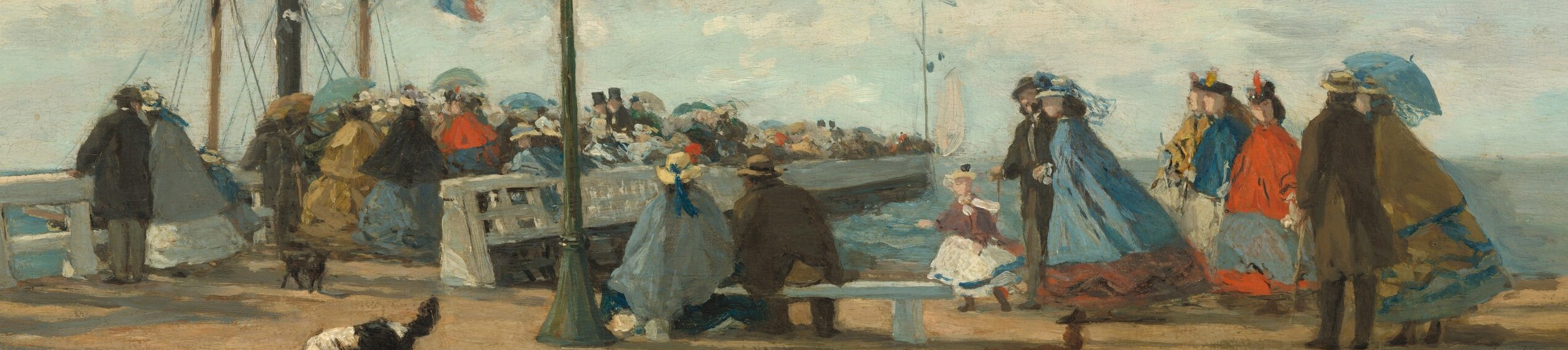
Observe the lively crowd on the quay, their leisurely strolls under parasols, and the modern steamboat's smoke mingling with the sky. These details transport us to a time of changing landscapes and social habits. Even small animals, like the dog on the shore, add to the scene's everyday charm.
Boudin was lauded by critics like Baudelaire for his ability to render the sea's fleeting moods. What truly makes this painting special, however, is a subtle detail often overlooked: the artist's signature, almost hidden, yet boldly inscribed directly into the wooden pier itself.
This small detail reveals Boudin's intimate connection to his subject and his innovative approach to art. What other hidden elements do you notice in his work?
Details
Transcript
This painter was an early Impressionist, capturing outdoor scenes. It's a bustling jetty scene, full of people enjoying the day. A steamboat signals the dawn of a new industrial age. Even the animals are out for a stroll on the shore. But look closely at the very bottom, on the right. The artist signed his name right into the wooden pier.