A Crow Village of Skin Tents on the Salmon River by Catlin, George
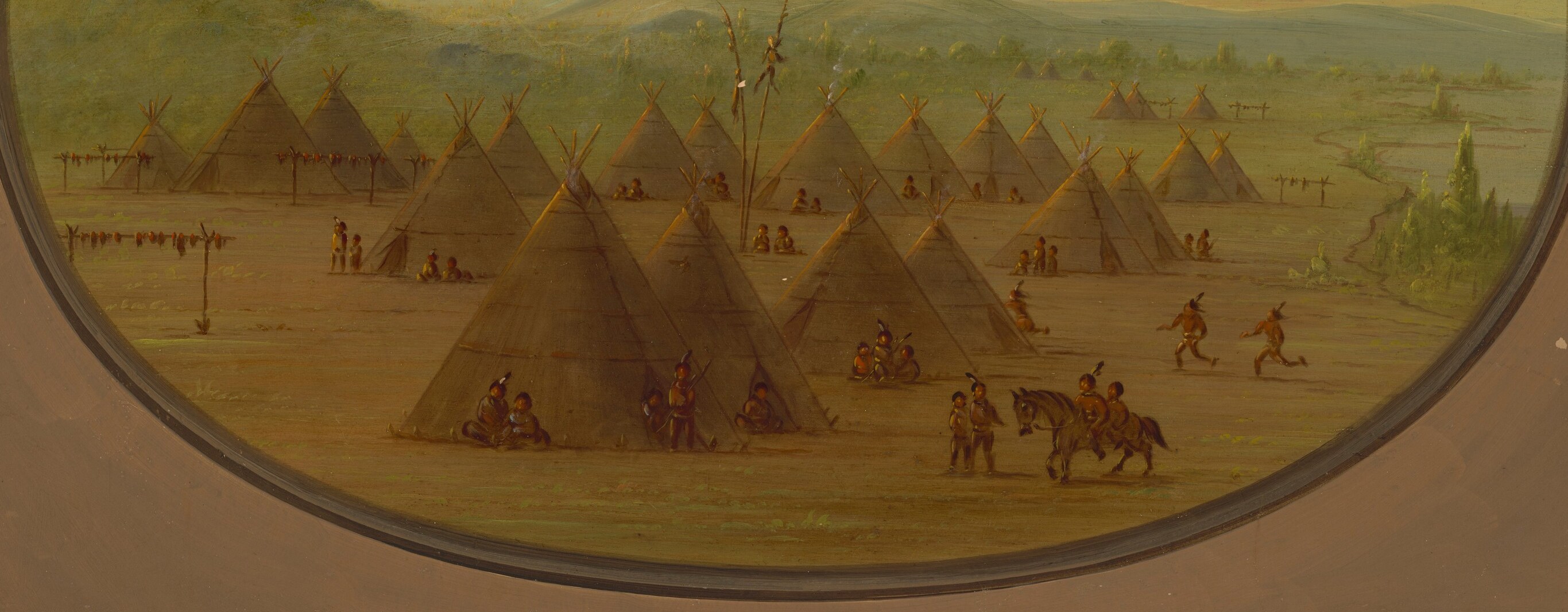
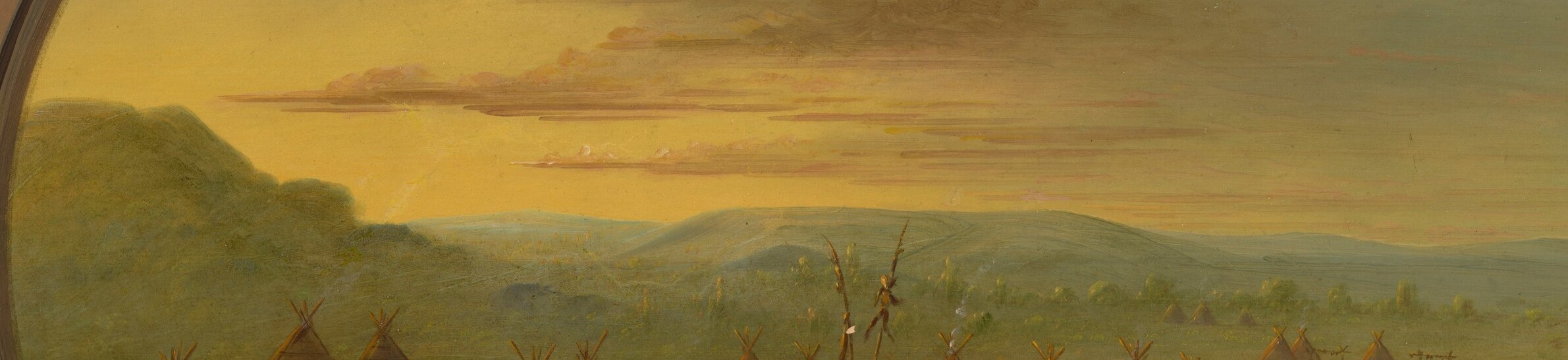
George Catlin, a lawyer-turned-painter, dedicated his career to documenting Native American life in the American West. His painting, *A Crow Village of Skin Tents on the Salmon River*, created between 1855 and 1869, is an oil on card mounted on paperboard and is housed in a museum collection.
Look closely at the distinctive conical skin tents, made from buffalo hide. These dwellings represent the ingenuity and nomadic lifestyle of the Crow people, showcasing their deep connection to the land and its resources. The solitary tree acts as a quiet anchor, symbolizing resilience within the village setting.
Catlin made multiple expeditions to the frontier in the 1830s, producing a vast visual record of Plains Indian cultures. His work stood in contrast to many contemporary, more romanticized depictions, aiming for ethnographic accuracy. This piece offers a snapshot of Crow life along the Salmon River during a period of significant change.
What aspects of this scene do you find most striking?
Details

Transcript
This painter traveled the American West in the 1830s. He sought to document Native American life as it was. Here, Crow people live in buffalo hide tents. These conical dwellings embody their nomadic ingenuity. A solitary tree anchors the settlement by the river. It symbolizes resilience and a landmark within the community.