The Campo di SS. Giovanni e Paolo, Venice by Bellotto, Bernardo
Bernardo Bellotto's "The Campo di SS. Giovanni e Paolo, Venice," painted between 1743 and 1747, is a beautiful oil on canvas that now resides in a public institution. This detailed cityscape, or 'veduta,' captures a serene moment in one of Venice's most famous piazzas.
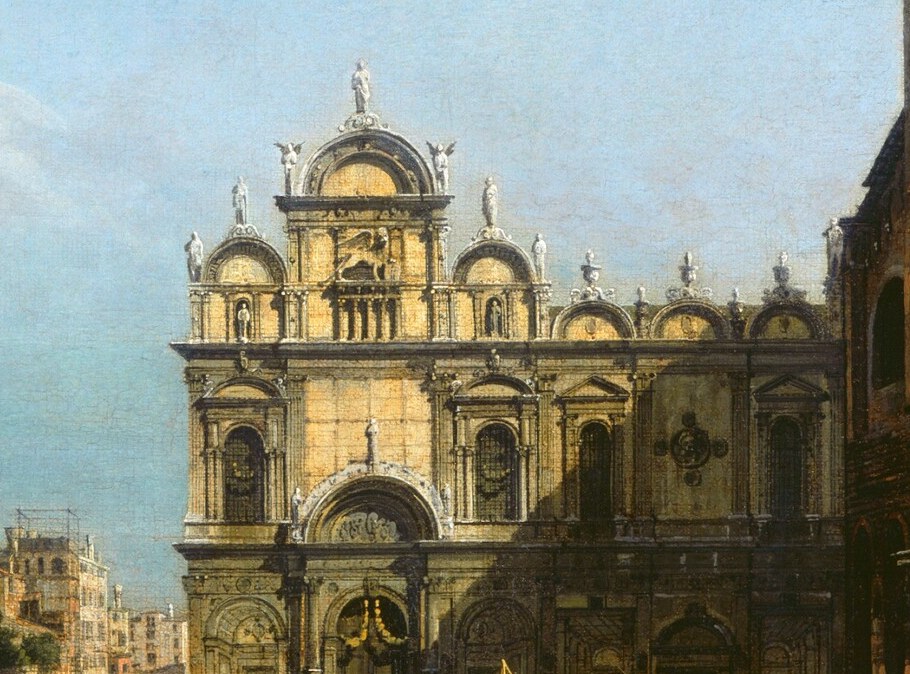
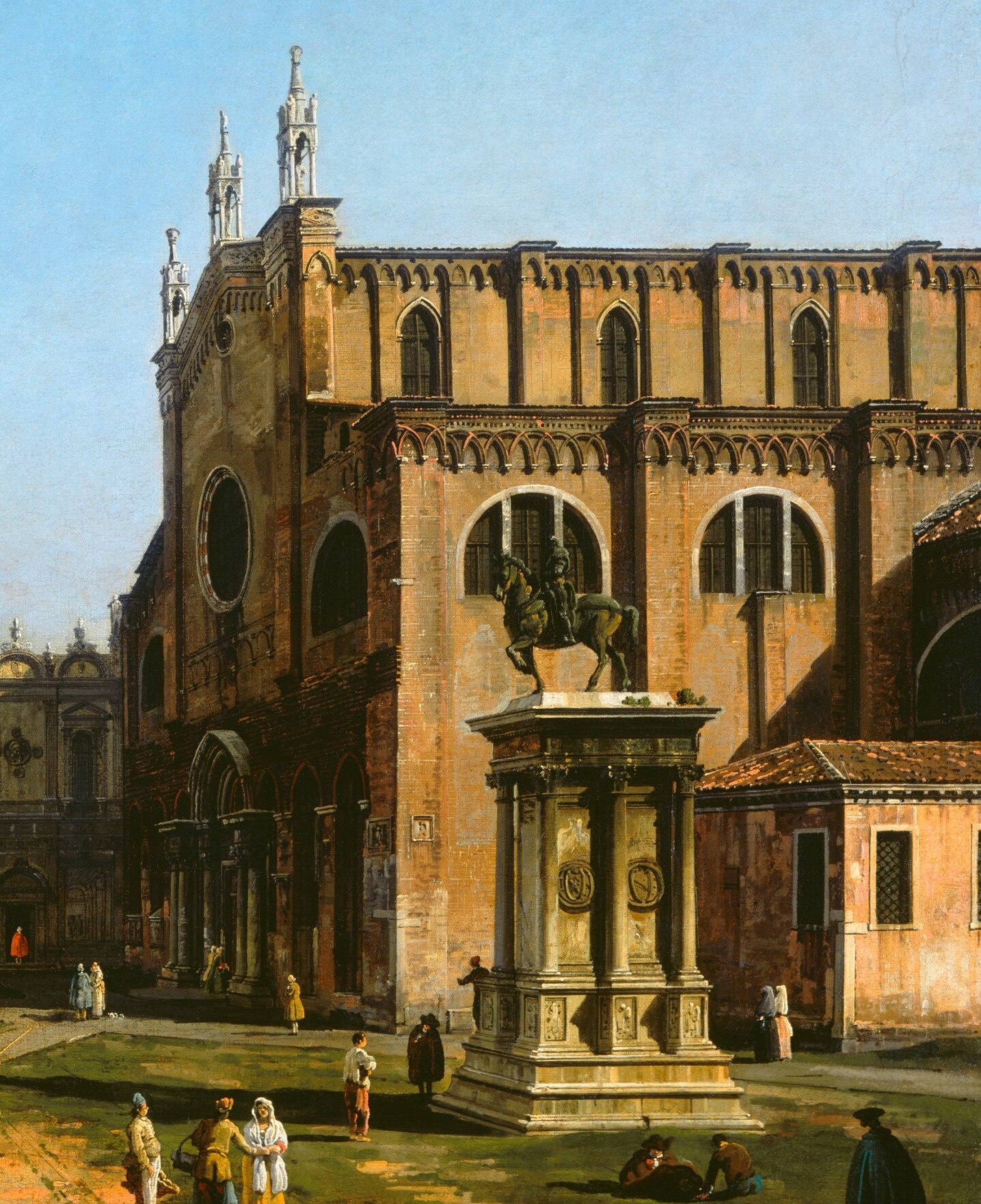
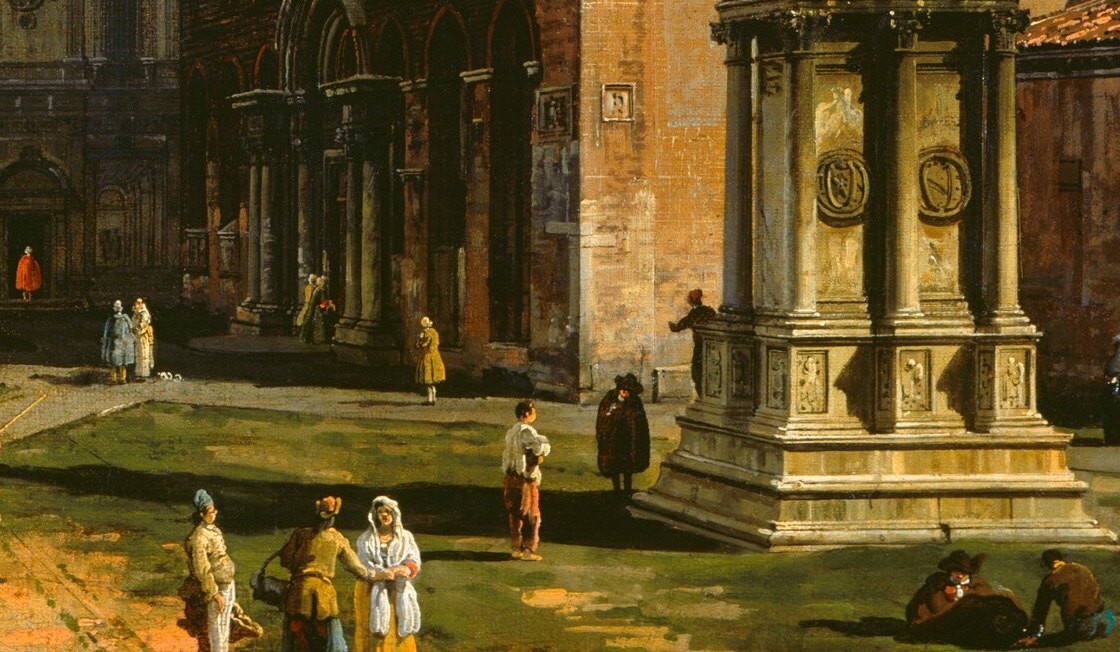
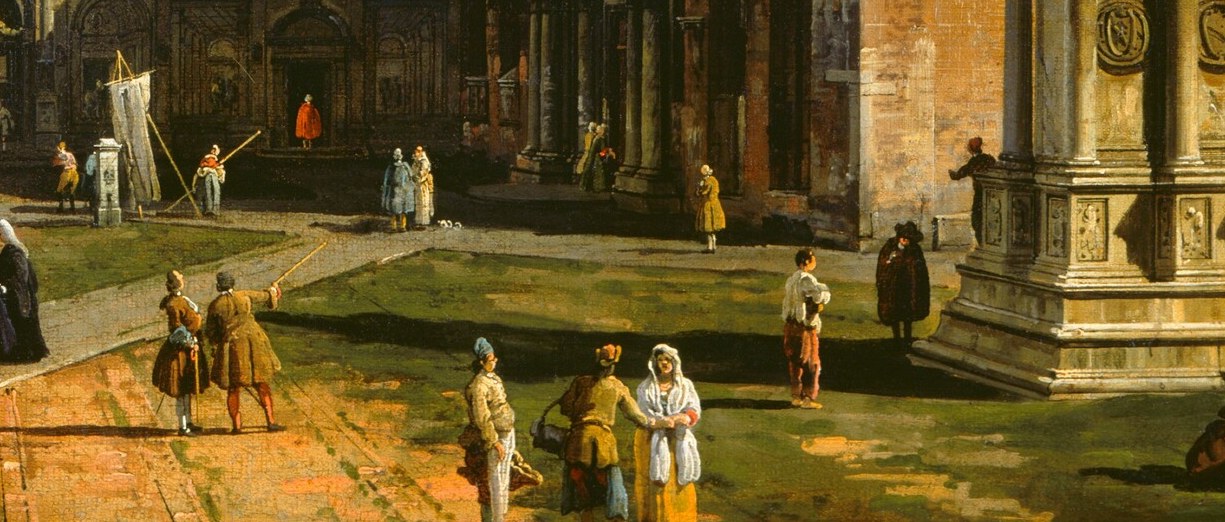
Bellotto meticulously rendered the architectural grandeur of the church facade and the surrounding buildings, using subtle chiaroscuro to give depth to the stone and structure. Look closely at the figures on the piazza and the gondola in the canal, which provide a sense of scale and everyday life against the monumental architecture.
Created in the mid-18th century, this painting was part of Bellotto’s series documenting Venetian landmarks for patrons across Europe. It journeyed through several private collections over centuries, a testament to its enduring appeal, before finding its way to a public collection where it can be appreciated by all. It serves as a visual record of 18th-century Venice, inviting contemplation of the city's unique charm.
Isn't it fascinating how art, much like the cities it depicts, can have its own long and winding history of movement and rediscovery?
Details
Transcript
This tranquil Venetian scene was painted around 1745. It shows the Campo di SS. Giovanni e Paolo, a famous piazza. The painter was known for these detailed city views, or 'vedute.' He used light and shadow to model the stone surfaces and add depth. This painting traveled through many private collections for centuries. Until it finally found its permanent home in a public museum.