Grape Vines and Fruit, with Three Wagtails by Bartolomeo Cavarozzi
This is "Grape Vines and Fruit, with Three Wagtails," painted around 1616 by Bartolomeo Cavarozzi, an Italian master who spent centuries in almost total obscurity. It hangs today at the Galleria Borghese in Rome, not far from the Caravaggios that shaped its creation, and in today's market a prime Cavarozzi still life can command well into seven figures at auction.
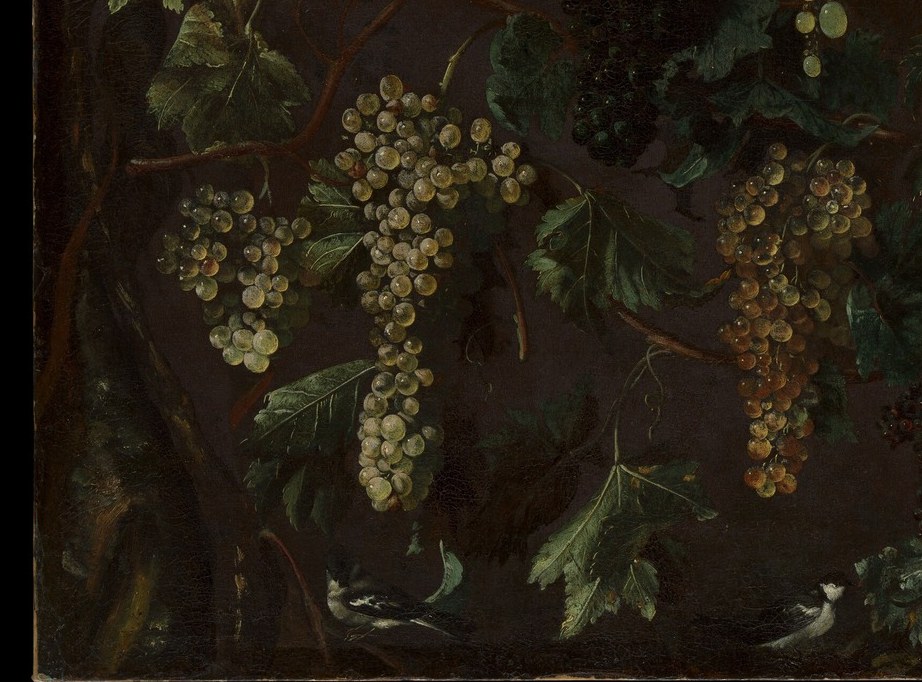
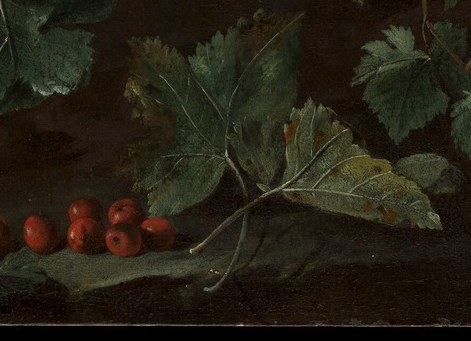
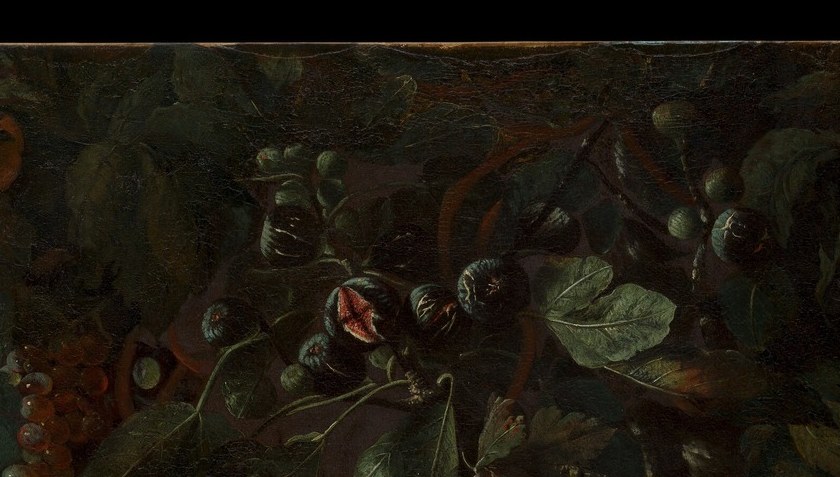
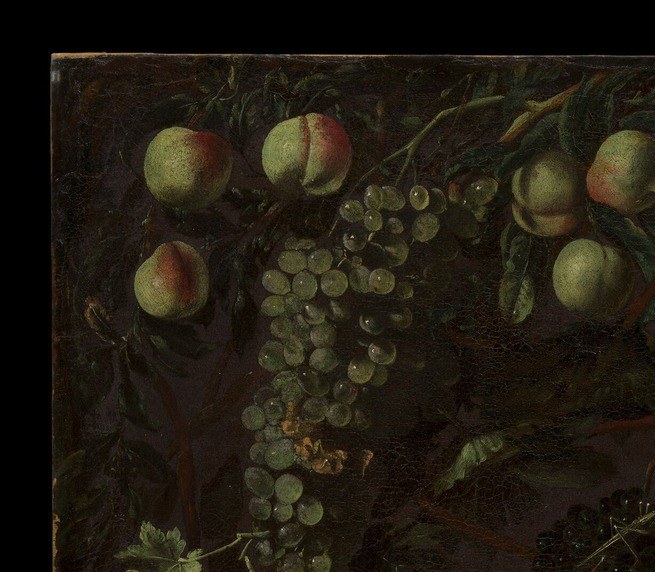
Let your eye adjust to the dark, and the painting rewards you slowly. The green grapes on the lower left are the technical showpiece: each one carries its own highlight, with the translucent skin of the fruit glowing against the void-black background. Look further back into shadow and you will find dark plums and figs nearly swallowed by the darkness, a deliberate trick Cavarozzi used to make looking feel like discovering.
Cavarozzi trained in Rome under Giovanni Battista Crescenzi and later traveled to Spain, where he helped spread Caravaggio's dramatic light-and-shadow style across Europe. But after his death in 1625 at about thirty-eight, his name faded. For the next three hundred and fifty years, his surviving paintings were routinely assigned to better-known hands. Serious scholarly re-evaluation only began in the final decades of the 20th century, and his work is still being identified.
The three wagtails that give the painting its title are not allegories or emblems. They are simply garden birds that have landed among the fruit, watchful and alive. In a genre full of grand moral lessons about decay, Cavarozzi just painted what he saw: a vine in full summer, exactly as it was.
Details
Transcript
This painting is worth millions. But for 350 years, no one cared who made it. The grapes glow like stained glass against the pure black ground. Three wagtails perch along the bottom. Real garden birds, not symbols. Bartolomeo Cavarozzi trained under Caravaggio's circle in Rome, then vanished from fame. Art historians only re-discovered him in the 1980s, sifting his work out of other painters' catalogs. His signature is hidden here, in red pigment embedded in the dark.