Kiowa Chief, His Wife, and Two Warriors by Catlin, George
George Catlin, a lawyer turned painter, created “Kiowa Chief, His Wife, and Two Warriors” around 1861. This oil painting on card, held at a museum, is a crucial piece of American folk art and a historical record.
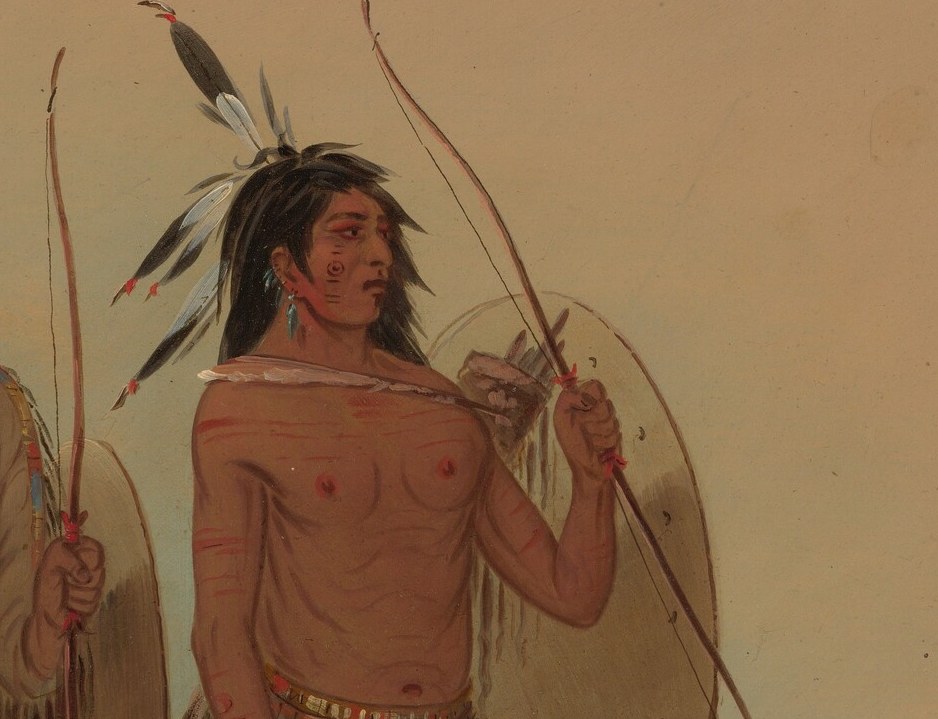
Catlin traveled the American West extensively in the 1830s, dedicated to documenting the lives of Plains Indians. In this work, he captures a Kiowa chief, his wife, and two warriors with a straightforward, documentary quality. Notice the chief's stoic face, the detailed feathered headdress, and the warrior's drawn bow, each element speaks to status, culture, and readiness.
The painting's flat, almost naïve style, characteristic of American folk art, emphasizes the quiet presence of each individual. It serves not just as an artistic representation but as a valuable historical document, offering insight into Kiowa dress and social structure during a period of rapid change and expansion into Native lands. What details stand out to you in this historical snapshot?
Details
Transcript
This painter was a lawyer who headed West. He sought to document Indigenous life before it vanished. Here, a Kiowa chief's stoic face conveys dignity and leadership. His feathered headdress symbolizes status and spiritual connection. The warrior's drawn bow shows readiness and skill. This work is a document of a changing world.