Portrait of Jacopo Strada by Titian
Titian's "Portrait of Jacopo Strada," painted between 1567 and 1568, captures the essence of a remarkable Renaissance figure. Housed in the Kunsthistorisches Museum in Vienna, this oil on canvas reveals Strada's shrewd intelligence and multifaceted roles within the Habsburg court.
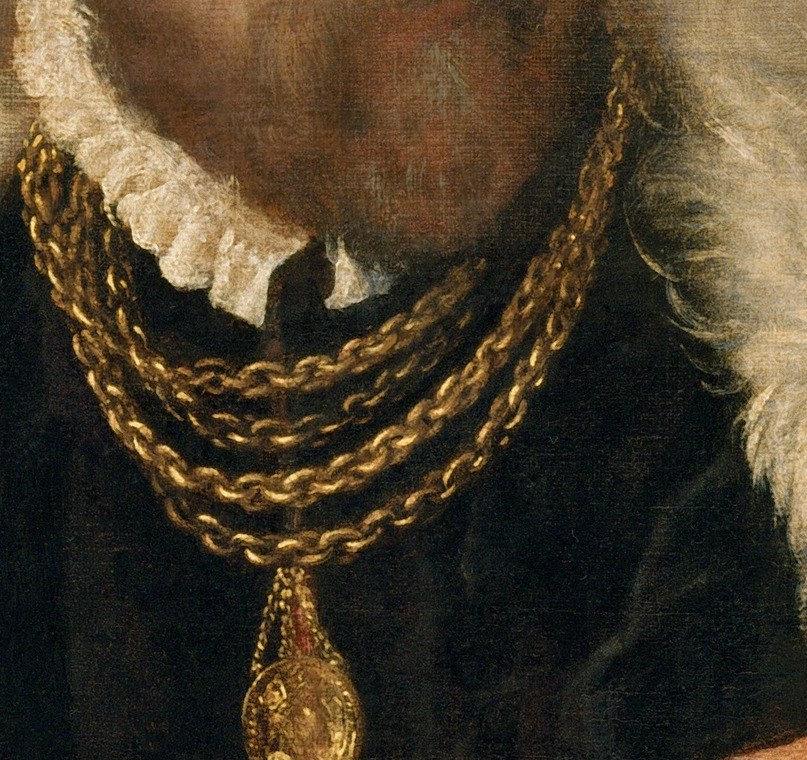
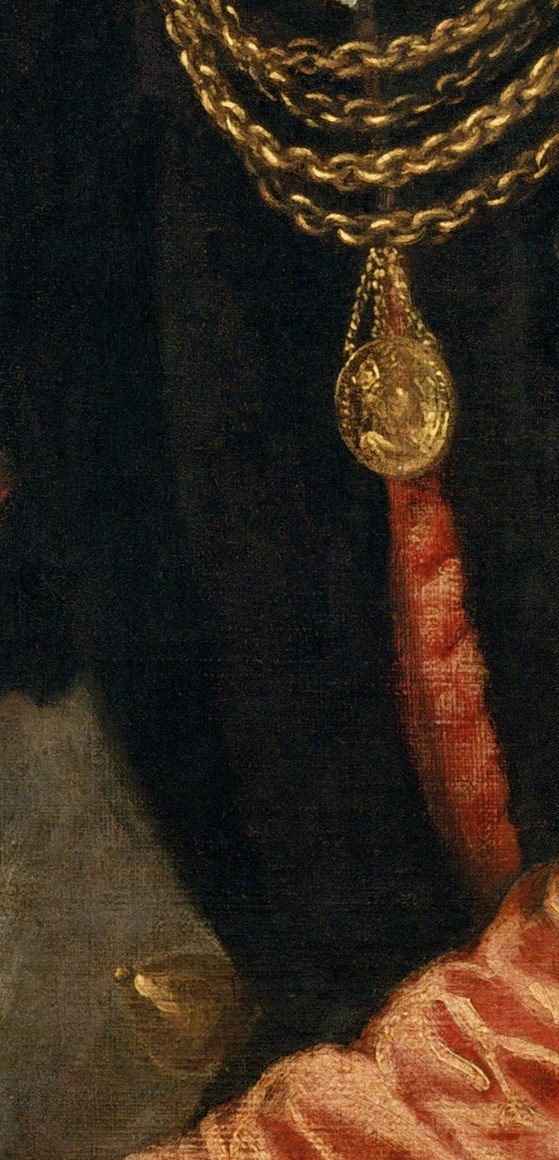
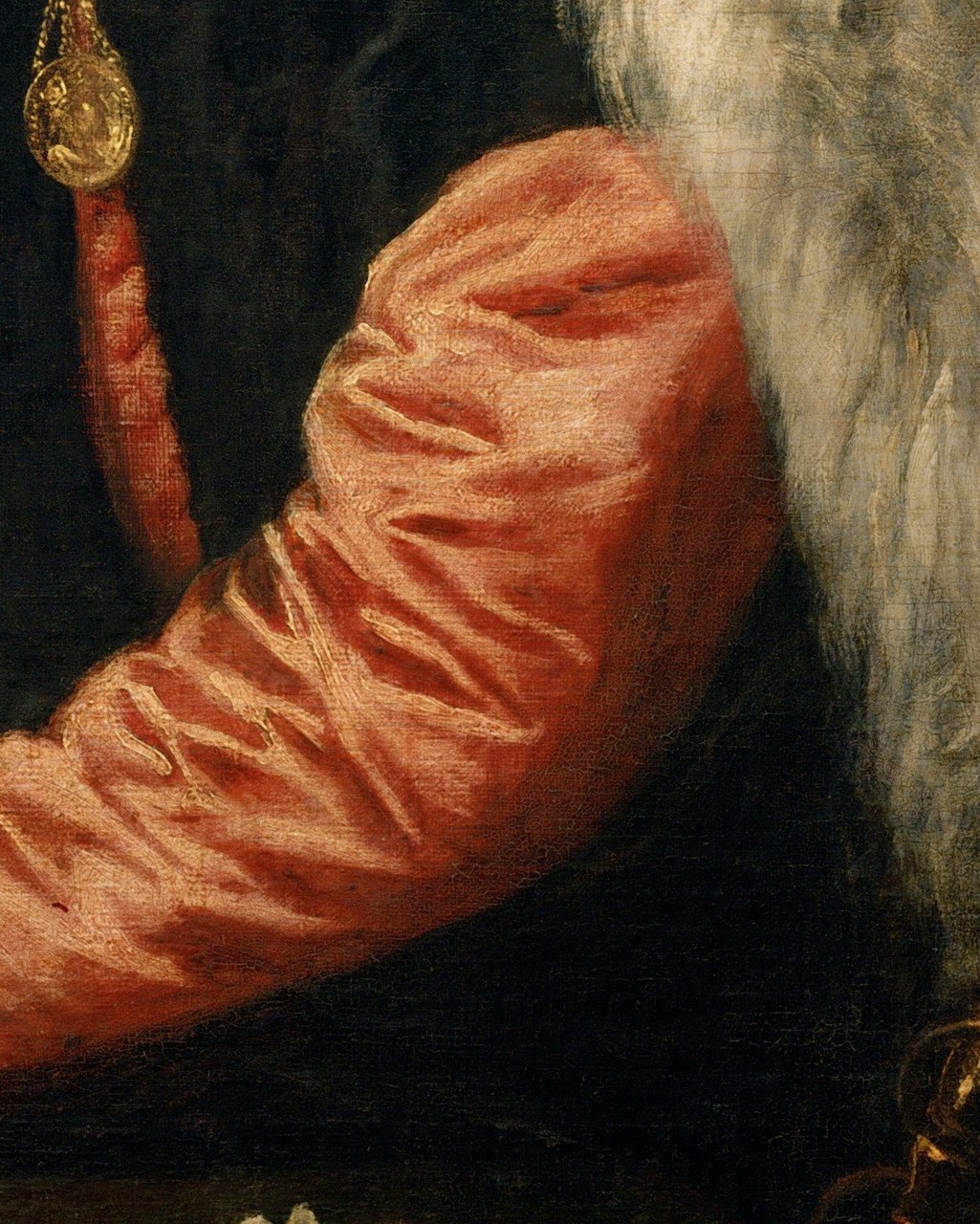
Look closely at Strada's direct gaze and the meticulous rendering of his attire, especially the rich red sleeve and the prominent gold necklace. These details, along with the scattered coins and the classical statue on the table, are not mere accessories; they are deliberate symbols chosen by Titian to represent Strada's identity as a scholar, collector, and man of significant financial standing.
Jacopo Strada was a court librarian, an antiquarian, and a dealer. Titian, a master of color and texture, used his skill to convey not just a likeness, but the very essence of Strada's status and intellect. The portrait remained within the Habsburg imperial collection, a testament to its value and the importance of its sitter.
What do you notice first about the objects surrounding him, and how do they inform your understanding of his character?
Details

Transcript
Jacopo Strada, a scholar and dealer, served the Habsburg court. His gaze is direct, a look of intelligence and quiet authority. He wears a heavy gold necklace, a clear sign of his wealth. His fingers rest on scattered coins, symbols of his profession. Beside them, a classical statue speaks to his humanist ideals. This painter, famed for color, chose red to emphasize his presence. Strada was a man of learning, power, and considerable means.