The Crucifixion by Jacob Cornelisz. van Oostsanen
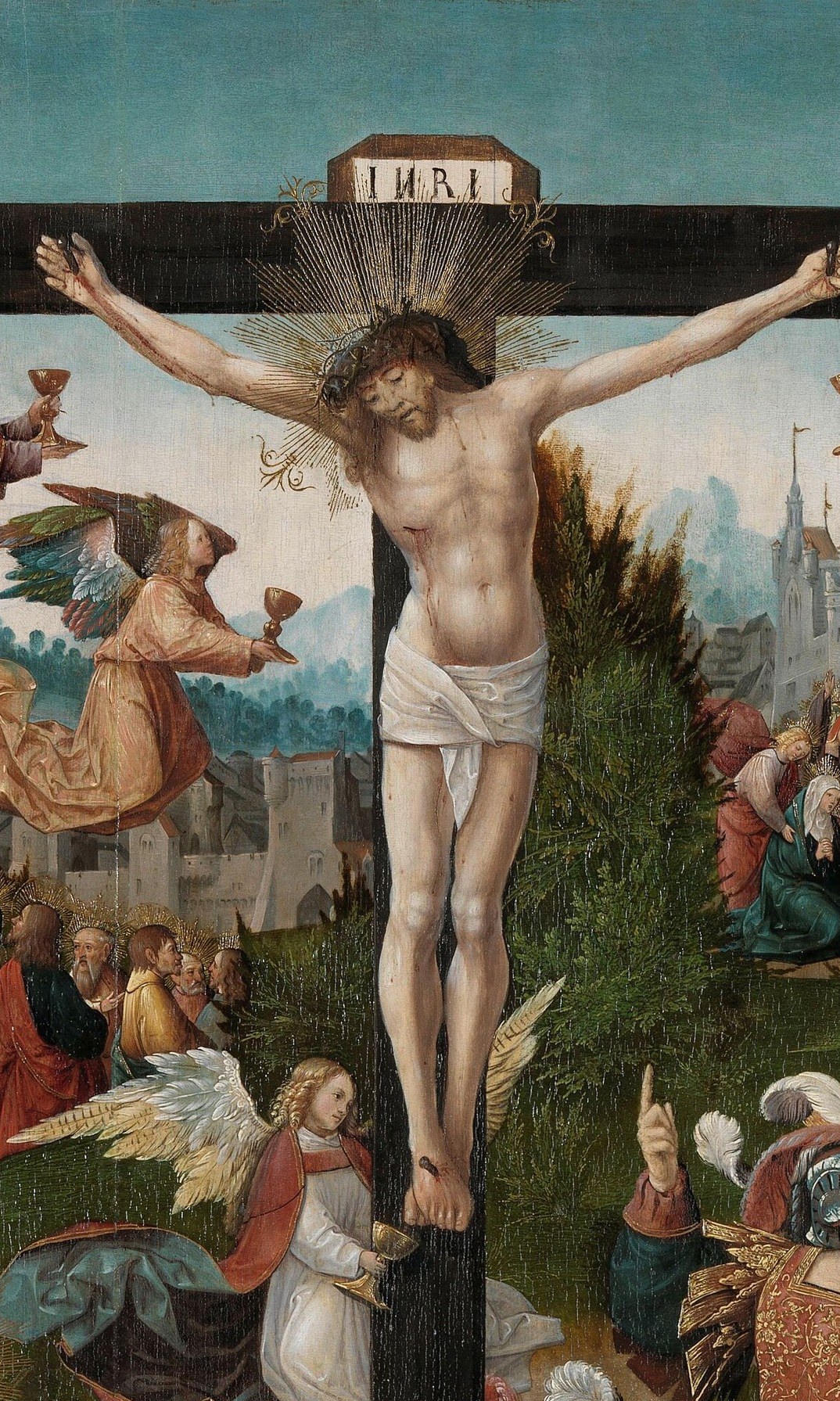
Jacob Cornelisz. van Oostsanen's The Crucifixion, painted in 1508, captures a pivotal biblical moment as a vivid public spectacle in early 16th-century Amsterdam.
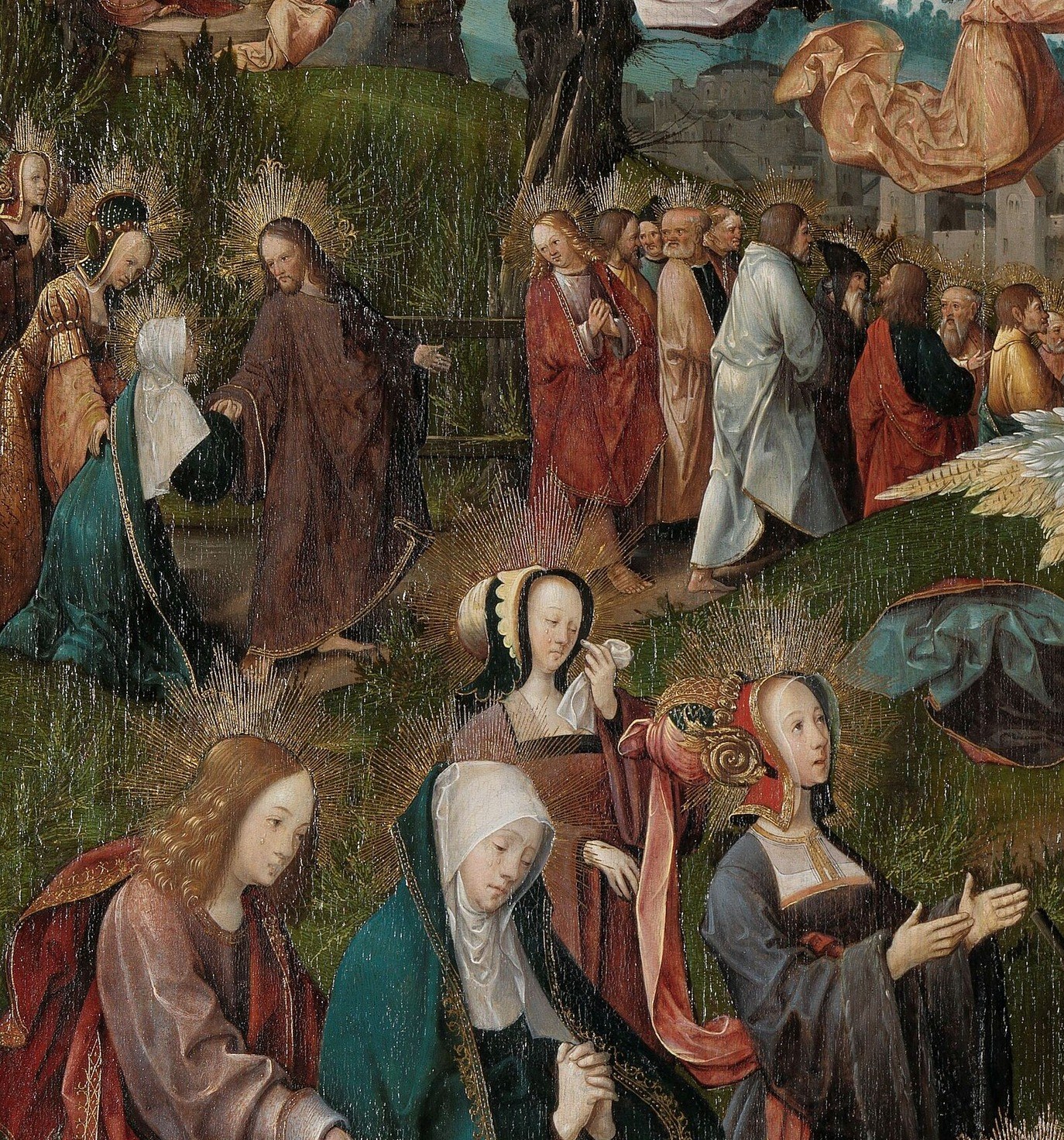
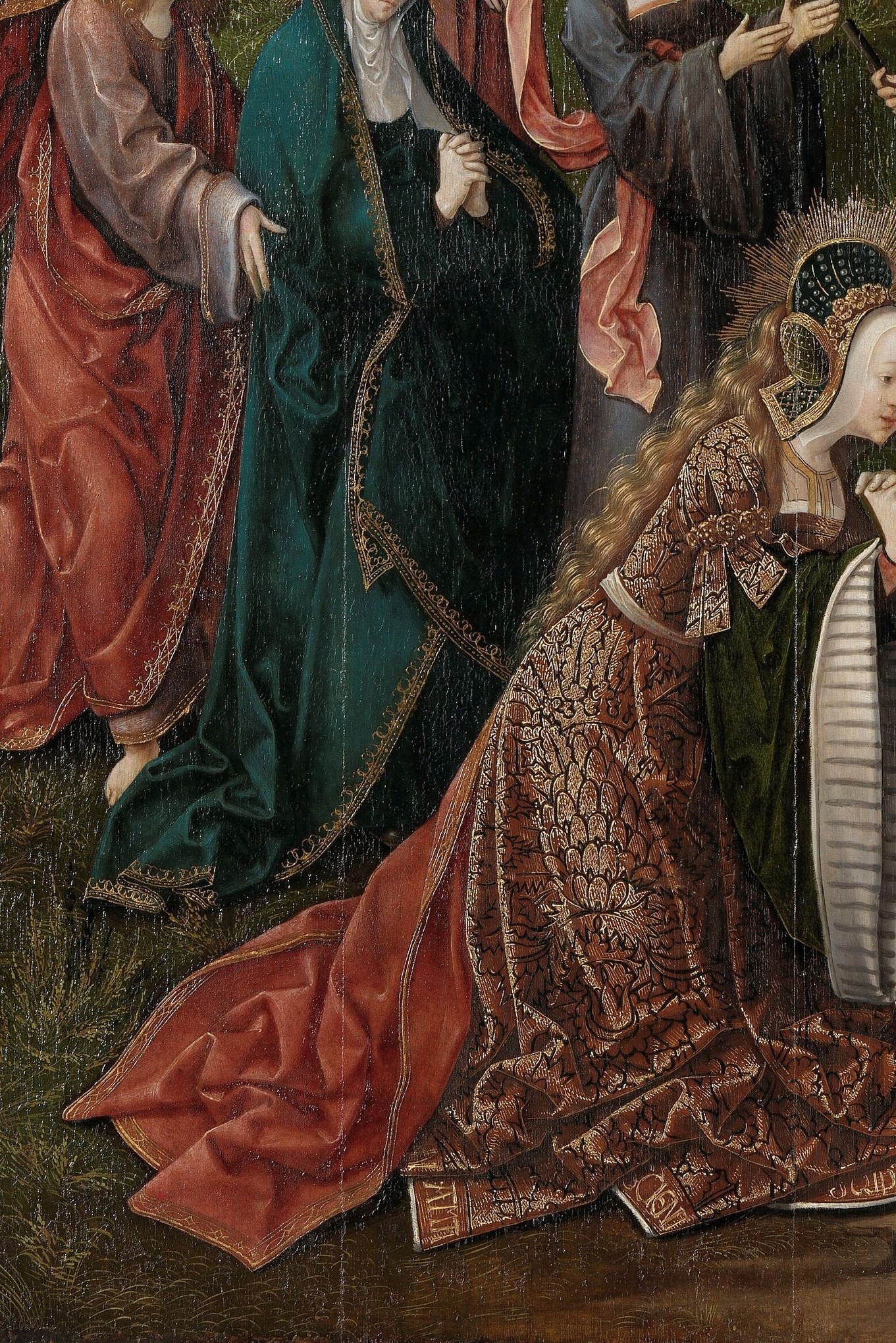
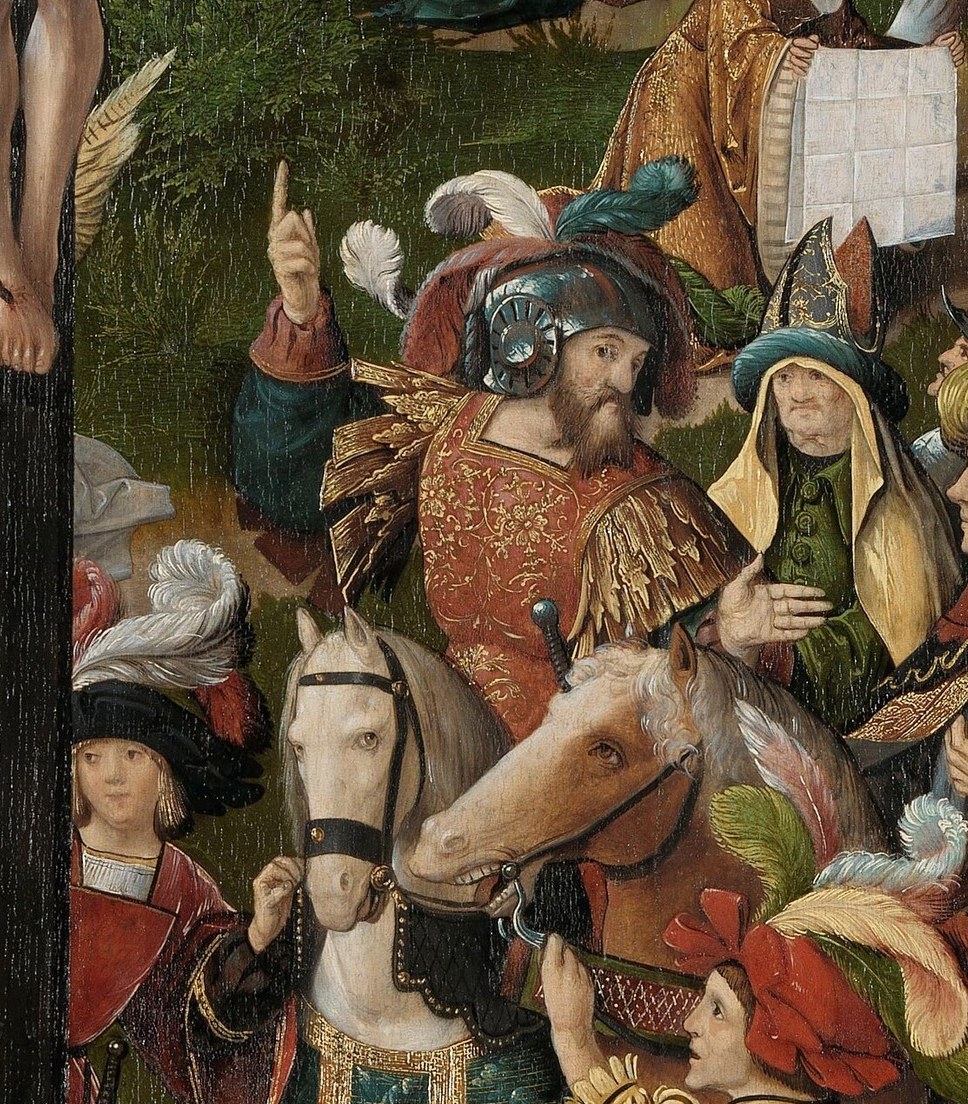
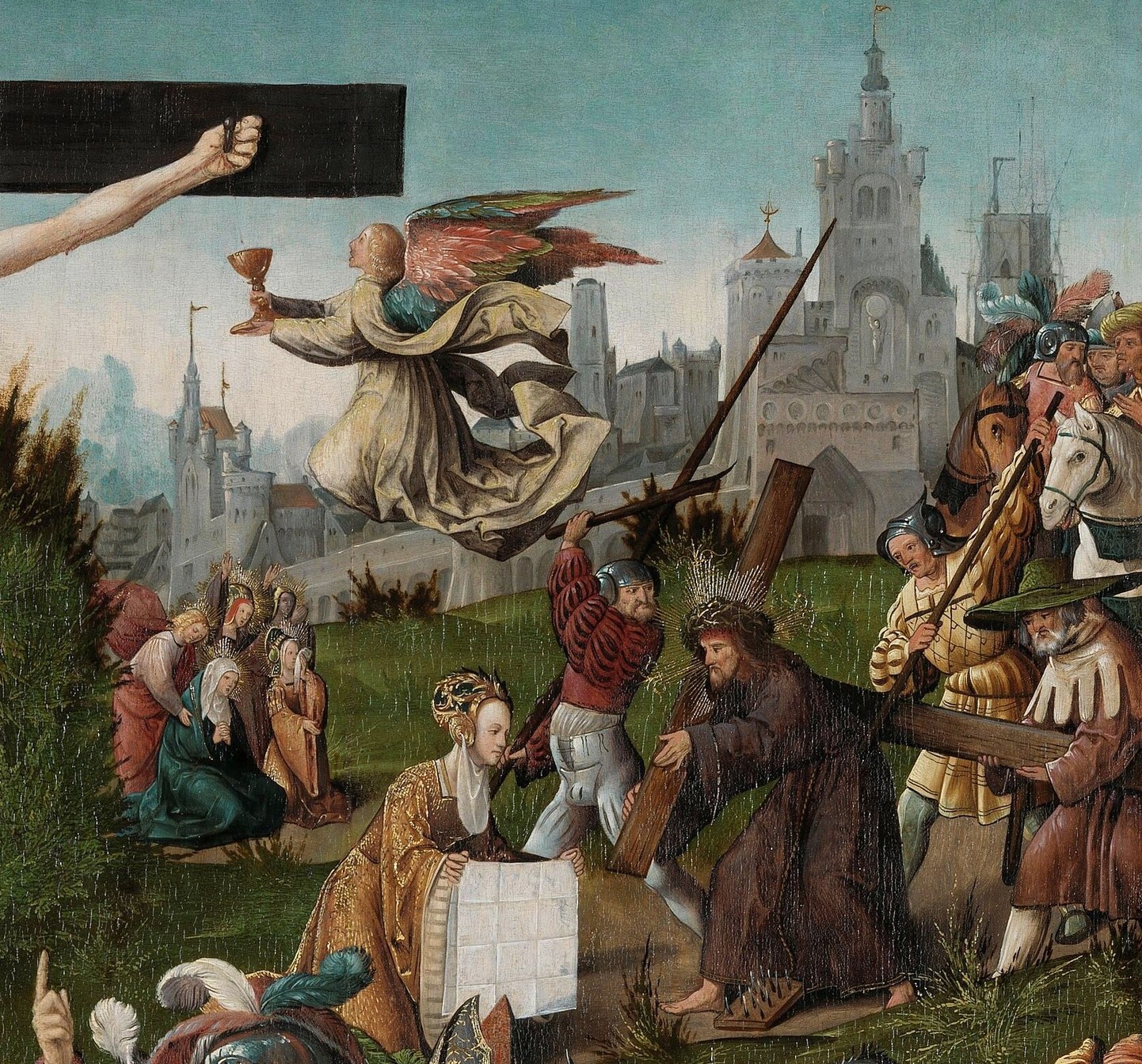
Look closely at the diverse crowd, from high-status mourners in rich garments to mounted soldiers, each figure reacting to the central drama. Above, angels collect the blood of Christ, while Saint Veronica presents her veil with his miraculous image.
As one of the first major artists active in Amsterdam, van Oostsanen's work reflects the city's emergence as a regional cultural hub during the Northern Renaissance. The detailed cityscape in the background grounds this timeless event in a specific historical context.
The painting is a testament to the artist's skill in weaving together narrative, symbolism, and a sense of bustling contemporary life. What details surprise you most in this scene?
Details
Transcript
This isn't just a religious scene, it's a bustling public event. In 1508, the painter captured a crowd's varied reactions. This woman in red represents the high-status mourners. See her elaborate dress, rich with gold embroidery. Even soldiers are present, mounted on horseback. In the distance, the city of Amsterdam rises under a clear sky. This was a major artistic work for the expanding provincial city.