Banquet at the Crossbowmen’s Guild in Celebration of the Treaty of Münster by Bartholomeus van der Helst
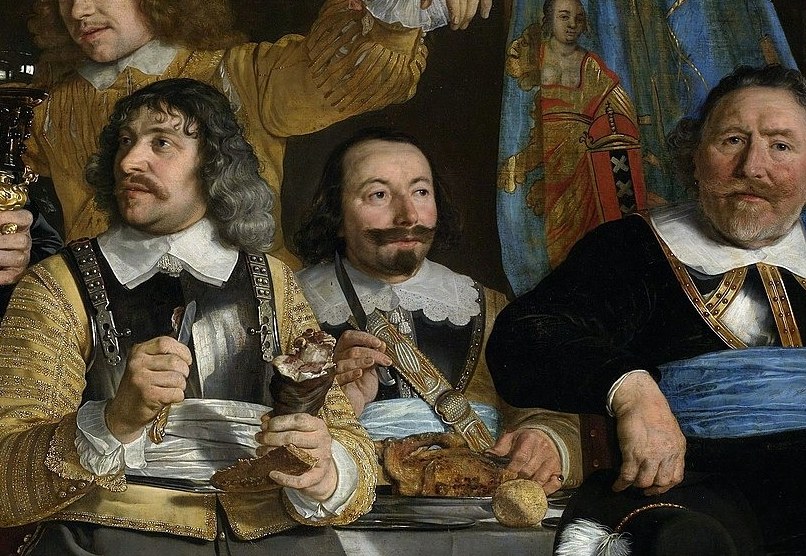
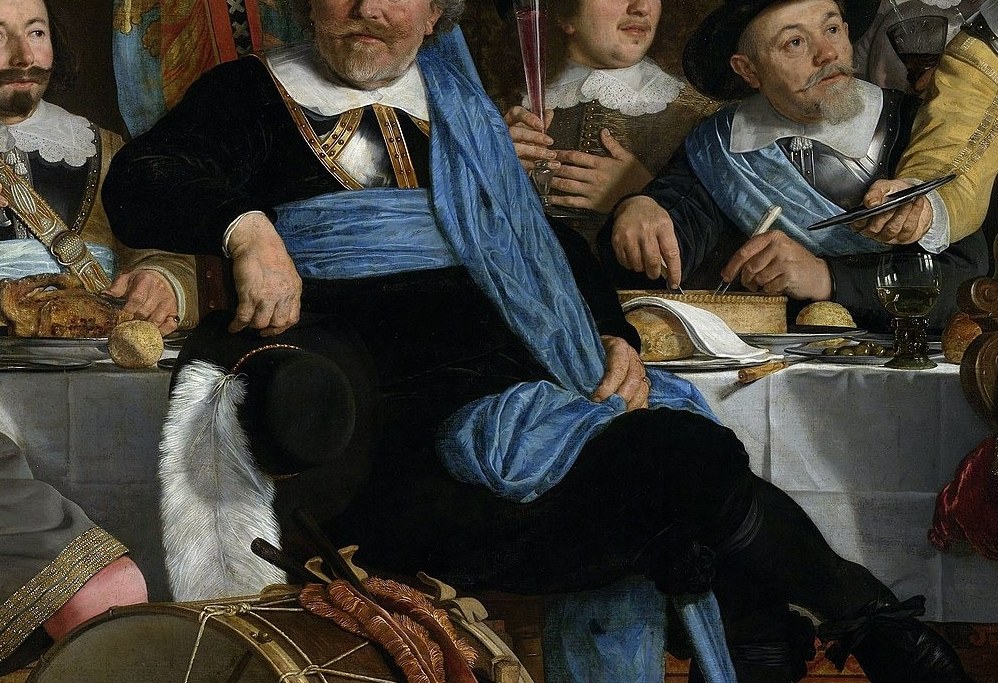
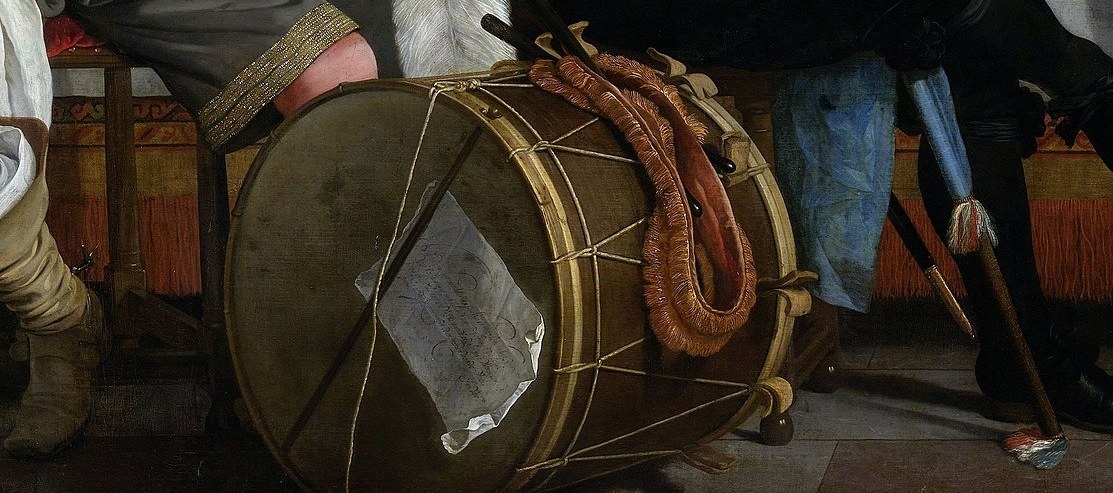
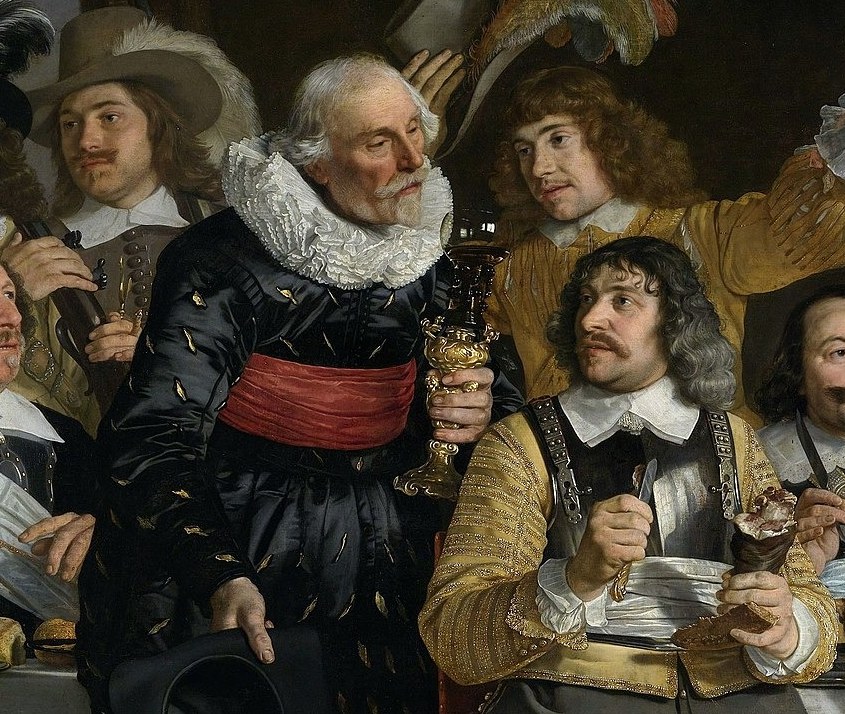
Bartholomeus van der Helst’s "Banquet at the Crossbowmen’s Guild in Celebration of the Treaty of Münster," painted in 1648, is more than just a grand portrait; it's a celebration of peace, and perhaps, a subtle nod to business as usual.
Look closely at the men, richly dressed and raising their glasses. They are members of Amsterdam's civic guard, gathered to commemorate the Treaty of Münster, which finally ended the long and arduous Eighty Years' War for the Dutch Republic. The silver ewer and ornate collars speak to their prosperity and the significance of the occasion.
While the painting broadly celebrates peace, a small detail in the background, the Kloveniersdoelen (their guildhall and shooting range), reminds us of their civic duty. With peace secured, these guardsmen could return to their training and their lives, making this not just a toast to a treaty, but also to a return to stability and the routines of a flourishing city.
What other subtle details do you think painters included to tell a deeper story?
Details
Transcript
This painting celebrates the Treaty of Münster, 1648. It ended the Eighty Years' War for the Dutch Republic. The civic guard of Amsterdam toasted the peace. Look closely at the distant background building. It is the Kloveniersdoelen, their guildhall and shooting range. The peace meant they could go back to business.