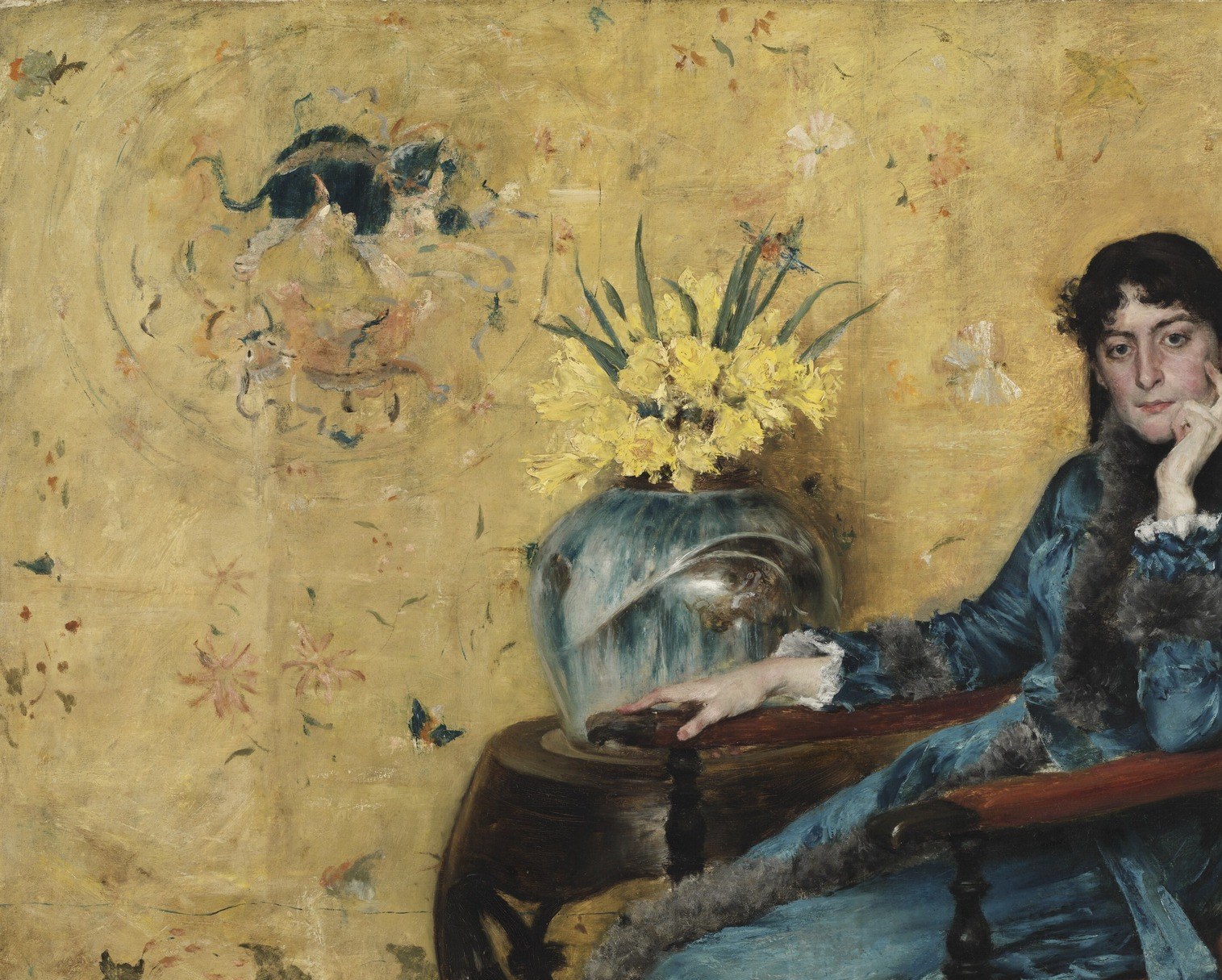
Portrait of Dora Wheeler by William Merritt Chase
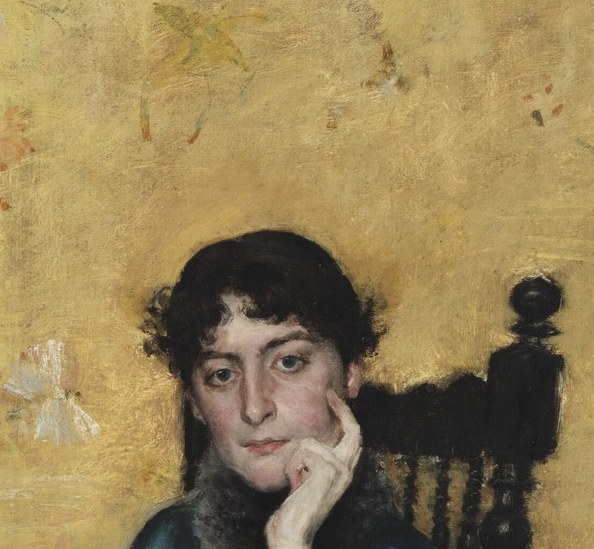
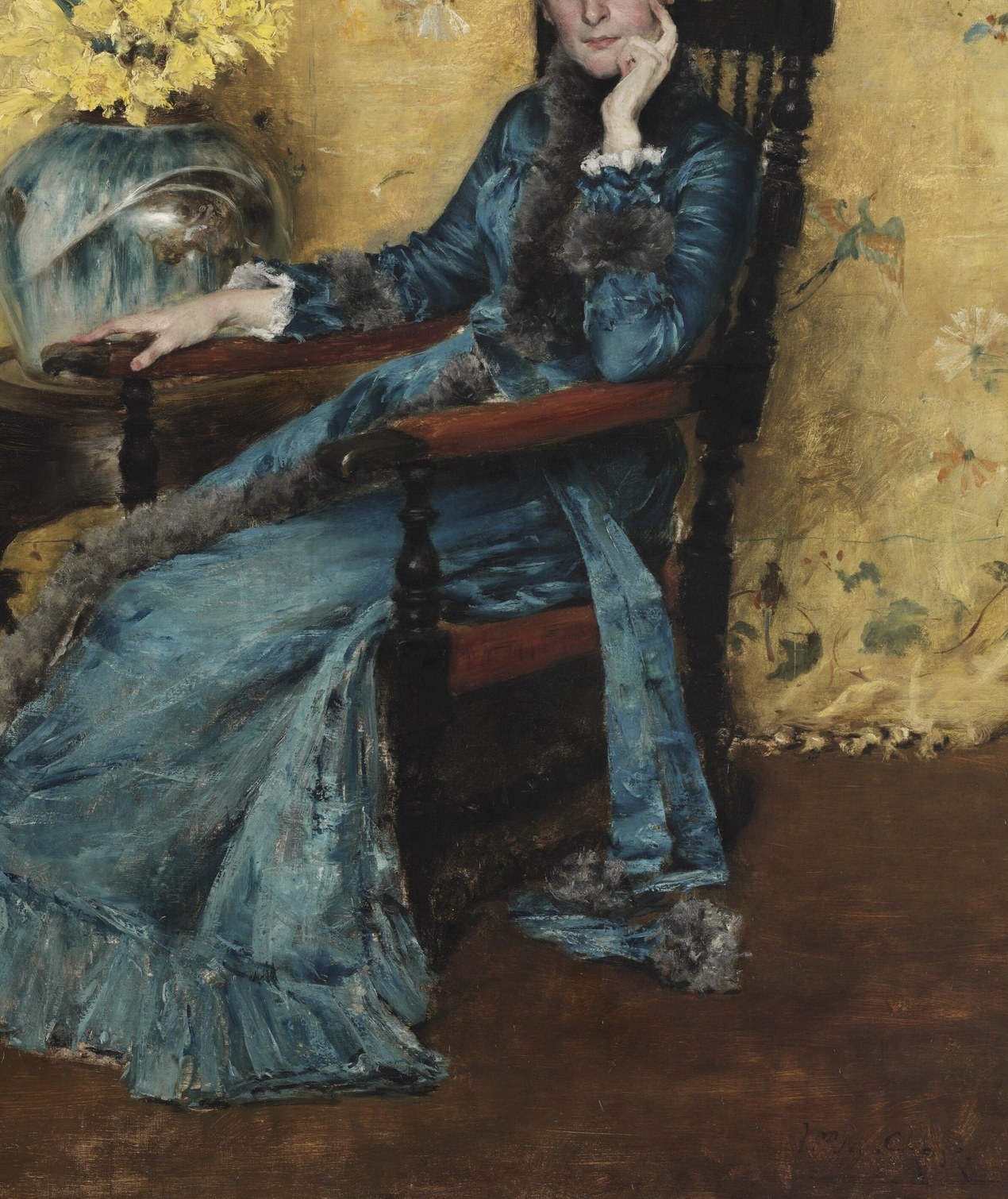
This is William Merritt Chase's *Portrait of Dora Wheeler* from 1892, now at the Cleveland Museum of Art. The painting's most radical choice is invisible to a modern viewer: that flat, gilded background was unprecedented in Western portraiture. Chase did not invent it. He saw it in Japanese folding screens and lacquerware, brought it home to New York, and used it to frame the daughter of America's foremost textile designer.
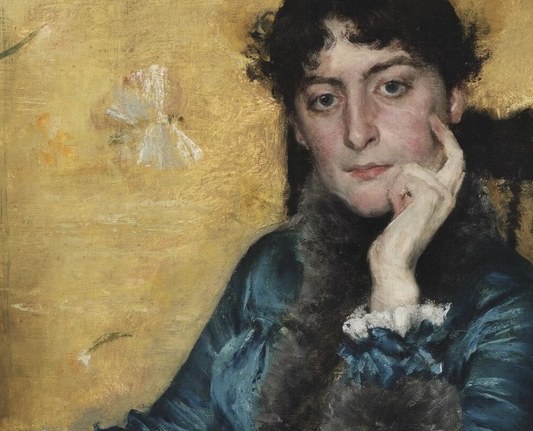
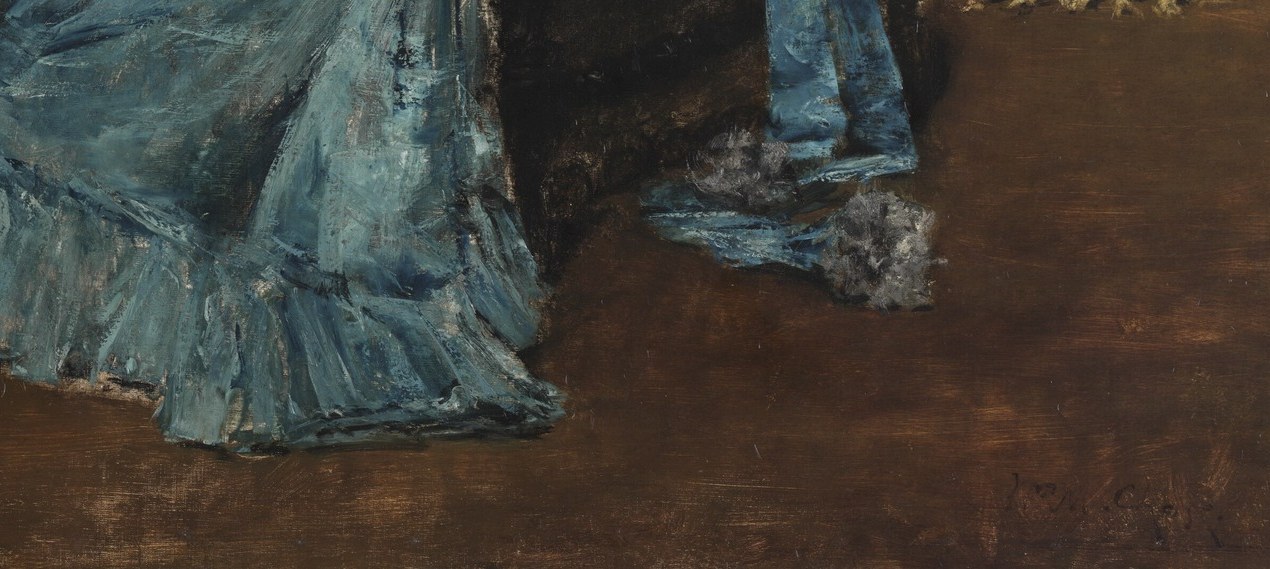
Look at the background first. No depth, no shadow, no Renaissance window. Just a luminous gold plane with a small Japanese-style motif in the upper left corner. Then let your eye drop to her blue silk dress, painted in loose Impressionist strokes that dissolve into near-abstract brushwork at the hem. Chase is letting the painting admit it is paint. The whole portrait argues that a Gilded Age New Yorker belongs on the same flat gold ground as a Japanese screen painting.
Dora Wheeler was herself an artist and designer. Her mother, Candace Wheeler, led the Associated Artists textile workshop and essentially invented the profession of interior design in America. Chase painted Dora not as a passive society ornament but as a thinking woman: her hand rests on her cheek in the classic thinker's pose, and the yellow narcissus she holds nods to self-reflection rather than vanity. Everyone in this room was in the business of making things.
Chase would go on to found the Chase School of Art, which grew into Parsons School of Design. This painting, in its fusion of American Impressionism and Japanese flatness, is an early piece of evidence that he was already teaching his students to look far beyond Europe.
What other American portraits of the 1890s borrow this openly from Japanese art?
Details
Transcript
She looks lost in thought. Quiet, even for a portrait. Her name was Dora Wheeler. She was not just a sitter. Dora was an accomplished designer. Her mother founded textile arts in America. Chase painted her dress with loose, flashing strokes. Pure Impressionism. But the painting's real shock is behind her. A flat field of gold. No Western portrait had ever done this. Chase lifted it straight from Japanese screens and lacquerware. He was declaring that a modern American portrait could look to Tokyo.