Soldiers Playing Cards and Dice (The Cheats) by Valentin de Boulogne
Valentin de Boulogne's *Soldiers Playing Cards and Dice (The Cheats)*, painted around 1619, masterfully uses dramatic lighting to reveal a hidden act of deception. This powerful oil on canvas, now in a private collection, captures a tense moment during a game, a signature example of the artist's Caravaggesque style.
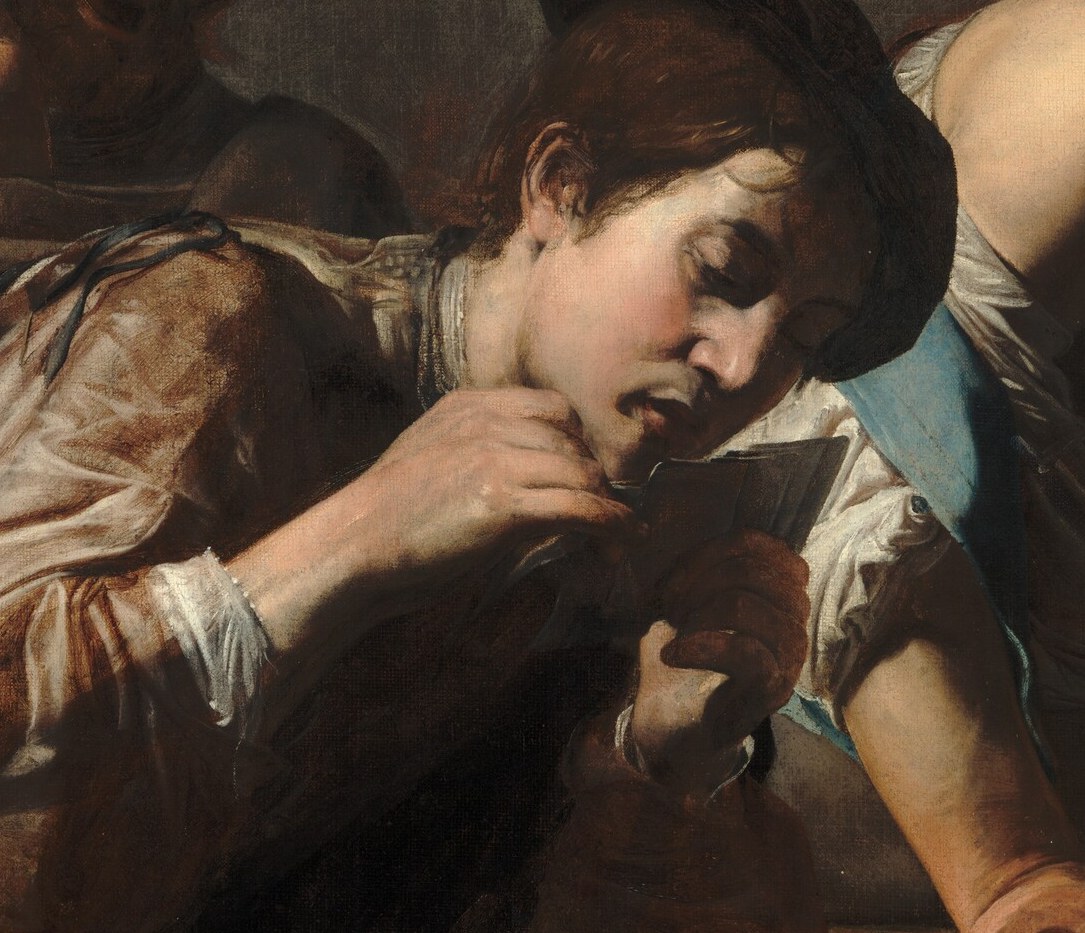
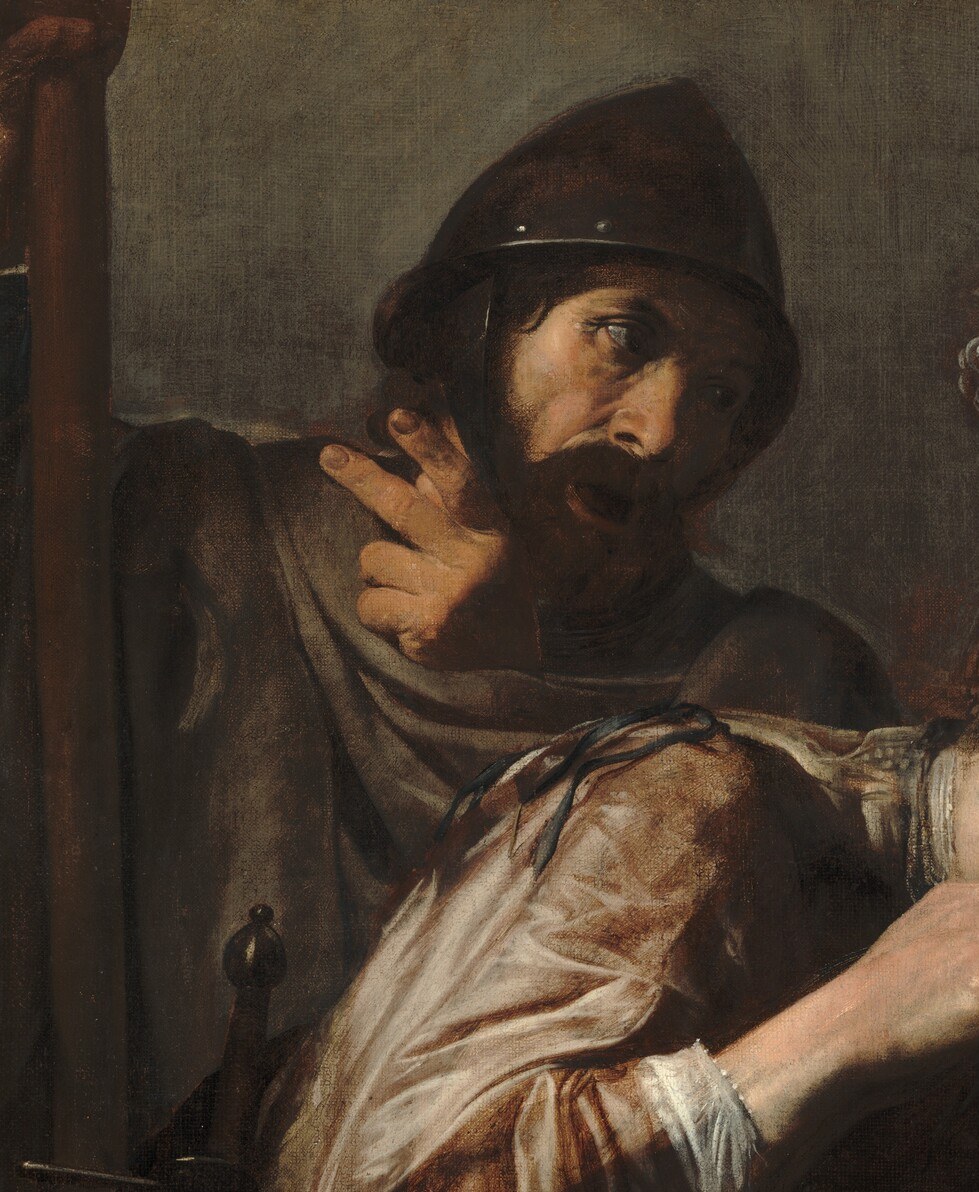
At first glance, it seems like a straightforward genre scene. But look closely at the figures, especially the man in the background with the helmet and mustache. His subtle gesture and knowing look suggest he's aware of more than just the game in front of him.
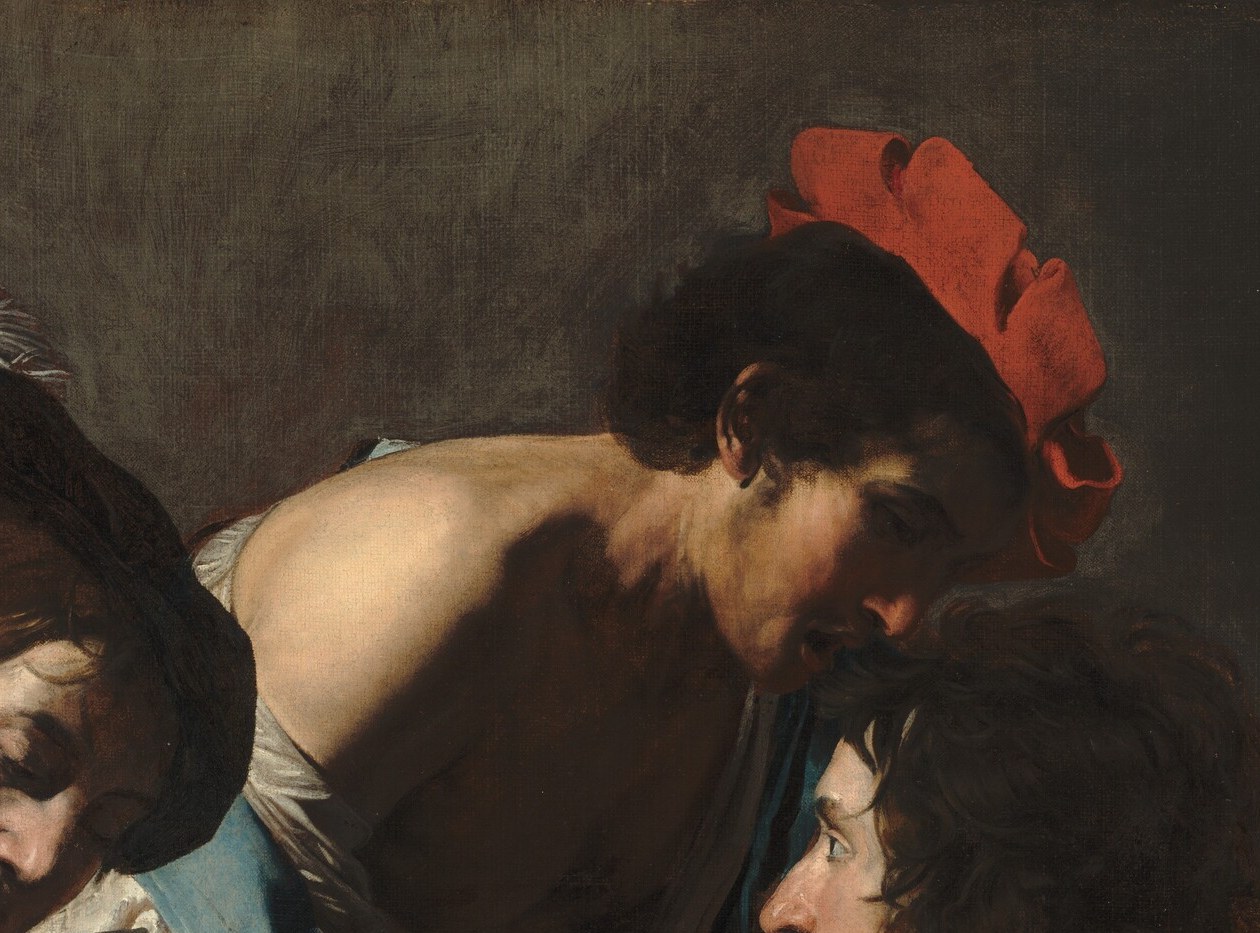
De Boulogne, a French painter active in Rome, was heavily influenced by Caravaggio's tenebrism, the dramatic contrast between light and dark. This technique not only adds depth and drama but also serves to highlight the psychological intensity of the scene and the secret communication between the players. The painting truly lives up to its alternative title, 'The Cheats.'
What other hidden details do you think the artist might have included?
Details
Transcript
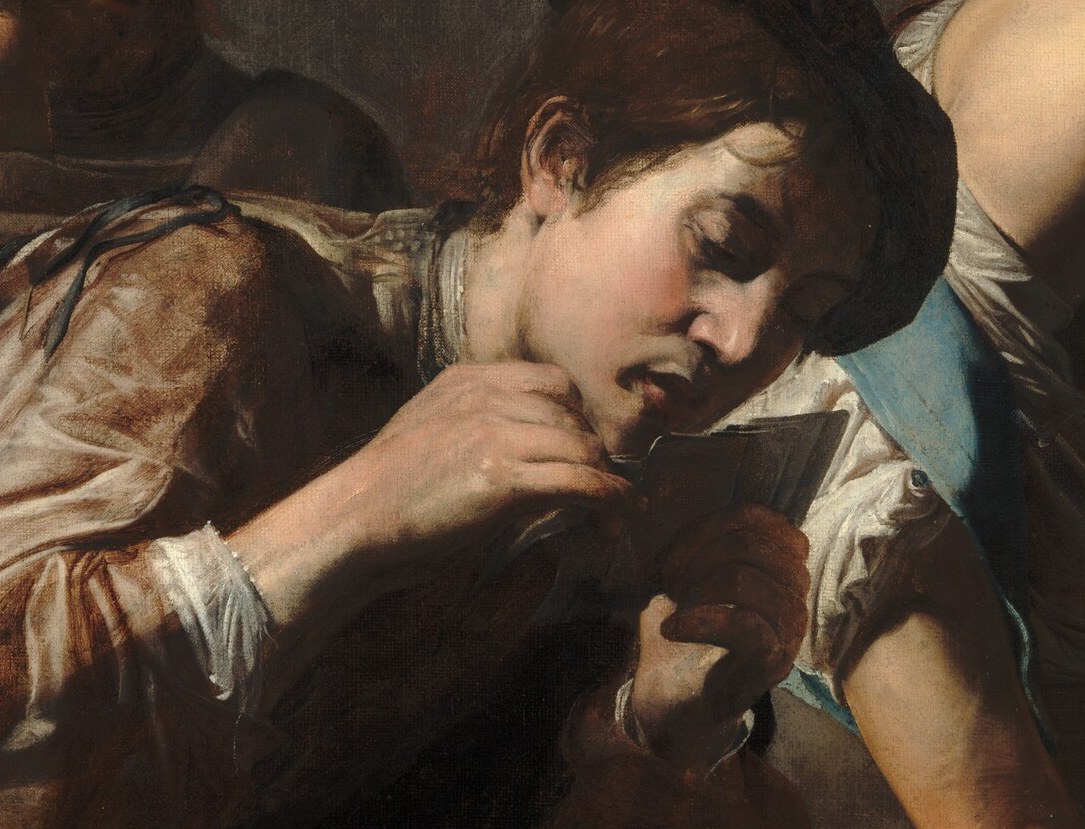
This painting, Soldiers Playing Cards and Dice, feels like a snapshot. The artist, Valentin de Boulogne, was a follower of Caravaggio. He used dramatic light and shadow, called tenebrism, to set a mood. Look at the man in the red cap. His gaze is intent on the game. But his friend behind him sees more than just the cards. He's signaling the red-capped player about the cards. This shadowy figure reveals the 'cheat' in the painting's title.