The Fishing Boat by Gustave Courbet
Gustave Courbet's The Fishing Boat (1865), oil on canvas, The Metropolitan Museum of Art. This painting marks the first acquisition of Courbet's work by a major American museum. Courbet painted around 35 oils in quick succession during the autumn of 1865, and in The Fishing Boat, he deliberately made the vessel the central subject, unlike typical marine paintings of the era.
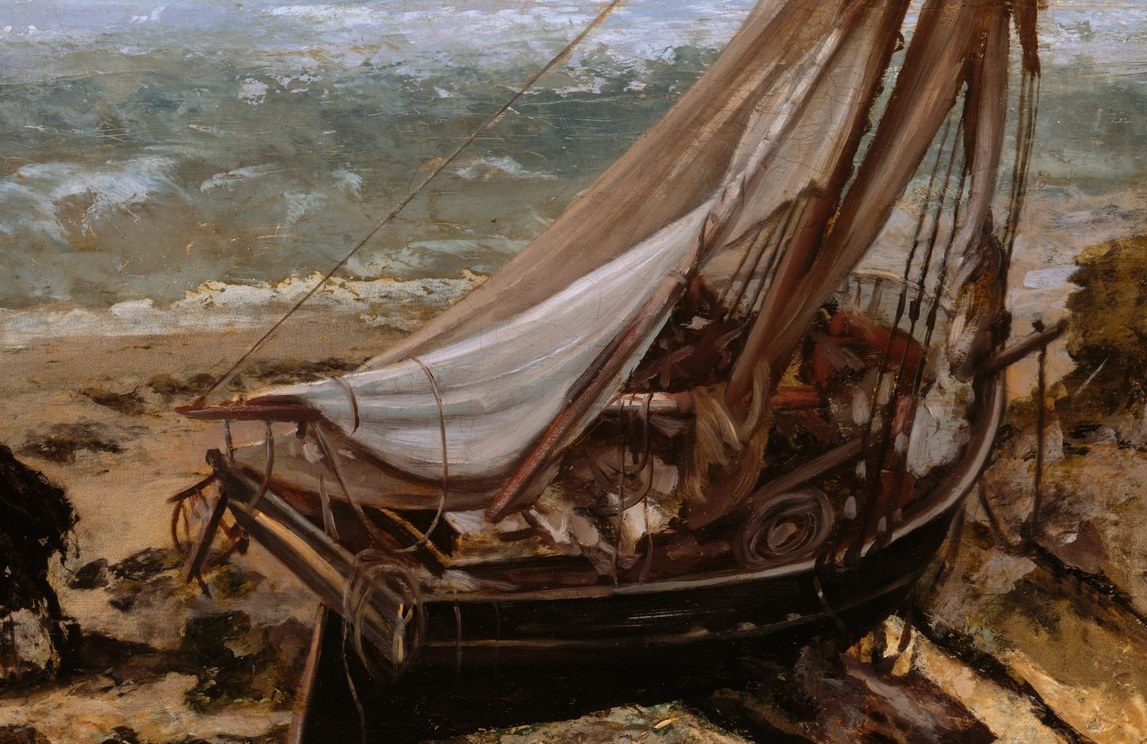
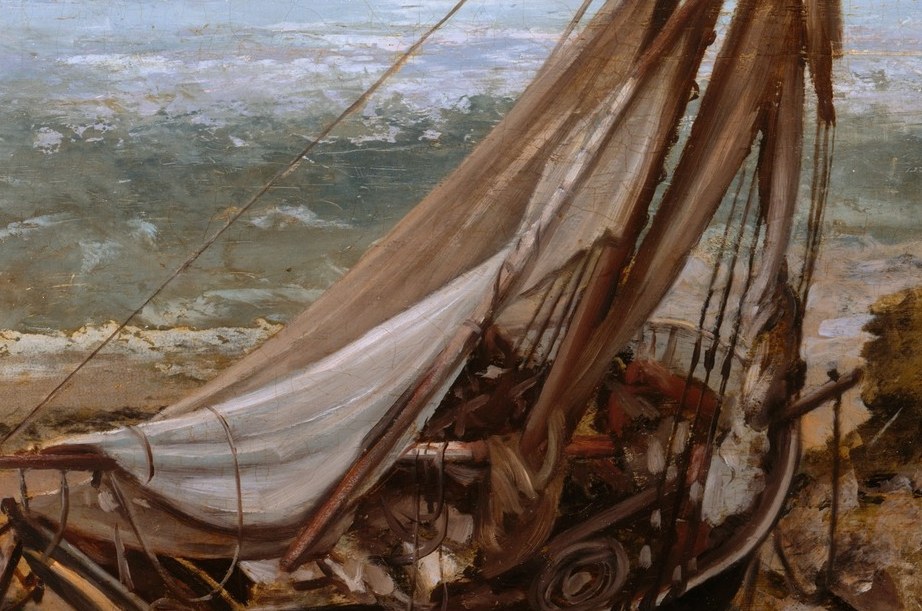
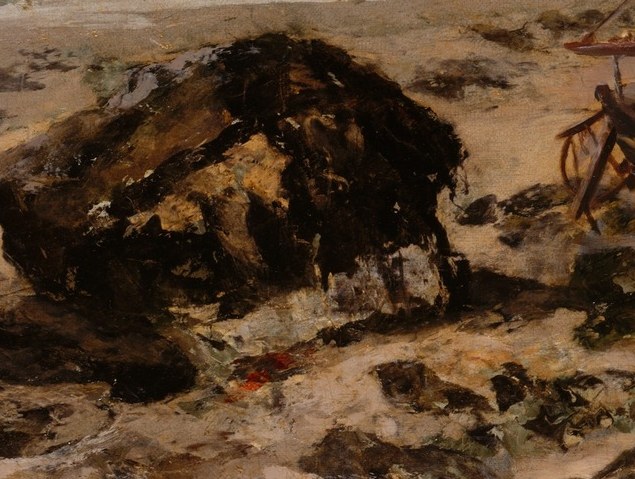
Look at the beached boat dominating the composition. Notice the tattered sail and the small, indistinct figure within its hull. The rough texture of the rocky shore and the choppy sea add to the scene's raw, unvarnished quality.
This work was acquired by the Met in 1899, signifying an early institutional recognition of Courbet's Realist movement. Courbet himself championed painting only what he could see, rejecting academic conventions and paving the way for later artists.
Its strong composition and focus on everyday life define Courbet's commitment to depicting unidealized reality.
Details
Transcript
The whole town moved onto the ice. This boat was beached near Trouville, France. Look at the tattered sail, showing past storms. Courbet painted 35 oils like this in autumn 1865. The boat is the main focus, not a background element. A small figure is in the boat. This was Courbet's first work acquired by the Met. His signature confirms this Realist painting.