A Woodland Road with Travelers by Jan Brueghel, the elder
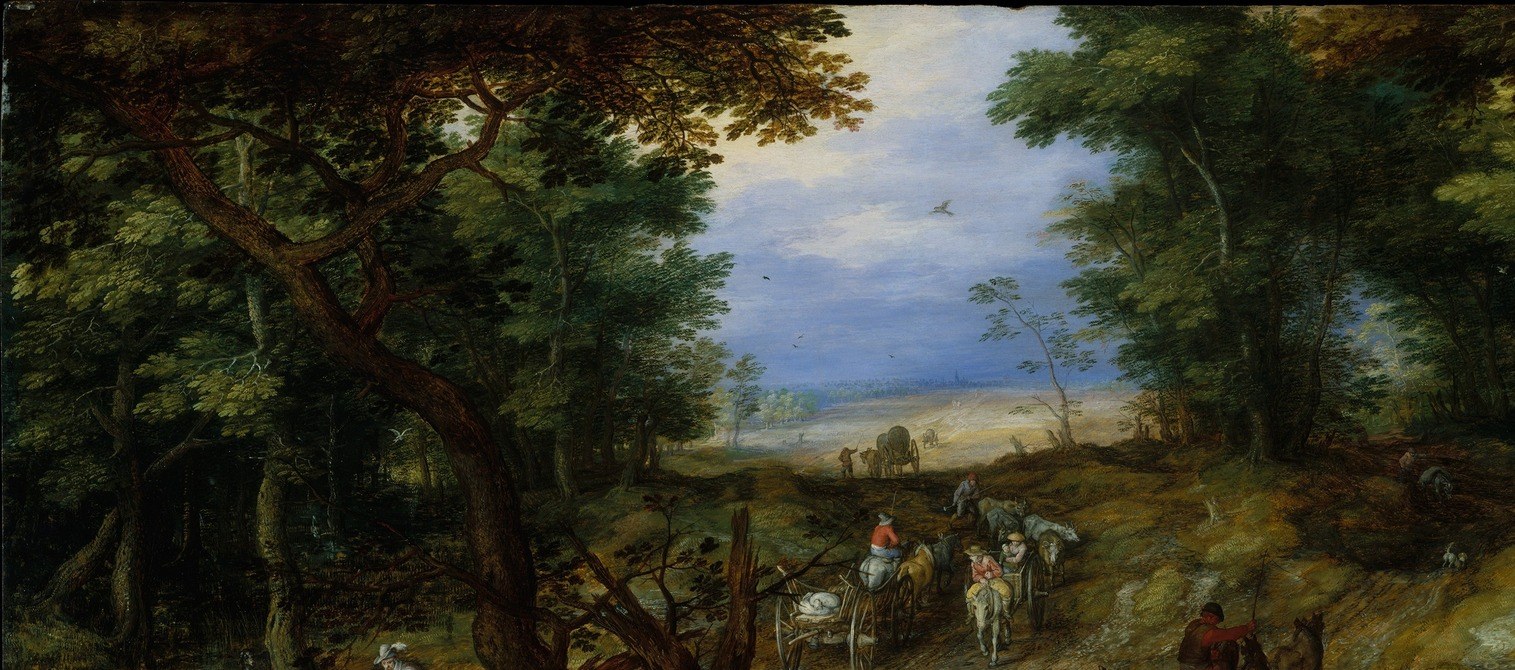
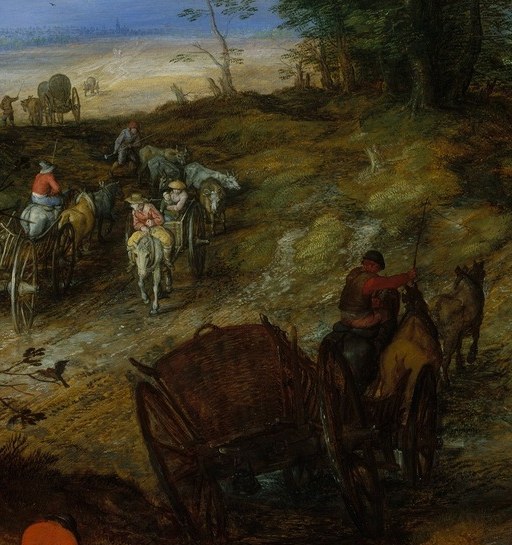
Jan Brueghel the Elder's 'A Woodland Road with Travelers' (1607) is a masterclass in how to move the human eye through a painting without it ever feeling forced. Housed at The Metropolitan Museum of Art, it is less a postcard and more a finely tuned machine for creating depth.
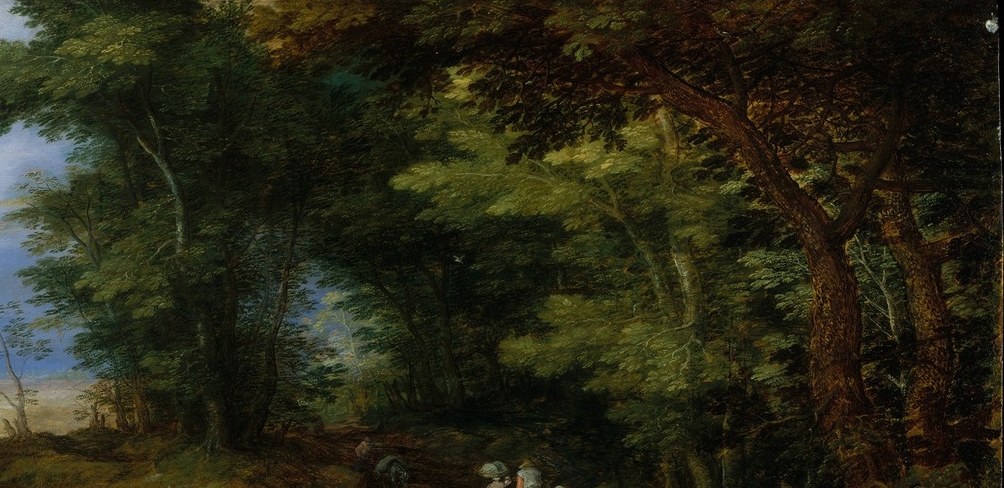
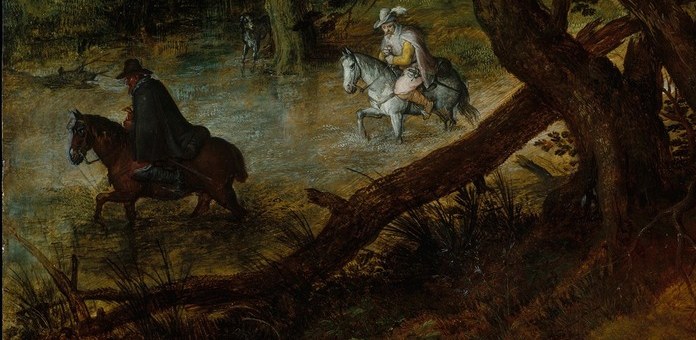
Start with the fallen log in the near foreground. Every flake of bark and twist of root is a distinct, textured stroke of oil paint, that bravura surface is not just showing off. It acts as a barrier that pushes you onto the rutted road, forcing you to join the travelers rather than float above them. From there, the arching canopy forms a natural tunnel, a cathedral nave of foliage that leads you relentlessly forward.
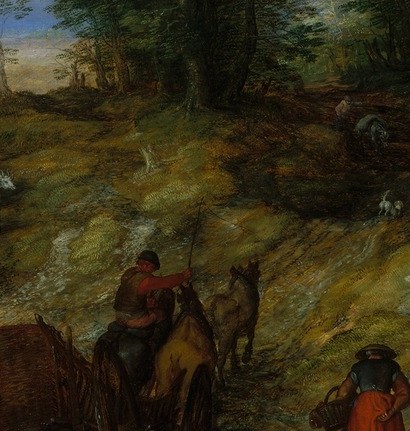
Brueghel was known as 'Velvet' Brueghel for his lush, precise surfaces, and here he deploys a classic Baroque repoussoir device: the dark, claustrophobic forest gives way to a luminous break in the background. That bright gap of sky is not accidental; he designed it to let the painting breathe, illustrating a technique he explicitly called a 'distant landscape.' Look also for the single rider in an orange-red cloak, it is the only saturated warm hue in a sea of greens and browns, a deliberate color accent marking a figure of rank.
By controlling exactly where you look and how fast you travel, Brueghel turns a simple road into a social and optical journey. Which detail catches your eye first when you might just scroll past?
Details
Transcript
In 1607, Jan Brueghel painted a tunnel of trees. It leads you straight into a bright, distant world. But first you have to get past this fallen trunk. Every flake of bark is a separate stroke of the brush. Placed here to stop you scrolling past and pull you onto the road. Now the canopy opens just enough to let the air in. He called it a 'distant landscape.' A painter's trick for breathing room. And this warm orange cloak? Your eye lands here because it is the only bright color for miles.